

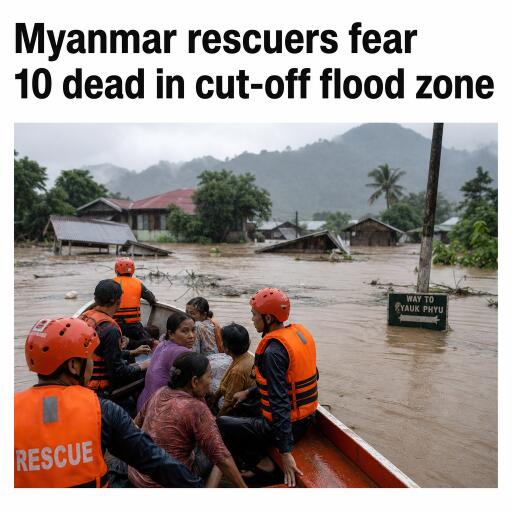
Myanmar rescuers fear 10 dead in cut-off flood zone
Days of relentless rain have carved a path of destruction across southern Myanmar, isolating villages, tearing up roads, and leaving rescue teams scrambling to reach communities where fatalities are feared and dozens may be missing.
Heavy downpours that began on the night of September 25 have battered Tanintharyi, Myanmar’s southernmost region, as part of a wider storm system soaking much of mainland Southeast Asia. The same system inundated Thailand over the weekend, overwhelming parts of Bangkok.
Local aid workers report that multiple townships in Tanintharyi have been struck by flash floods and landslides. In some areas, damaged bridges and knee-deep mud have made roads impassable, forcing teams to proceed on foot. Hundreds of residents have fled to monasteries and community halls now serving as improvised shelters.
According to the volunteer-led Dawei Zabuthiri Emergency Medical Service, there is not yet a confirmed death toll. Preliminary field reports point to as many as seven to ten fatalities, with roughly 20 to 30 people unaccounted for. Volunteers say the disaster zone is too vast and fragmented to assess in full, with damaged infrastructure, power outages, and swollen rivers slowing every step of the response.
Authorities have not issued an official tally. Ongoing conflict in several parts of the country further complicates logistics, making it difficult for humanitarian groups to move personnel and supplies or verify needs across remote communities. In rugged uplands, saturated soils have primed hillsides for collapse, while low-lying areas remain at risk of renewed flooding should the rains persist.
Myanmar is among the countries most exposed to climate hazards, a vulnerability shaped by its geography, reliance on seasonal monsoons, and widespread environmental degradation. Intensifying rainfall extremes, long observed by communities across the region, are consistent with a warming atmosphere that can hold and dump more moisture. Deforestation, poorly regulated mining, and hillside agriculture exacerbate runoff and erosion, heightening the risk of landslides when storms stall overhead.
On the ground in Tanintharyi, the immediate priorities are search and rescue, medical care, and restoring access to cut-off villages. Emergency teams are working to deliver clean water, food, and tarpaulins to shelters, while engineers survey damaged roads and bridges for rapid repairs. Health workers warn of waterborne diseases following the inundation, especially where sanitation systems have been overwhelmed.
Regional spillovers underscore the scale of the weather system. In Thailand, flooding over the weekend swamped neighborhoods across the capital. City officials reported nearly 48 hours of heavy rain, prompting a disaster declaration, the evacuation of close to 4,900 people to temporary shelters, and impacts to about 52,000 households. Urban drainage systems struggled to cope as canals and streets overtopped, disrupting transport and commerce.
Disaster specialists say the twin crises highlight how exposed Southeast Asian cities and rural regions alike are to extreme precipitation. Expanded early warning networks, protected evacuation routes, and investment in resilient infrastructure—such as elevated roads, reinforced embankments, and restored wetlands that store floodwater—could help blunt future impacts. In mountainous areas, slope stabilization and reforestation are key to reducing landslide risk.
Aid organizations in Myanmar stress that funding shortfalls and complex operating conditions have stretched response capacity. As the rains ebb and flow in the coming days, responders fear isolated communities could face extended shortages of essentials. With many residents now sheltering in monasteries and schools, the need for sustained assistance—clean water, sanitation, health services, and safe shelter—will likely persist well beyond the immediate emergency.
For families awaiting news of loved ones in Tanintharyi’s cut-off valleys, the next clear day cannot come soon enough. Until then, rescuers will keep threading their way along flooded footpaths and broken roads, racing the clock to bring help—and answers—to those stranded by the storm.



Leave a Reply