

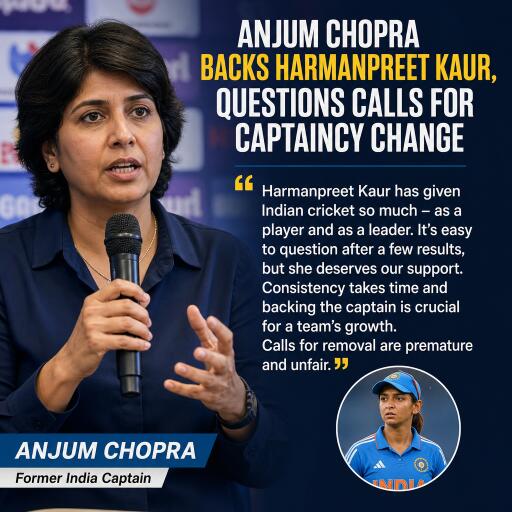
Anjum Chopra Backs Harmanpreet Kaur, Questions Calls for Captaincy Change
Debate over leadership in India’s women’s cricket team has intensified, but former captain Anjum Chopra believes replacing Harmanpreet Kaur is not the remedy. Chopra argues that a change at the top won’t mask deeper issues, particularly the shortage of fully prepared alternatives across key roles.
Chopra contends that swapping captains risks becoming a cosmetic fix rather than a meaningful solution. In her view, results hinge on collective consistency, not just the player wearing the armband. If performance is expected to skyrocket purely because of a different leader, she suggests, that reflects a broader structural concern rather than a leadership gap.
The conversation gained momentum after suggestions to prioritize long-term planning by grooming a young leader specifically for the T20 format. The idea of easing in an emerging star like Shafali Verma has its advocates, positioning her as a future captain for WT20Is. Chopra, however, views that path as premature. She stresses that before entrusting a young player with strategic command, the team must deepen its bench and develop resilience across batting, bowling, and fielding.
From Chopra’s perspective, captaincy is not an immutable post—transitions happen when the timing and context align. But making frequent changes just to chase short-term outcomes sets a risky precedent. She emphasizes that leadership should be part of a broader performance ecosystem: stable roles, clear plans, and accountability for all eleven on the field.
Her stance also underscores a recurring theme in Indian women’s cricket: the need for sustained investment in backups. Without reliable second options—whether for pace, spin, or middle-order solidity—any leadership reshuffle risks being viewed as symbolic. Chopra’s message, in essence, is to fix the pipeline and elevate standards across the squad; only then can a change at the helm be judged on merit rather than used as a quick answer.
Supporters of a youth-first approach see value in long-term grooming, arguing that T20s are a natural launchpad for leadership apprenticeships. Chopra does not dismiss the future potential of younger players, but she questions whether thrusting them into high-pressure roles now would serve the team’s immediate needs. Stability, she argues, buys time to build depth and clarity—assets just as crucial as tactical nous on match day.
As the debate rolls on, Chopra’s viewpoint adds a stabilizing note: assess the full picture, strengthen the core, and avoid the temptation of frequent captaincy rotations as a cure-all. Leadership matters—but so does the readiness of the ten teammates around the captain. Only when those elements align, she suggests, will India unlock the consistent performances it seeks.



Leave a Reply