

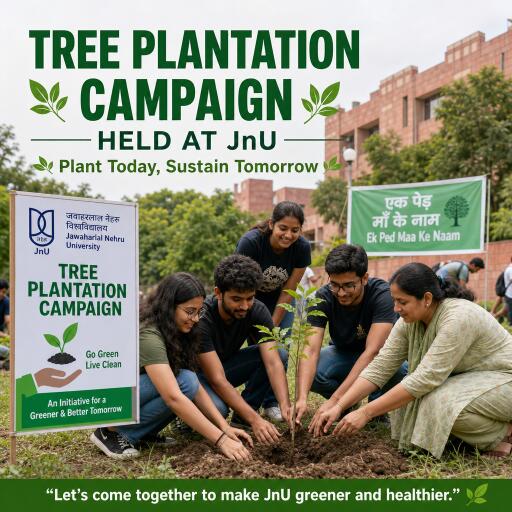
Tree plantation campaign held at JnU
Jagannath University’s Kathaltala grounds turned into a living classroom on Tuesday as students rolled up their sleeves to plant trees and commit to a greener campus. The event, designed to boost urban canopy cover and student stewardship, blended practical conservation with a hopeful message: climate resilience can start right where you study.
The campaign was jointly facilitated by campus partners working with student volunteers. Over the course of the day, participants placed dozens of saplings into the soil—species chosen for shade, seasonal color, and resilience to city conditions. These included:
- Golden shower (noted for vibrant spring blossoms)
- Jarul or queen’s crepe myrtle (lush purple blooms)
- Royal poinciana (flame-red canopy)
- Frangipani (fragrant flowers and drought tolerance)
- Mango and jackfruit (fruiting trees with deep cultural roots)
- Neem (hardy, medicinal, and pollution-tolerant)
Addressing the gathering, the university’s Proctor, Professor Mohammad Nasir Uddin, underscored the stakes: planting trees is one of the most immediate actions available for restoring ecological balance and buffering the impacts of climate change in dense urban quarters. He praised the initiative for transforming aspiration into action and for focusing on long-term campus wellbeing rather than one-off symbolism.
Organizers reflected on the energy driving the programme, noting that student participation turned the event into a spirited demonstration of civic responsibility. They emphasized that the effort does not end with planting day; success will be measured in survival rates, shade cast on hot afternoons, and the return of birds and pollinators as the canopy matures. “This is less a ceremony and more a promise,” one coordinator said, describing the saplings as a living pledge to cleaner air and cooler corridors.
Student volunteers echoed that view, calling on peers to bring the same momentum to regular care—watering, mulching, and protecting young trees during the first two summers, when survival is most at risk. As one participant put it, a greener campus starts with patience and persistence: small weekly acts that add up to a thriving landscape.
Why trees on campus matter
Urban campuses experience extreme heat, water runoff, and air pollution. The right mix of native and well-adapted species can:
- Reduce the heat island effect by creating shade and transpiration-driven cooling
- Intercept stormwater, lowering flood risk during intense rainfall
- Filter airborne particulates and improve local air quality
- Support biodiversity, providing forage and habitat for birds and insects
- Enhance mental wellbeing and learning outcomes through access to green spaces
At Kathaltala, the chosen species complement one another—some fast-growing for quick cover, others long-lived for structural canopy. Fragrance and seasonal color are more than aesthetic flourishes; they attract pollinators, enrich campus life, and help create a sense of place that fosters care.
From planting to permanence
Turning saplings into shade trees demands attention beyond the photo moment. Organizers outlined a practical care plan that includes:
- Routine watering during the dry season, focusing on deep, infrequent soaks
- Mulching to retain moisture and regulate soil temperature
- Tree guards and signage to prevent accidental damage
- Annual pruning for structure and safety once trees are established
- Student-led monitoring of survival rates and growth
The initiative also hinted at a broader campus roadmap: micro-groves near walkways to create continuous shade corridors, pocket habitats to draw in urban wildlife, and co-curricular projects that link ecology to engineering, public health, and the arts. By embedding stewardship into campus culture, JnU can translate one day of action into a year-round living laboratory.
As saplings took root, the message was clear: climate solutions can be local, visible, and shared. With sustained care, the trees planted at Kathaltala will stand as a practical buffer against heat and flooding—and as a testament to what collective action can grow.



Leave a Reply