

Scientists Just Solved the Mystery of Why Crabs Walk Sideways
Crabs’ trademark side-shuffle may trace back to a single, pivotal moment in their deep past. New research indicates that the lateral gait likely arose just once—around 200 million years ago—and then persisted as true crabs radiated into today’s astonishing diversity.
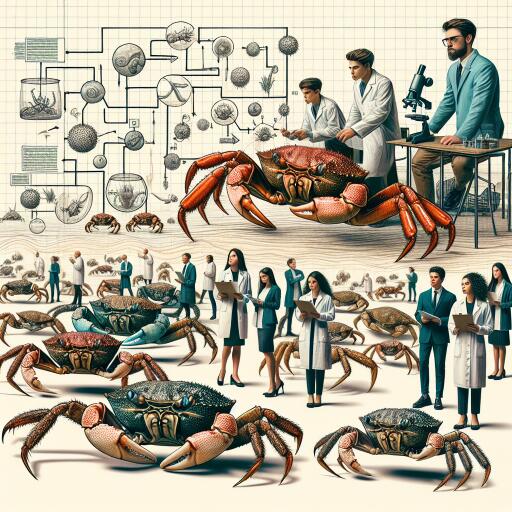
To get here, researchers carried out the most extensive comparison of crab movement yet. They filmed 50 species in standardized circular arenas designed to mirror each animal’s typical terrain, recording 10-minute clips of one representative per species. Those behavioral snapshots were then integrated with a broad evolutionary framework capturing genetic relationships across hundreds of crab species. Because not all filmed species were present in the genetic dataset, the team pruned the tree to 44 genera and included several higher-level groups, using close relatives as proxies when needed.
The pattern that emerged was remarkably consistent. Out of the 50 species, 35 predominantly moved sideways and 15 tended to walk forward. When mapped onto the simplified crab family tree, the data point to a single origin of side-stepping near the base of Eubrachyura—an assemblage that includes most “modern” crabs—followed by long-term preservation of the behavior across many lineages.
That rarity stands in stark contrast to a separate hallmark of crab evolution: the repeated emergence of a crab-like body form, a process known as carcinization. While body shapes can converge again and again, the analysis suggests sideways walking itself is a behavioral innovation that took hold once and stuck.
Why sideways pays off
Sideways movement offers crabs a fast, flexible way to escape. By keeping their legs oriented laterally, crabs can accelerate quickly to the left or right with minimal reorientation, potentially making them less predictable targets for predators. This agility may have been a crucial advantage as true crabs spread into new niches—on shorelines, in mangroves, across coral rubble, in freshwater, and even into the deep sea.
But the study also hints at why sideways walking is uncommon beyond true crabs. Locomotion is tied to many other behaviors. Digging, feeding, mating—each places demands on limb coordination and body posture. A switch to lateral motion could interfere with these tasks, making the transition hard to achieve and harder still to refine without trade-offs. Occasional analogs exist—such as certain crab spiders or leafhopper nymphs—but the sideways specialty remains largely a crab affair.
A Jurassic origin story
The timing of the shift adds another layer. The best estimate places the rise of sideways walking in the earliest Jurassic, shortly after the Triassic–Jurassic mass extinction. That period brought sweeping changes: the breakup of the supercontinent Pangaea, an expansion of shallow marine habitats, and an escalation of predator–prey arms races in the seas. Against that backdrop, a locomotor innovation that boosted escape performance and maneuverability could have amplified survival and opened doors to new habitats.
Inside the analysis
- Behavioral dataset: 50 true crab species, each filmed for 10 minutes in habitat-mimicking arenas.
- Evolutionary context: a large genetic tree built from 10 genes across 344 species, then simplified to align with the observed taxa (44 genera plus select higher groups).
- Outcome: 35 species primarily moved sideways; 15 walked forward. Ancestral-state reconstructions support a single origin of sideways locomotion near the base of Eubrachyura.
The approach blends direct observation with phylogenetic inference—a powerful pairing for teasing apart how behavior evolves. Importantly, the dataset acknowledges practical constraints: one individual per species and the need to substitute close relatives where exact matches were missing. Even with these limits, the converging lines of evidence were strong enough to reveal a coherent evolutionary narrative.
Key takeaways
- Sideways locomotion appears to be a rare behavioral innovation that likely emerged once in the ancestors of most modern crabs.
- This gait may have improved predator evasion and maneuverability, contributing to the ecological success and diversification of true crabs.
- Unlike body shape convergence (carcinization), which happened multiple times, the evolution of sideways walking seems constrained by trade-offs with other behaviors.
- The trait’s Jurassic timing aligns with environmental upheavals that expanded ecological opportunities.
What comes next
Open questions remain. How exactly does sideways motion boost survival across different habitats? Are there quantifiable performance gains—speed, endurance, stability—that explain its persistence? Future work could test how gait affects escape outcomes in realistic predator scenarios, explore trait-dependent diversification to quantify how locomotion links to speciation rates, and refine timelines with fossil-calibrated trees.
There’s also a technological frontier. Bio-inspired robotics often borrows from the biomechanics of animals that excel in cluttered, shifting environments. Understanding how crabs coordinate many legs for rapid lateral movement could inform the design of nimble, low-profile robots suited for disaster response, seabed surveying, or delicate ecological monitoring—systems that, like their crab muses, need to dart sideways through tight spaces without turning.
For now, the sideways scuttle stands as a rare behavioral leap that helped true crabs thrive through geological upheaval and into almost every corner of aquatic and coastal life. One clever move, it seems, went a very long way.



Leave a Reply