

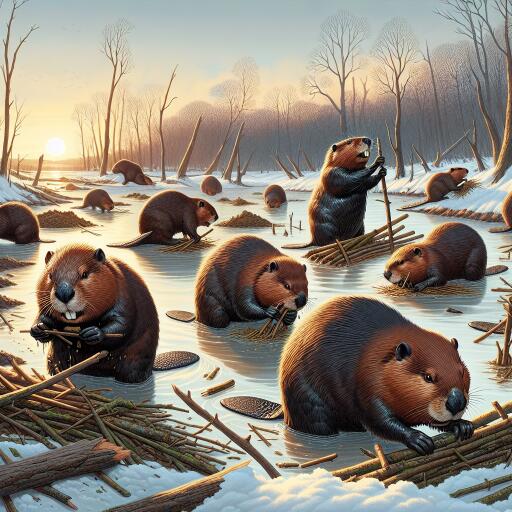
New research details why beavers are working earlier in the year than ever before
Across northern landscapes, winters are shrinking—and beavers are responding. Fresh analysis of long-term observations shows these industrious rodents are leaving their lodges earlier each year as temperatures rise, reshaping both waterways and the human communities that share them.
The research tracked the first seasonal appearance of beavers at a park in central Alberta from 2008 through 2025 and linked those dates to warming conditions. The pattern was striking: for every 1 degree Celsius increase in temperature, beavers surfaced about six days sooner. Historically, the animals spent roughly 144 days sealed beneath ice, typically reemerging around the start of April; now, that under-ice period is getting noticeably shorter.
Beavers do not hibernate. During the freeze, their lodge entrances sit underwater, limiting movement and forcing a reliance on cached food. Once the thaw arrives, access to shorelines and woody plants returns—and with it, a burst of engineering: rebuilding dams, expanding ponds, and restocking winter stores. Warmer springs accelerate that transition, effectively adding working days to the beaver calendar.
What’s emerging is a powerful feedback. Longer, more productive summers let colonies secure greater food reserves and maintain sturdier infrastructure. Those gains can translate into an even earlier start the following year, compounding the shift over time. In regions where summers are trending hotter and drier, the cycle intensifies: earlier ice-off, longer activity periods, and expanded beaver influence on streams and wetlands.
The ecological consequences cut both ways. As a keystone species and quintessential ecosystem engineer, beavers create ponds that spread water across floodplains, recharge groundwater, trap sediment, and provide refuges for amphibians, waterfowl, and fish. In drought-prone years, their impoundments can buffer low flows and reduce wildfire risk by keeping riparian areas moist.
Yet earlier and longer activity seasons also raise the odds of friction with nearby communities. More time above the ice means more tree-felling near neighborhoods, more dam-building in culverts, and a greater chance of flooded roads or fields. Without preparation, a spring surge in beaver work can overwhelm infrastructure just as snowmelt peaks.
Managers and municipalities are likely to feel the timing pinch first. Calendars built around historic spring conditions may no longer fit. Practical steps include:
- Shifting monitoring and maintenance to earlier in the season to head off blocked culverts and overtopped roads.
- Installing flow devices and pond levelers before peak runoff to keep water moving without destroying dams.
- Protecting high-value urban trees with fencing or trunk guards in late winter rather than mid-spring.
- Mapping and prioritizing conflict hotspots where earlier thaw coincides with vulnerable infrastructure.
The findings also offer a preview of how beavers might behave as they expand north into newly thawing territories. Warmer conditions are opening ponds and streams in subarctic and Arctic regions for longer stretches each year, inviting colonization. New dams in permafrost landscapes can alter thaw patterns, reroute water across tundra, transform habitat mosaics, and influence carbon cycling—changes that will ripple through local fisheries, migratory birds, and human uses of the land.
Planning for coexistence will be essential. Tools already exist to reduce conflict—culvert exclosures, adjustable dam notches, coexistence agreements with landowners—but timing is becoming the critical variable. Acting weeks earlier might be the difference between a manageable beaver pond and an emergency road washout.
Stepping back, the study underscores a broader climate reality: it isn’t only plants budding sooner or birds arriving earlier. Mammals that stay active year-round are also shifting their schedules, and when those mammals are ecosystem engineers, the consequences cascade. Beavers’ earlier “clock-in” times are changing the tempo of northern watersheds—sometimes to the benefit of resilience, sometimes to the frustration of human infrastructure.
The message is clear. As winters wane and summers stretch, our strategies must evolve just as quickly as the beavers do. If we plan ahead—aligning maintenance with the new spring, embracing non-lethal mitigation, and anticipating northward expansion—these earlier working hours can bolster wetland health and water security rather than erode roads and budgets. The future will test our flexibility as much as the beavers’ ingenuity; both will be on full display each spring, now arriving sooner than we remember.



Leave a Reply