

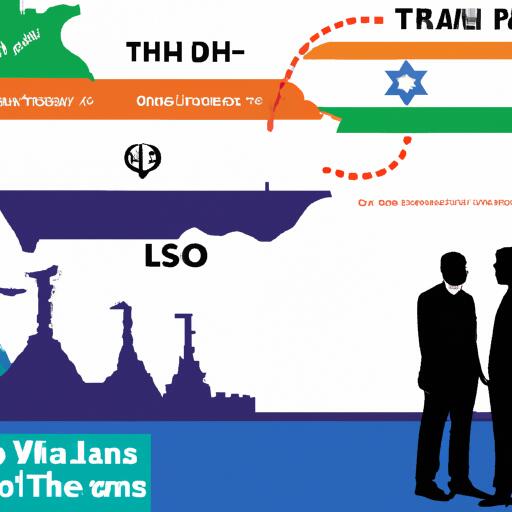
From Oil to Geopolitics: Why the Iran-Israel-US Conflict Matters to India
Missile launches and military gestures grab global attention, but for India the most consequential front lies in energy markets. As a nation that relies on imports for the vast majority of its crude needs, any tremor in West Asia quickly reverberates through Indian fuel pumps, factory floors, and household budgets. The latest flare-up involving Iran, Israel, and the United States is therefore not a distant drama—it is a direct stress test of India’s economic stability and strategic agility.
Energy at a chokepoint
India sources roughly 85 percent of its crude from abroad, and much of that supply moves through the Strait of Hormuz, the world’s most sensitive oil corridor. Even a perceived threat to this narrow passage can trigger higher freight rates, spiking insurance premiums, and rerouted tankers taking longer, costlier paths around Africa. These frictions compound quickly: pricier crude pushes up transport costs, raises the price of essentials, inflates industrial input costs, and strains public finances through larger subsidy and import bills.
Recent blows to energy infrastructure and the rising risks to export terminals underscore a critical reality: energy systems are now instruments in geopolitical competition. Disruptions—whether physical damage, cyber interference, or maritime brinkmanship—don’t just dent supply; they send signals that move markets ahead of any actual shortage. For a fuel-importing economy like India, that psychology matters almost as much as barrels on the water.
Balancing friends, fuel, and trade routes
India’s relationships in the region are a delicate web. Tehran remains a pivotal partner—historically as a supplier and strategically through the Chabahar port, a gateway to Afghanistan and Central Asia. At the same time, New Delhi’s security and technology ties with Israel have deepened, and cooperation with the United States has broadened across defense, trade, and clean energy. The current tensions force India to preserve energy access, keep strategic projects on track, and avoid alienating key partners—simultaneously.
When oil prices rise, so does the pressure at home
Costlier crude ripples through the entire economy. A spike can widen the current account deficit, put downward pressure on the rupee, and compel the central bank to weigh currency support against inflation control. Fuel and fertilizer costs seep into food prices, squeezing household budgets. Small manufacturers and energy-intensive industries face margin shocks, risking slower investment and job creation. For an economy aiming for sustained high growth, even short disruptions can derail momentum.
There is also a paradox at play: heightened risk can lift global prices in ways that partially offset sanctions on exporters, while penalizing import-dependent economies. This feedback loop—anticipation driving prices, prices shaping behavior—raises the stakes for timely and well-communicated policy responses.
What India can do now
- Diversify barrels and routes: Lock in long-term contracts with a wider pool of suppliers beyond the Persian Gulf, including Africa and the Atlantic basin, while strengthening crude swaps and spot flexibility to handle sudden shocks.
- Build buffers: Expand strategic petroleum reserves and align refill strategies with price cycles. Encourage refineries to optimize crude slates and maintain contingency plans for redirected shipping.
- Harden the lanes: Intensify maritime coordination with partners to reduce war-risk premiums and keep sea lines open, while ensuring rapid access to alternative ports and logistics.
- Diplomatic calibration: Deepen engagement with Tehran to safeguard energy and connectivity interests, without compromising ties with Israel and the United States. Quiet, persistent diplomacy is essential to de-escalate risks around Hormuz.
- Protect the vulnerable: Calibrate excise duties, rationalize subsidies, and consider targeted transfers to cushion households and MSMEs from fuel-led inflation.
Accelerating the clean-energy pivot
Reducing exposure to imported oil is the structural answer. The faster India advances its energy transition, the smaller the macroeconomic shock from every geopolitical flare-up. Priorities include:
- Power sector resilience: Rapidly add wind-solar hybrids, pumped hydro and battery storage, and grid modernization to displace oil-backed generation and cut gas peaking needs.
- Transport transformation: Scale EV adoption for two-wheelers, buses, and urban fleets; expand charging networks; and improve fuel efficiency across rail, road, and shipping.
- Clean molecules and domestic gas: Grow biomethane and green hydrogen for industry and heavy transport, while using LNG and domestic gas as transitional stabilizers.
- Demand-side efficiency: Accelerate building retrofits, efficient motors, and process heat electrification to tame energy intensity across sectors.
- Local manufacturing: Deepen domestic supply chains for solar, wind, batteries, and electrolyzers to reduce import risks and create jobs.
Gray zones, real stakes
Today’s conflicts blur lines—limited strikes, sanctions, cyber operations, and naval signaling can all move markets without a formal declaration of war. Miscalculation or misreading intent could abruptly disrupt shipping, jolt crude benchmarks, and transmit a financial shock far beyond the Gulf. India’s window to mitigate risk is narrow; contingency planning, diversified sourcing, and credible communication can dampen volatility before it spirals.
The bottom line
Behind the headlines, the contest is about oil flows, shipping lanes, and market expectations. For India, the priority is clear: shield the economy from energy shocks while hastening the shift to a cleaner, more secure system. That means hedging today’s risks—through diplomacy, reserves, and diversified supply—while racing to build tomorrow’s resilience with renewables, storage, electrified transport, and efficiency. Missiles may dominate the news cycle, but it is energy strategy that will determine how deeply this crisis touches Indian households, industries, and the broader economy.



Leave a Reply