

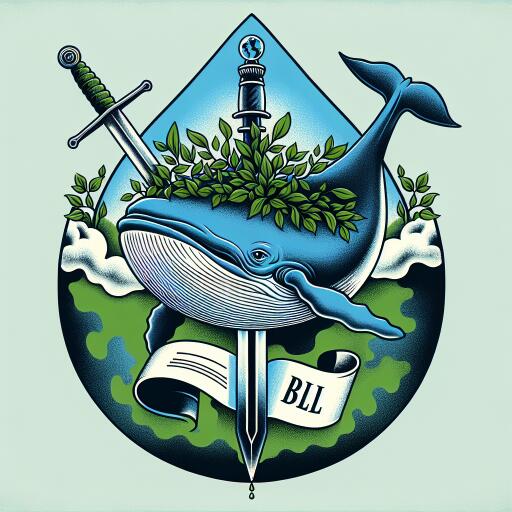
Are whales people? The Green Party Bill to give whales personhood
What happens when a nation decides whales are not things, but beings with rights? A new Member’s Bill from Green MP Teanau Tuiono, the Tohorā Oranga Bill, aims to do exactly that: recognise whales in law as rights-bearing entities. The proposal doesn’t make whales “human,” and it won’t see humpbacks in court. Instead, it would shift whales from the legal status of property—protected only insofar as humans choose—to entities with inherent rights that must be considered in decisions about the ocean.
Legal personhood is not unprecedented. Rivers and forests have been recognised in law to reflect their intrinsic value and the relationships communities have with them. Extending this approach to tohorā (whales) aligns ecological science with Indigenous knowledge systems that describe the ocean (moana) as a living network, not a warehouse of resources. In practice, personhood typically comes with appointed guardians empowered to represent the interests of the entity—here, whales—within existing environmental and planning frameworks.
What the Bill aims to protect
While the full text is yet to be made public, the proposal signals five guiding principles that would anchor whales’ legal rights and inform decisions across marine policy:
- Freedom to migrate across their traditional routes and corridors.
- Protection of natural behaviours, including feeding, breeding, communication and rest.
- Recognition of social and cultural structures—pods, family lineages and learned traditions.
- A right to a healthy environment, free from harmful noise, toxins and excessive disturbance.
- Restoration and regeneration of habitats and ecosystems on which whales depend.
If these principles are embedded in policy, the benefits cascade far beyond whales. Safeguarding migration routes can reshape shipping lanes and reduce fatal strikes. Protecting acoustic space curbs ocean noise from vessels and seismic surveys, easing chronic stress on many marine species. Restoring habitats revives biodiversity from plankton to apex predators. In short: protect the whales, and you uplift the whole web of ocean life.
Why whales matter to climate and ecosystems
Ecologically, whales punch far above their weight. Many species are keystone actors, meaning their presence organizes and stabilizes entire ecosystems. Through the “whale pump,” their vertical movements and nutrient-rich wastes fertilize surface waters, boosting phytoplankton productivity. In the Southern Ocean, iron and nitrogen recycled by whales can increase phytoplankton blooms, which feed krill and fish and draw carbon dioxide from the atmosphere. When whales die, their bodies sink, locking substantial carbon in the deep sea for centuries—so-called “whale falls” that also create rare deep-ocean habitats.
These processes make whales part of the climate solution. Protecting them isn’t a sentimental gesture; it’s an evidence-based strategy to strengthen ocean resilience and global carbon cycles. With marine heatwaves intensifying and ecosystems destabilizing, personhood for whales would hardwire climate-smart decisions into law.
From principle to practice
What might change if whales have legal rights? Expect environmental impact assessments and marine planning to explicitly consider whale interests. That could mean:
- Shipping management: re-routing or slowing vessels in whale hotspots; incentives for quieter propellers and hull designs to cut noise; real-time route planning using AIS data and machine learning to avoid collisions.
- Acoustic protection: time-area restrictions on seismic surveys; caps on cumulative noise; deployment of passive acoustic monitoring buoys that trigger dynamic slow-down zones when whales are detected.
- Fisheries policy: tighter controls to minimize entanglement; on-demand or ropeless gear trials; surveillance tech such as satellite-linked buoys and AI detection to reduce bycatch.
- Pollution and habitat: targeted clean-ups near calving grounds; stricter discharge standards; restoration of kelp and seagrass meadows that support prey species and store carbon.
- Monitoring and verification: satellite tracking, environmental DNA (eDNA) sampling, and shared data platforms to continuously assess population health and habitat quality.
Crucially, personhood reframes the threshold for action. Instead of asking whether harm is acceptable for human gain, decision-makers must show how choices uphold whales’ rights to migrate, communicate and thrive. The result is a precautionary, ecosystem-first approach—precisely what science indicates is necessary in a rapidly changing ocean.
Technology meets tikanga
The proposal also knits together technology with tikanga and kaitiakitanga—guardianship practices that recognise the mana (inherent authority and dignity) of tohorā. Guardianship models for legal persons commonly include co-governance arrangements where Indigenous knowledge and scientific methods operate side by side. That could look like coastal communities partnering with researchers to run acoustic networks, or iwi and hapū helping design migration corridors guided by both orally transmitted knowledge and satellite data. The hybrid toolkit is powerful: ancient wayfinding meets modern sensing, both focused on stewardship.
Addressing the skeptics
Critics often caricature personhood as granting animals human privileges. That’s not what this is. Corporations are legal persons, yet they don’t vote or marry; personhood is simply a legal tool to create duties and representation. For whales, it would allow appointed guardians to advocate in court or administrative processes, ensuring ocean decisions don’t write off their survival as collateral damage.
Others ask why focus on whales. The answer is ecological leverage. Whales structure food webs, fertilize seas and move carbon. Protecting them delivers multipliers for biodiversity and climate. It also sharpens ecological literacy—helping the public see the ocean as a living system with feedbacks, not a bottomless pantry. That shift in mindset, from extraction to relationship, is the cultural infrastructure of any credible response to the climate and biodiversity crises.
A bigger window for the future
Regardless of its legislative fate, the Tohorā Oranga Bill expands the conversation about who and what the law is for. It positions environmental values at the heart of policy, connects climate mitigation to living systems, and makes space for Indigenous knowledge to shape national priorities. Most of all, it challenges us to measure progress not by how efficiently we take from the sea, but by how well the sea and its great navigators can live.
If whales are recognised as persons in law, it won’t be because they are like us. It will be because we finally accepted what the science—and wisdom traditions—have long said: our wellbeing rises and falls with theirs.



Leave a Reply