

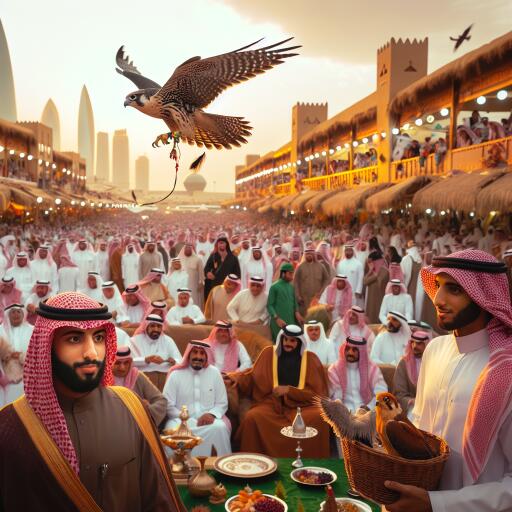
Saudi Arabia’s heritage, wildlife take spotlight at falcon festival
In the far north of Saudi Arabia, the 10th Northern Borders Falcon Festival in Turaif is drawing crowds with a rare blend of cultural memory and ecological ambition. Running from Jan. 29 to Feb. 2, the event showcases how traditional knowledge and modern conservation practices can work hand in hand—on the dunes, in the weaving tent, and inside interactive learning spaces that spotlight the country’s wild heritage.
Weaving identity into conservation
At the heart of the exhibition, Sadu—the centuries-old Bedouin art of geometric weaving—takes center stage. Local artisans demonstrate techniques passed down through generations, turning dyed wool into patterned textiles that once outfitted desert life. Beyond aesthetics, the focus is sustainability: supporting family-run workshops and cottage industries to keep this living craft viable, while reinforcing the cultural identity of the communities that help steward nearby landscapes.
Wildlife making a comeback
The reserve’s pavilion highlights tangible gains in species restoration, underscoring how protected areas can revive fragile ecosystems. Recent reintroduction programs are bringing iconic desert fauna back to their native ranges, including:
- Arabian oryx
- Sand gazelle
- Ibex
- Houbara bustard
These species play crucial roles in arid environments, from seed dispersal to balancing food webs. Their return signals improving habitat health—an outcome tied to stricter protection measures, adaptive management, and long-term monitoring in the region’s reserves.
Tech meets tradition
Interactive displays guide visitors through the science behind habitat protection and the ecological significance of falcons. Touchpoints highlight topics such as migration corridors, the importance of prey availability, and the role of clean, connected landscapes. By pairing hands-on learning with stories from the field, the exhibits make conservation actionable—encouraging people to see falconry as more than sport, and falcons as indicators of ecosystem wellbeing.
The approach is deliberately hybrid: digital tools translate complex ecological processes into accessible visuals, while storytelling preserves the customs and ethics of responsible falconry. The result is a space where tradition informs innovation—and innovation helps safeguard tradition.
Falconry on a grand stage
Organized with the Saudi Falcons Club, this year’s festival draws more than 700 participants, from elite and international falcon owners to local amateurs. The competition calendar spans 18 rounds, testing skill, training, and the remarkable athleticism of the birds. Prize money exceeds SR1 million (about $266,000), underscoring the sport’s growing profile and its ability to rally support for wildlife protection.
Why it matters
Falconry is deeply woven into the cultural fabric of the Arabian Peninsula, and it has become a powerful platform for environmental education. By elevating both heritage and habitat, the festival demonstrates how community pride can translate into long-term stewardship—whether through reviving native species, sustaining traditional crafts, or inspiring the next generation to protect the wild places that define the region.



Leave a Reply