

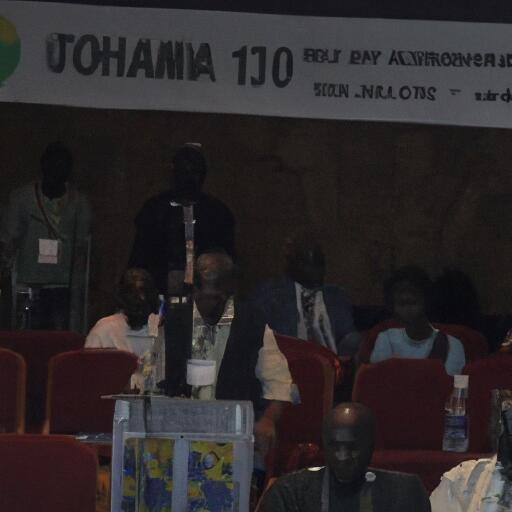
Ghana demands bold climate adaptation financing at African leaders’ summit
Ghana has urged African heads of state and global partners to unlock far larger flows of climate adaptation finance, warning that escalating droughts, floods, and heat are eroding livelihoods and economic gains across the continent. Delivering Ghana’s message, Minister of State for Climate Change and Sustainability Seidu Issifu—speaking on behalf of President John Dramani Mahama—pressed for swift, scaled investment to harden economies against climate shocks and accelerate resilient growth.
A summit built for action
The call came at a hybrid summit anchored at State House in Nairobi and joined by leaders across Africa. Chaired by Kenyan President William Ruto in his role as head of the Committee of African Heads of State and Government on Climate Change (CAHOSCC), the meeting focused on fast-tracking cooperation and finance for adaptation at a moment when climate impacts are crossing borders and intensifying.
Participants used the gathering to align political will behind the next phase of the Africa Adaptation Acceleration Program (AAAP 2.0), a platform designed to mobilize major investments in resilience, food systems, and climate-smart infrastructure.
From COP30 to investment on the ground
Building on outcomes from COP30 in Belém, leaders sought to convert global negotiations into deployment-ready commitments. Ghana emphasized that the continent cannot afford a pause between pledges and implementation, highlighting adaptation as a core development priority rather than a secondary environmental agenda.
Issifu outlined a continent-wide reality: climate extremes are uprooting communities, disrupting supply chains, and diverting public budgets from schools, hospitals, and productive infrastructure to disaster response. The resulting pressure threatens growth trajectories unless adaptation is financed at a scale that matches the risk.
Closing the finance gap
Ghana’s intervention offered a sober assessment of international finance. Despite incremental progress, discussions following COP30 left many African governments frustrated by fragmented mechanisms, limited concessional resources, and uneven access to funds. Concerns persist around the ambition of the revised Global Goal on Adaptation and the pace and predictability of loss-and-damage funding.
The Nairobi dialogue therefore centered on building more reliable frameworks—linking AAAP 2.0 with multilateral development banks and facilities such as the IMF’s Resilience and Sustainability Facility—to reduce borrowing costs, catalyze private capital, and prioritize projects with immediate benefits for food security, water management, and climate-resilient infrastructure.
Ghana’s green-growth push
At home, Ghana is embedding climate resilience into national planning while expanding renewables and sustainable infrastructure as part of an emerging 24-hour economy agenda. The government frames clean energy and nature-positive development as engines of job creation, competitiveness, and energy security, rather than constraints on growth.
Yet structural barriers persist: high technology costs, limited access to affordable finance, and trade rules that can disadvantage African producers. Ghana stressed that progress requires fairer financing, accelerated technology transfer, and partnerships that enable local value creation. In other words, climate action should strengthen domestic industries and supply chains rather than deepen dependency.
Equity and partnership over new debt
Ghana underscored a basic imbalance: Africa contributes under 4% of global emissions but bears a disproportionate share of climate losses. Addressing this inequity demands finance that is accessible, predictable, and structured to avoid piling on unsustainable debt. The country called for partnerships that share risk, build capacity, and deliver long-term, locally owned solutions.
Central to this vision is a push to mobilize at least $100 billion annually for African adaptation and mitigation. Leaders argued that every dollar invested should serve multiple purposes—protecting communities, boosting productivity, expanding clean power, and laying the groundwork for green industrialization.
Continental momentum
The summit drew African presidents and prime ministers alongside multilateral lenders, philanthropies, and partner governments, reflecting the scale of coordination now required. Ghana backed a robust communiqué paired with concrete offers that move beyond statements to bankable projects, emphasizing transparency and results.
Youth engagement featured prominently, with a call for young innovators and entrepreneurs to scale climate-smart solutions in agriculture, energy, transport, and urban planning. Governments, the message stressed, must create enabling environments—clear regulations, reliable grids, and fit-for-purpose finance—to help these solutions grow.
What comes next
By coupling domestic reforms with a candid appraisal of global finance gaps, Ghana positioned itself as a driving voice for a new adaptation compact grounded in African leadership and real investment. As AAAP 2.0 advances from concept to delivery, the test will be whether partners can jointly convert momentum into resilient roads and bridges, drought-ready farms, early-warning systems, climate-proofed schools and clinics, and clean power that supports industry around the clock.
The message from Accra in Nairobi was unambiguous: Africa’s resilience is non-negotiable, and the time to fund it is now.



Leave a Reply