

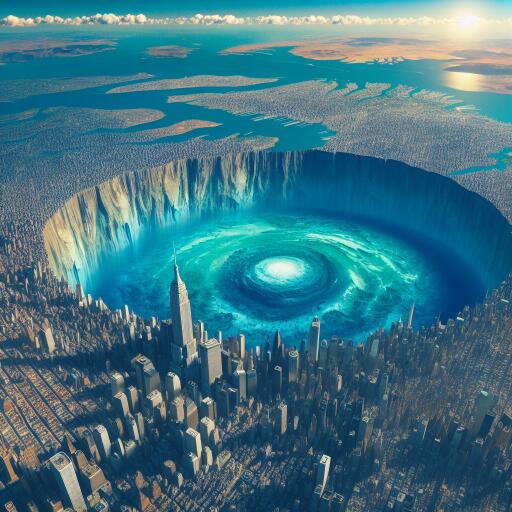
Massive secret freshwater reservoir off U.S. East Coast could supply NYC for 800 years
A vast cache of fresh water appears to be locked beneath the seafloor from New Jersey to at least southern New England—an offshore aquifer that could hold hundreds of cubic miles of low-salinity water. Early estimates suggest a volume on the order of 670 cubic miles, theoretically enough to supply a city the size of New York for centuries if it were accessible and carefully managed. While the find is stirring excitement in a warming world where droughts and saltwater intrusion are mounting threats, it also raises urgent questions about stewardship, ecology, and the risks of tapping a resource formed thousands of years ago.
What scientists found beneath the shelf
For decades, hints of freshwater beneath the Atlantic continental shelf came from 1970s-era petroleum wells that unexpectedly hit brackish to fresh water. Building on those clues, a recent multi-month oceanographic campaign drilled hundreds of meters below the seafloor off Nantucket and Martha’s Vineyard, retrieving cores and pumping tens of thousands of liters of formation water from multiple sites. The samples and geophysical data point to a laterally extensive groundwater body that likely extends well beyond the immediate test areas, possibly from the Mid-Atlantic into the Gulf of Maine.
Measurements show the water is far less salty than seawater, with salinity generally increasing farther offshore. That pattern, along with geologic mapping, supports the presence of a confining layer—clays and silts—that acts as a seal between the ocean above and the freshwater below, limiting rapid mixing.
How did a freshwater reservoir end up offshore?
Several mechanisms may have contributed to this submarine aquifer:
- Glacial recharge: During the last ice age, meltwater and pressure from massive ice sheets likely forced large volumes of fresh water into permeable sands now buried beneath the seafloor.
- Meteoric inputs: Rain and snowmelt flowing through coastal sediments could have fed the system when sea levels were lower and the shoreline was farther seaward.
- Onshore leakage: Modern coastal aquifers may still bleed freshwater offshore along buried channels, albeit slowly and unevenly.
Early isotope and radiocarbon results point strongly to a glacial legacy, indicating much of this water may be “fossil” on human timescales—recharged under past climatic conditions rather than replenished year to year.
How big is it—and how usable?
The working estimate of at least 670 cubic miles is staggering. But size alone doesn’t equal sustainable yield. Key factors include:
- Recharge rate: If the aquifer is largely glacial in origin, modern replenishment could be extremely slow.
- Salinity gradients: Water becomes saltier with distance offshore; production would target the freshest zones, and over-pumping could draw in seawater.
- Permeability and pressure: Flow through buried sands and their connectivity will determine how quickly water can be extracted without causing rapid salinization.
- Economics and energy: Offshore drilling, subsea infrastructure, and treatment costs could rival or exceed large-scale desalination in some scenarios.
In short, while the resource is enormous, its practical contribution is likely as a strategic drought buffer or regional supplement—not a limitless tap.
Environmental and climate context
This discovery arrives as climate change amplifies water stress. Hotter temperatures and shifting precipitation patterns are straining reservoirs and rivers, while sea-level rise pushes salt farther into coastal aquifers. An offshore groundwater reserve could add resilience for coastal communities facing episodic shortages. Yet developing it carries risks:
- Saltwater intrusion: Pumping could alter pressure balances, pulling seawater into freshwater zones and degrading water quality.
- Seafloor stability: Changing subsurface pressures may affect sediment integrity in localized areas.
- Ecosystem impacts: Drilling, pipelines, and discharge from treatment plants can affect marine habitats if not carefully designed and monitored.
- Equity and governance: The aquifer spans multiple jurisdictions; decisions about access, pricing, and environmental safeguards must prioritize public interest and ecological limits.
Careful policy frameworks—balancing state authority, federal oversight, and regional coordination—will be essential before any extraction proceeds.
What comes next in the science
Researchers are now analyzing the water and sediments to build a full picture of the system. Priorities include:
- Dating the water: Radiocarbon, isotopes, and noble gases can pinpoint when recharge occurred and how isolated the aquifer has been.
- Mapping extent and pathways: Offshore geophysics and additional boreholes will refine boundaries, thickness, and connectivity to onshore aquifers.
- Microbial ecology: Subsurface microbial communities influence water chemistry and can signal how the system evolved.
- Trace elements and minerals: Understanding the presence of elements, including rare earths, helps assess treatment needs and environmental behavior.
- Salinity dynamics: Modeling how pumping would change salinity over time is crucial to setting sustainable withdrawal limits.
These data will inform realistic scenarios for use—ranging from emergency supply during multi-year droughts to long-term, low-rate extraction designed to avoid triggering saltwater encroachment.
The big picture: Promise with prudent limits
An offshore reservoir capable of supplying a megacity for centuries is a remarkable piece of Earth’s glacial legacy. But its greatest value may lie not in prolonged daily use, but as a carefully managed buffer that boosts regional resilience alongside conservation, efficiency, and diversified water portfolios. As coastal populations grow and climate pressures intensify, the smart path forward will be science-led: measure first, plan cautiously, and treat this hidden aquifer as a finite natural endowment—one that, if mishandled, cannot be easily restored.



Leave a Reply