

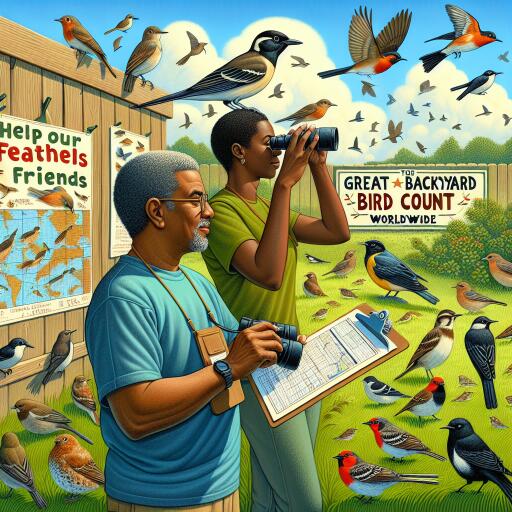
Help Our Feathered Friends: Volunteer For the Great Backyard Bird Count Worldwide
Bluebirds, finches, chickadees, and countless other species are closer than you think—often right outside your window. This February, join a global effort to notice, enjoy, and document them during the Great Backyard Bird Count, taking place February 13–16, 2026.
Spending time with birds is a simple way to recharge: being outdoors and tuning into the rhythms of nature can ease stress and lift mood. It takes just 15 minutes to participate, yet the observations you share help scientists monitor bird populations and guide conservation where it’s needed most.
What Is the Great Backyard Bird Count?
Now in its 29th year, the count invites people of all ages and experience levels to record the birds they see over four mid-February days. Last year, more than 800,000 people contributed sightings from nearly every country, documenting 8,078 species—over 150 more than the previous year. Every checklist deepens our understanding of how birds are doing amid changing climates, shifting habitats, and other pressures.
As one longtime participant put it, birdwatching reveals a world of personalities and patterns. Noticing how species behave—from a nuthatch’s headfirst descent to a hawk’s soaring circle—can spark curiosity and a deeper care for the places we share.
How to Take Part in 15 Minutes
- Pick your time: Any 15-minute block during February 13–16 works. Longer sessions or multiple counts over the weekend are even better.
- Choose a spot: Your backyard, a balcony, a neighborhood street, a city park, or a nearby nature area all count.
- Watch and tally: Record the highest number of each species you see at once to avoid double-counting.
- Share your list: Use a bird identification or checklist app commonly used by birders worldwide, or submit through your local organizing group’s preferred method.
If you’re new to birding, introductory online sessions are often offered in early February. These brief orientations walk through simple ID tips, how to record observations, and how to submit a checklist. Community groups and nature centers may also host local walks and counting events.
Why Your Checklist Matters
Birds are powerful indicators of ecosystem health. When volunteers across the globe report what they see in the same time window each year, researchers can detect:
- Population trends—species that are increasing, declining, or holding steady
- Shifts in distribution tied to weather and climate
- Timing of migration and unusual irruptions
Combined with other community-science efforts, GBBC data helps identify priority habitats, inform land management, and guide conservation investment. In short: small moments of observation add up to big-picture insight.
Tips for First-Time Birdwatchers
- Start with what’s common: sparrows, doves, crows, and robins build confidence before you chase rarities.
- Listen as much as you look: distinctive calls can clinch an ID when birds stay hidden.
- Use guides wisely: a field guide or an ID app can help narrow possibilities based on location and season.
- Note details: size, shape, color patterns, bill type, behavior, and habitat are all clues.
- Be kind to wildlife: give birds space, avoid playback that disturbs them, and follow local rules.
Make It Social
Turn the count into a family activity, a classroom project, or a neighborhood meet-up. Kids love keeping tally and learning the names of “regulars” at a feeder. Friends can split roles—spotter, note-taker, and photographer—and compare lists from different locations. Consider challenging another group to see who can identify the most species while practicing ethical birding.
Where to Count
You don’t need pristine wilderness to contribute valuable observations. Count from:
- Your window or yard, especially if you maintain a bird-friendly garden or feeder
- Apartment balconies and rooftops that offer a view of passing flocks
- Community parks, schoolyards, tree-lined streets, and waterfronts
- Local nature reserves or trails, if accessible
Ready to Join In?
Set aside at least one 15-minute window between February 13 and 16, 2026. Gather a notebook, binoculars if you have them, and a bird ID tool. Then look, listen, and record. Whether you spot a single chickadee or a parade of winter waterfowl, your sightings will help map the living pulse of our planet—one checklist at a time.
Birds bring color and song to our daily lives. This February, let’s return the favor and help safeguard their future, together.



Leave a Reply