

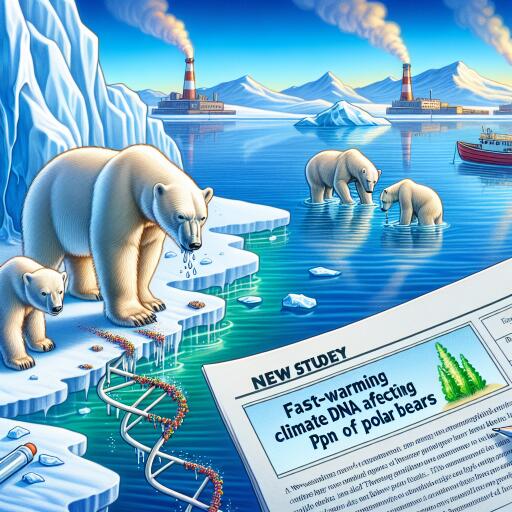
Stress from fast-warming climate visible in DNA of polar bears, says new study
Polar bears living in one of the fastest-heating corners of the Arctic are showing measurable shifts in how their DNA operates, according to new research that links rising temperatures to changes in genetic activity in wild mammals. The findings provide a molecular snapshot of how a rapidly warming climate is pressuring a species already pushed to the edge by shrinking sea ice.
Scientists compared bears from north-eastern and south-eastern Greenland—two regions that now experience very different temperature swings and sea-ice conditions. The south-east, where sea ice is more fragmented and unstable, stood out: bears there showed markedly higher activity in so-called “jumping genes,” mobile DNA elements that can influence how other genes turn on and off.
DNA signals of heat stress and metabolic strain
The heightened activity of these mobile elements clustered around genes linked to heat stress, metabolism, and cellular ageing. In other words, the parts of the genome that help animals cope with environmental stressors appear to be on high alert in bears living with warmer, less predictable ice conditions.
Crucially, the study reports a statistically robust association between regional temperature patterns and the observed genomic changes. Bears in the south-east—where temperatures fluctuate more and sea ice is less reliable—consistently displayed stronger signals of these DNA shifts than their north-eastern counterparts, which inhabit colder, more stable conditions.
Jumping genes, formally known as transposable elements, are a normal part of most genomes. Under environmental stress, they can become more active, altering the way genes are regulated. That can sometimes spark rapid adjustments in physiology, but it can also introduce risks, from disrupted gene function to accelerated ageing. Seeing this machinery rev into higher gear in wild polar bears suggests the animals are experiencing sustained physiological stress tied to their changing environment.
A preview of the Arctic to come
South-eastern Greenland has emerged as one of the warmest, least predictable habitats in the polar bear’s range. Sea ice is thinner and breaks up more readily, temperature swings are larger, and bears face increasing isolation as ice retreats. Researchers describe these conditions as a glimpse of the “future Arctic,” resembling what many polar bear habitats could face by mid-century if heat-trapping emissions continue to rise.
Because polar bears rely on sea ice to hunt seals, shifts in ice formation and stability ripple through the entire population. Reduced hunting opportunities force bears to burn reserves and travel farther, compounding metabolic stress. The new genomic evidence indicates that this ecological pressure is now visible at the molecular level—well before many of its longer-term impacts, such as reduced reproductive success, fully play out.
Global heat records frame an Arctic hotspot
Recent years have rewritten the global temperature record book. After back-to-back record-setting warmth, the world has entered its first multi-year stretch with average temperatures more than 1.5°C above pre-industrial levels. The Arctic, meanwhile, continues to heat at close to four times the global average, turbocharging changes in sea ice, ocean circulation, and weather extremes.
This amplified warming sets the stage for the kind of environmental instability south-eastern Greenland is already experiencing. As sea ice seasons shorten and become less predictable, ice-dependent wildlife confronts a moving target: food availability shifts, migration routes become riskier, and the energy costs of survival rise.
What this means for polar bears
Scientific assessments indicate that without deep and sustained emissions cuts, more than two-thirds of the world’s polar bears could disappear by 2050. Continued warming could push some populations toward local extirpation and drive a broader extinction risk later in the century. The genetic patterns uncovered in Greenland add a new line of evidence, showing how climate stress is not only visible in shrinking habitat and declining body condition, but also etched into the very regulation of polar bear DNA.
Genomic markers like those identified here can serve as early-warning indicators, revealing physiological strain before population declines become irreversible. They also highlight the complex and often hidden ways climate change can affect wildlife—beyond the obvious loss of ice and habitat—to the fundamental processes that keep animals healthy and resilient.
The takeaway
The Arctic is warming at a pace that is reshaping ecosystems and testing the limits of species adapted to cold, ice-laden seas. In south-eastern Greenland, polar bears are not just navigating thinner, more volatile ice; their genomes are responding to the heat. This new window into DNA activity offers an urgent reminder: stabilizing the climate is not only about preserving the places animals live—it’s about protecting the biological machinery that allows them to survive.



Leave a Reply