

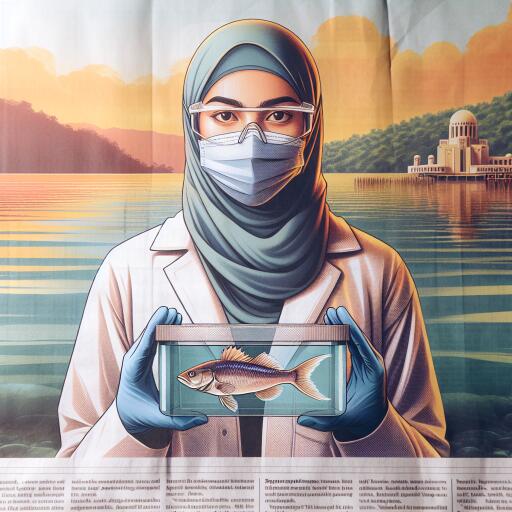
Researcher saves Taal Lake’s fish – Manila Standard
In the shadow of an active volcano, one scientist’s steady, data-driven work has given Taal Lake’s most iconic fish a fighting chance—reviving livelihoods, stabilizing supply chains, and reshaping how inland fisheries are managed in the Philippines.
A lake’s lifeline, rebuilt in the hatchery
For years, maliputo—the prized freshwater trevally of Batangas—was a chef’s delight and a producer’s headache. Unpredictable behavior and poor spawning in captivity forced dependence on wild catch, exposing communities to erratic supply and price swings.
That changed when a team led by fisheries scientist Dr. Maria Theresa Mutia cracked the code on captive breeding. Through painstaking trials, long nights in hatcheries, and meticulous environmental controls, they achieved a reliable spawning and grow-out protocol for maliputo. The result: a sustainable hatchery pipeline that eases pressure on the lake’s natural stocks, supports year-round availability, and opens new income streams for lakeshore families and small enterprises.
What began as a technical challenge ended up as a systems solution—proof that rigorous science can stabilize a value chain from broodstock to market stall.
Tawilis: safeguarding the world’s only freshwater sardine
Tawilis exists nowhere else on Earth but in Taal Lake. Overfishing, water quality declines, and the lake’s volatile geology have repeatedly put this species at risk. Mutia’s research on its biology, spawning patterns, and population dynamics became the backbone of decisive management tools: a closed season during March and April and the formation of protected zones within the lake.
These interventions, grounded in field data rather than guesswork, helped halt declines and gave tawilis room to recover. The turnaround demonstrates how science-led regulation can conserve an ecological treasure while protecting an industry central to food security.
From muddy banks to national policy
Mutia entered public service in 1992 as a young biologist, bringing training in zoology and environmental science from the University of the Philippines Los Baños. Over the next three decades, she rose to lead national fisheries research at the Department of Agriculture’s National Fisheries Research and Development Institute, guiding the sector through intensifying climate and resource pressures.
Her leadership style mirrors the work itself: collaborative, evidence-first, and grounded in field realities. She has consistently credited colleagues, fishers, and local partners—framing her accomplishments as the product of many hands and shared commitment rather than individual effort.
Global recognition for local impact
In 2025, her decades of work earned international acclaim with the Women in Ag Award in Hanover, Germany. She became the first Filipina recognized in the award’s Technology and Research category, joining a cohort of honorees from Europe and Asia and underscoring the rising influence of women in agriculture, fisheries, and environmental innovation.
The honor spotlighted a crucial message: breakthroughs in conservation and production are not at odds. Smart science can protect biodiversity while underpinning resilient economies.
Technology, ecology, and community—and why it all matters
- Resilient supply: Captive breeding of maliputo turns a vulnerable resource into a dependable product, cushioning communities from shocks and seasonality.
- Conservation with teeth: Closed seasons and protected areas for tawilis translate data into enforceable rules that help populations rebound.
- Policy grounded in evidence: Long-term monitoring of stocks and habitats informs regulation, funding priorities, and enforcement strategies.
- Human-centered innovation: Mentorship of young scientists and continuous dialogue with fisherfolk ensure technologies are adopted, adapted, and impactful where they are needed most.
In Taal, ecological complexity is the norm: a deep caldera lake shaped by eruptions, rapid water chemistry shifts, and intense fishing pressure. The work led by Mutia shows how careful experimentation, patient fieldwork, and co-created solutions can tame that complexity just enough to sustain both nature and livelihoods. It is a model for other inland waters under similar strain.
Two emblematic fish—maliputo and tawilis—now stand a better chance of thriving. Their recovery is more than a conservation story; it is a blueprint for science-based stewardship in a climate-challenged century.



Leave a Reply