

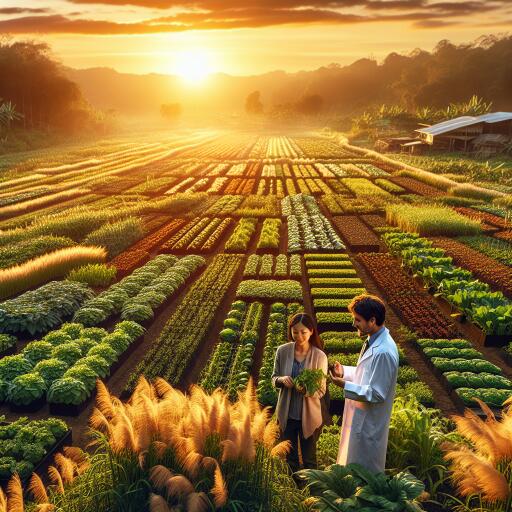
Agroecology in full bloom
For a full week, the fairground at Hotel Africana pulsed with color, song and the scent of fresh earth as farmers, youth groups and cooperatives unveiled a living atlas of Uganda’s food heritage. Stalls brimmed with crops edging toward rarity and with inventive value-added products, signaling a movement that is both conserving biodiversity and reinventing rural livelihoods.
Thirty years of momentum
The occasion marked three decades of Participatory Ecological Land Use Management (PELUM) Uganda, whose network has helped anchor agroecology in the country’s fields and kitchens. Through farmer-to-farmer learning, community organizing and practical training, the movement has championed soil health, seed diversity and low-input systems that make farms more resilient to climate stress. The result is a vision of a food economy that is cleaner, fairer and more self-reliant.
Innovation, rooted in tradition
The exhibition blended the old and the new with disarming ease. Visitors sampled sorghum drinks and millet flours milled by small enterprises, tasted forest honey, and discovered bamboo shoot delicacies (malewa). Shelves carried herbal cosmetics, clarified ghee, crunchy soya snacks and carefully crafted handwork. Each item told a story: value added close to the farm, cultural knowledge kept alive, and income diversified beyond raw commodity sales.
Policy winds at their back
A message delivered on behalf of the trade ministry highlighted how alliances among farmers, researchers and private actors are accelerating. That collaboration is viewed as essential for transforming the entire food chain—strengthening small enterprises, scaling climate-smart techniques and opening doors to markets.
According to the ministry, national policies increasingly emphasize environmentally sound industrialization, technology transfer and wider trade opportunities. This aligns with the country’s long-term development ambitions under Vision 2040, which hinges on a resilient, knowledge-driven economy. The global context is also favorable: the organic and ecological food sector is already valued at roughly $254–318 billion and could approach $500 billion by 2030, signaling strong demand for sustainably produced food.
What must happen next
- Build stronger farmer networks and cooperatives to pool harvests, share know-how and negotiate better market terms.
- Refocus research and extension around agroecological indicators—soil organic matter, on-farm biodiversity, and climate resilience—rather than short-term yield alone.
- Create supportive policies and financing tools that reward good stewardship and long-term land regeneration, from affordable credit to performance-based incentives.
Agroecology as a systems upgrade
Agroecology isn’t simply about replacing inputs; it’s a redesign of the farming system. Intercropping and crop rotations build fertility rather than deplete it. Mulches and composts keep soils alive, boosting water retention and buffering against drought. Local seed networks preserve genetic diversity while lowering costs. When paired with appropriate technologies—like low-cost soil testing, efficient processing equipment and market information platforms—these practices amplify both productivity and profitability.
The fair offered a glimpse of that future: a food system where rural ingenuity meets supportive policy and practical innovation. With better extension, fair financing and market access, smallholders can shift from surviving to thriving—selling more value-added foods, reducing vulnerability to climate shocks and delivering healthier diets for urban and rural consumers alike.
A message that carries beyond the fairground
As the exhibitions wound down, a clear theme resonated: the most powerful farm inputs are knowledge, community and care for living soils. By scaling these principles—while embracing the right tools and partnerships—Uganda can grow a food economy that restores ecosystems, empowers producers and meets rising demand for sustainable, nutritious food.



Leave a Reply