

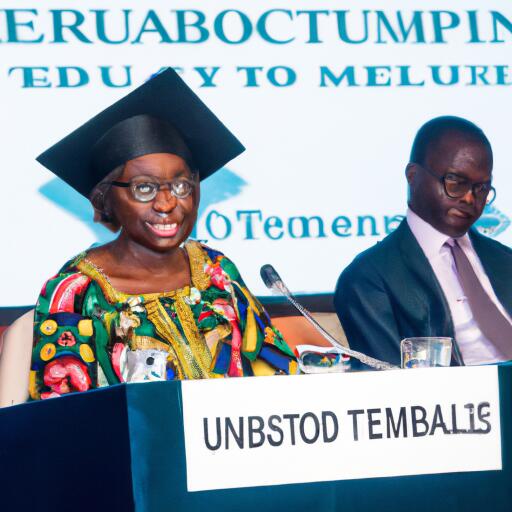
Tinubu Raises Alarm over Rising Graduate Unemployment, Tasks Varsities on Job-driven Curricula
President Bola Tinubu has drawn fresh attention to the surge of university graduates entering Nigeria’s labour market, urging institutions to pivot decisively toward curricula that convert learning into livelihoods. Speaking at the 36th convocation of the Federal University of Technology, Akure (FUTA), he called for academic programmes that blend employability, entrepreneurship, and innovation—especially in sectors powering the nation’s economic transition, from digital services to renewable energy and climate-smart agriculture.
Universities as engines of jobs and innovation
Represented by the Executive Secretary of the National Universities Commission, Prof. Abdullahi Yusufu Ribadu, the president cautioned that the volume of new graduates each year requires universities to rethink how they prepare students for work and enterprise. He emphasized that while government cannot absorb all graduates into public-sector roles, it can—and will—build an enabling environment where businesses can expand and hire.
He highlighted the centrality of science, technology, and innovation to national development, noting policies under way to strengthen education quality, expand research funding, and deepen collaboration between academia and industry. Tinubu underscored that ongoing efforts in the digital economy, renewable energy deployment, and infrastructure upgrades are creating fresh pathways for graduates to contribute to growth, resilience, and community-level development.
Agriculture and the bioeconomy
The president encouraged graduates to see the agricultural value chain as a modern opportunity, not a fallback option. From seed systems and mechanization to cold-chain logistics, processing, and sustainable packaging, agriculture offers multiple entry points for job creation and wealth generation. With climate pressures reshaping food systems, skills in precision agriculture, irrigation management, soil health, and clean energy for agro-processing are increasingly valuable—and compatible with Nigeria’s drive for food security and a greener economy.
Policy tools on the table
Tinubu outlined a suite of measures designed to stabilize and strengthen the tertiary education ecosystem:
- A revitalization blueprint aimed at improving teaching, learning, and institutional governance.
- Expanded interventions through TETFund to support infrastructure, research, and innovation.
- The Nigerian Education Loan Fund (NELFund) to improve access and ease financial barriers for students.
- The Tertiary Institutions Staff Support Fund (TISSF) to cushion rising costs and support university personnel.
He urged universities to deploy these tools strategically to produce graduates who are not only employable but capable of founding companies, commercializing research, and building solutions to real-world problems—especially in clean-tech, off-grid energy, waste-to-value, and other circular economy niches.
FUTA’s climate and technology milestones
FUTA’s Vice-Chancellor, Professor Adenike Temidayo Oladiji, reported that the university retained its spot among Nigeria’s top 10 in the 2025 Times Higher Education rankings, a sign of growing academic and research credibility. She spotlighted two milestones from the past year: the successful hosting of the maiden Colloquium of Tertiary Institutions in Ondo State, and the reconfirmation of the Department of Meteorology and Climate Science as a World Meteorological Organisation Regional Training Centre for another five years.
That WMO endorsement carries particular weight in an era of intensifying extreme weather. Training more specialists in forecasting, climate services, and risk management can underpin smarter infrastructure planning, resilient agriculture, and a thriving renewable energy sector that depends on high-quality wind, solar, and hydrological data.
Ondo State lauds a strategic partner
Ondo State’s leadership commended FUTA as an anchor institution for innovation and a reliable partner in the state’s development agenda. Through stronger university–government–industry linkages, the state hopes to accelerate technology transfer, spin-outs, and place-based projects—from clean energy pilots to climate adaptation initiatives—that create decent jobs and build local capacity.
What this means for graduates
- Build green and digital skills: data analytics, coding, drone mapping, solar design, energy auditing, and sustainable manufacturing are in growing demand.
- Seek industry exposure early: internships, apprenticeships, and cooperative placements ease the school-to-work transition.
- Pursue entrepreneurship: identify problems in power, water, waste, mobility, and agriculture where local solutions can scale.
- Translate research into products: leverage university IP policies, incubators, and funding windows to bring prototypes to market.
- Explore the agri-value chain: logistics, processing, cold storage, and climate-smart inputs are fertile ground for jobs and SMEs.
For Nigeria to reap a demographic dividend, universities must do more than confer degrees—they must activate talent for a changing economy. Tinubu’s message from Akure was unequivocal: tie learning to livelihoods, back research with partnerships and funding, and prepare graduates to power a low-carbon, innovation-driven future. The opportunity is vast; the urgency is real.



Leave a Reply