

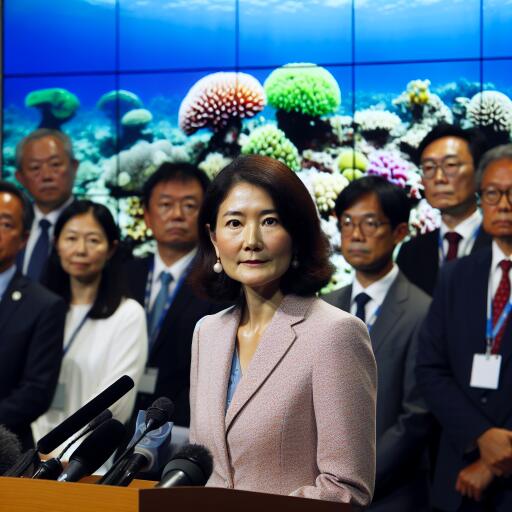
Climate minister presses for stronger action to protect ocean
Fiji has urged the COP30 Presidency to weave ocean protection into the core of the UN climate process, calling for a dedicated Oceans Agenda to steer negotiations and financing. Speaking at a high-level event in Brazil on behalf of the Alliance of Small Island States (AOSIS), Environment and Climate Change Minister Mosese Bulitavu said the health of the ocean underpins climate stability and the survival of island nations.
Putting the ocean at the center of climate decisions
Bulitavu emphasized that for Small Island Developing States, the ocean is both shield and lifeline—buffering coasts from storms, supporting food systems, and sustaining economies. He underscored the scale of the ocean’s climate service: it takes up more than 90 percent of excess heat from human activities, produces roughly half of the planet’s oxygen, and absorbs about a quarter of global carbon dioxide emissions.
Despite this role, he noted, ocean-based climate solutions remain vastly underfunded and are often sidelined in global finance flows. Fiji is pressing for COP30 to be a turning point: integrating the ocean across the UNFCCC agenda—from Nationally Determined Contributions and adaptation planning to climate finance. Countries that have already placed the ocean at the heart of their updated climate pledges were commended, with a call for others to follow.
For Pacific communities, adaptation begins at the shoreline. Fiji highlighted the need to scale nature-based measures such as coral reef restoration, mangrove protection, and wetland conservation—backed by predictable, long-term finance. Stronger regional cooperation, including through platforms like the SIDS Centre of Excellence, was also encouraged to accelerate ocean science, finance access, and knowledge-sharing.
Fiji weighs deeper role in the Beyond Oil and Gas Alliance
Fiji’s Environment and Climate Change Ministry is reviewing a previous cabinet decision on oil and gas policy as it considers strengthening its participation in the Beyond Oil and Gas Alliance (BOGA), a coalition promoting a managed phase-out of fossil fuel production. Officials said they will verify the status of earlier decisions, align across relevant laws, and determine whether to progress through an “associate” stage before moving toward full membership.
Under a stepped approach, Fiji could meet initial commitments first and then scale up. Core membership would see the country rule out new oil and gas exploration licenses and channel more investment into renewable energy and green jobs.
Rural electrification model delivers clean power and resilience
Fiji’s Rural Electrification Fund (FREF) has already brought clean, reliable energy to more than 6,500 people in 20 communities—reducing diesel dependence while reinforcing resilience to extreme weather. The initiative powers cyclone-rated evacuation centers, cold storage for fisheries and agriculture, water systems, digital connectivity, schools, and clinics to keep essential services running during storms.
New solar mini-grids are under construction in Yadrana and Salia (Lau), as well as Kioa and Yacata (Cakaudrove). By April 2026, these systems are slated to provide around-the-clock electricity for households, classrooms, and local enterprises. Technical teams have completed socio-economic and geotechnical assessments for 21 additional communities across Kadavu, Lomaiviti, and Lau; seven sites will be selected for the next phase, alongside an upgrade of Vio Island, where the program first launched.
Each installation is engineered to withstand Category 5 cyclones and includes remote monitoring and telecommunications integration. Community cooperatives are being established to manage the systems and keep benefits local. Fiji’s model is informing similar efforts elsewhere in the Pacific, with Tuvalu developing its own program inspired by FREF’s approach.
Keep the Global Stocktake grounded in science
Fiji also called on negotiators to avoid reopening debates about the role of the Intergovernmental Panel on Climate Change (IPCC), stressing that its authority as the leading source of climate science is well established, including recognition in recent international legal opinions. Officials urged parties to draw on both IPCC assessments and relevant knowledge systems, including indigenous expertise, to inform timely decisions.
Instead of procedural wrangling, Fiji wants the Global Stocktake to focus on urgent priorities: addressing loss and damage, integrating ocean–climate interactions, and tackling non-CO₂ greenhouse gases. The delegation cautioned against late-stage proposals that distract from substantive progress.
Small team, big footprint at COP30
Fiji’s delegation is active across 14 thematic tracks, with participation in nearly a hundred meetings and side events. The country is working closely with regional blocs—including AOSIS, Pacific Small Island Developing States, and Caribbean partners—to consolidate positions and elevate shared priorities. Coordination with Tuvalu, Niue, Solomon Islands, Vanuatu, and Kiribati has strengthened the Pacific voice as the talks move toward political decision-making next week.
Fiji’s negotiators are also underscoring sustainable land use—such as climate-smart farming and irrigation—as part of a broader adaptation strategy that links terrestrial and marine resilience. As the first week of COP30 wraps up, the contours of the negotiations are coming into focus, with ocean stewardship and science-based action emerging as defining tests for the weeks ahead.



Leave a Reply