

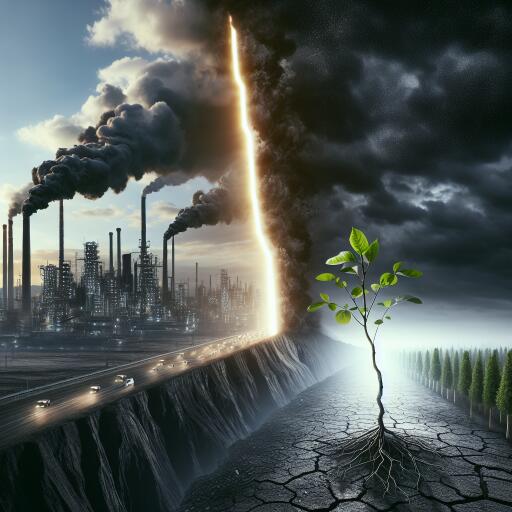
Relentless rise in carbon pollution from fossil fuels slightly dampens climate-fighting hopes
Hopes that global carbon pollution from coal, oil, and gas would finally stop climbing have been deferred yet again. New analyses released alongside the COP30 climate talks show fossil fuel emissions rose by about 1.1% in 2025—another incremental increase that underscores how difficult it has been to bend the curve downward, even as the world races to limit dangerous warming.
While the uptick is modest compared with other pre-pandemic years, negotiators meeting on the edge of the Amazon have repeatedly stressed that the trajectory must shift from growth to steep decline if the Paris Agreement’s temperature goals are to remain within reach. The rise in fossil emissions stands in contrast to the scientific imperative for rapid cuts this decade.
Researchers estimate that burning fossil fuels and producing cement will add roughly 38.1 gigatonnes of carbon dioxide to the atmosphere in 2025—about 42 billion short tons. That equates to nearly 1.2 million kilograms (2.7 million pounds) of heat-trapping gas released every second. Today’s output is more than double what the world emitted in 1983.
Beneath the global total, there are mixed signals. Dozens of economies have managed to grow while cutting fossil fuel emissions—a crucial proof point for decoupling. Yet several large emitters moved in the wrong direction. U.S. emissions, which had been on a declining path for much of the past decade, bounced up by about 2% compared with 2024. In contrast, China’s fossil emissions held roughly steady year-on-year, raising cautious hopes that its peak may be near. Aviation was a clear outlier, with pollution from flying rising an estimated 6.8% between 2024 and 2025.
Another important piece of the puzzle comes from land. Significant reductions in deforestation and other land-use emissions helped to offset the fossil increase, leaving total global greenhouse gas output roughly flat compared to last year. That improvement on the land side, however, cannot mask the central challenge: cutting fossil fuel emissions is the indispensable lever to stop adding heat to the planet.
Parallel assessments of policy trajectories suggest the world’s temperature outlook remains stubbornly high. Analyses of current measures place Earth on track for about 2.6°C of warming above preindustrial levels—slightly lower than last year’s estimate, but largely due to updated accounting rather than fresh policy gains. When countries’ current pledges are fully factored in, the projected warming improves to around 2.2°C. Even that, however, overshoots the 1.5°C threshold that scientists identify as the safest guardrail, beyond which the risks of extreme heat, drought, floods, and ecosystem loss grow sharply.
The last several years have not delivered the transformative acceleration many had hoped for. Some national rollbacks have nudged projections in the wrong direction, offsetting incremental advances elsewhere. The message from researchers is clear: without a change in political momentum and implementation on the ground, incremental progress will not prevent a hotter, harsher future.
Still, there are threads of progress to pull. Record additions of wind and solar power, the rapid fall in battery costs, the spread of electric vehicles, and expanding heat pump adoption are reshaping energy systems. Methane controls in oil and gas operations, if rigorously enforced, can deliver fast climate benefits. And policies that successfully drive down deforestation—where they exist—are showing tangible results that can be replicated and scaled.
What would it take to bend the emissions curve decisively? Analysts point to five priorities:
- Accelerate clean electricity to displace coal and gas, backed by storage and modern grids.
- Supercharge efficiency in buildings, industry, and appliances to cut energy demand.
- Electrify transport and heating, while expanding public transit and active mobility.
- Crack down on methane and other non-CO2 pollutants across energy, agriculture, and waste.
- Protect and restore forests and ecosystems, anchoring durable declines in land-use emissions.
The stakes are immediate. Each year of rising fossil emissions locks in additional warming, intensifies extreme weather, and narrows the path to stabilizing the climate. Conversely, each year of decline reduces risks, improves public health, and strengthens energy security.
COP30’s challenge is to turn scattered bright spots into a synchronized global downturn in emissions: peaking everywhere as soon as possible and then falling rapidly. With current policies pointing toward around 2.6°C and today’s pledges toward roughly 2.2°C, the world has clear distance to travel. The next steps taken—especially by the largest emitters—will determine whether the future edges closer to 1.5°C or drifts further toward a world transformed by heat.



Leave a Reply