

China’s power paradox: record renewables, continued coal
China is racing ahead on two tracks at once: it is rolling out clean power at an unprecedented pace while continuing to add new coal capacity. This uneasy duality matters far beyond its borders. As the world’s largest source of greenhouse gas emissions and the biggest builder of wind and solar, China’s choices will set the tone for the global energy transition and the planet’s climate trajectory.
A clean-energy boom without precedent
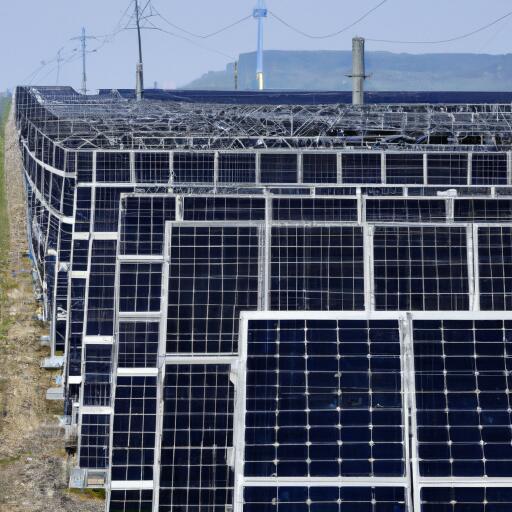
Across vast deserts, rooftops, and coastal shallows, China has unleashed a surge of solar panels, wind turbines, and long-distance power lines. Utility-scale solar parks stretch to the horizon in arid provinces; offshore wind arrays now stud the eastern seaboard. Battery factories and electric-vehicle supply chains anchor a domestic market that absorbs massive volumes of clean power equipment. New transmission corridors knit together energy-rich regions in the west with industrial hubs along the coast.
Behind the buildout is a policy mix that combines industrial strategy, large-scale procurement, and relentless cost compression. Falling hardware prices have turned once-costly technologies into workhorses of the grid. Provinces compete for investment, while state-owned utilities push to integrate ever-larger shares of variable generation. The outcome is a record-setting expansion of renewables that has altered the shape of China’s power system in just a few years.
Why coal is still growing
Yet coal remains deeply embedded. Several factors explain why plants continue to be approved and built even as clean power soars.
- Energy security: After power shortages and drought-hit hydropower years, planners seek firm capacity that can respond on demand. Coal, with abundant domestic supply and well-established logistics, is seen as insurance against volatility.
- Grid flexibility gaps: Wind and solar ramp up and down with the weather. When storage, demand response, and interprovincial trading lag behind, system operators turn to coal as a stabilizer.
- Provincial incentives: Local governments view coal projects as tools for growth, tax revenue, and employment, especially where heavy industry dominates.
- Industrial restructuring: Some new units are billed as replacing small, inefficient boilers with more efficient, “flexible” plants intended to run at lower capacity but respond quickly to peaks.
In practice, these dynamics translate into a pipeline of projects that risks locking in emissions and crowding out cleaner solutions if not managed carefully. Even if plants are used sparingly, once built, they can persist for decades.
The grid is the bottleneck—and the key
China’s challenge is less about adding more turbines and panels and more about making them count every hour of the year. Curtailment—when available renewable electricity is not used because the grid cannot absorb it—still occurs in some regions. Smoothing out these mismatches requires a suite of measures:
- Energy storage: Batteries and pumped hydro can shift solar noon peaks into evening demand and cushion wind variability.
- Flexible operations: Retrofitting coal units to ramp quickly, coupled with market rules that reward flexibility rather than baseload hours, reduces the need for new coal capacity.
- Demand-side response: Pricing and digital controls can nudge factories and buildings to consume power when it is plentiful and clean.
- Stronger interconnections: Moving surplus renewable power across provinces evens out local weather patterns and demand swings.
These solutions exist and are scaling, but they must outpace both electricity demand growth and the inertia of legacy systems. When they do, the rationale for additional coal capacity weakens sharply.
Hydropower swings and industrial demand
Hydropower has long been a cornerstone of China’s low-carbon electricity. Drought years, however, highlight its vulnerability to climate variability, forcing more reliance on coal and gas to fill gaps. At the same time, electricity demand continues to climb as data centers, electrified transport, and advanced manufacturing expand. Aligning this rising load with clean supply will require meticulous planning—anticipating dry hydro seasons, building seasonal storage, and steering new electricity-hungry industries toward regions rich in renewable resources.
The policy equation
Beijing has pledged to peak carbon emissions before 2030 and reach carbon neutrality by 2060. Within that arc, the “new energy system” under construction is increasingly centered on renewables. The policy pivot now is from how many gigawatts get installed to how reliably the system can operate with a high share of wind and solar. Capacity markets, ancillary service reforms, and performance standards for flexibility can accelerate the shift. So can clear retirement pathways for the oldest, least efficient coal units.
What to watch next
- Utilization rates: If new coal plants run fewer hours, serving mostly as backup, emissions growth can be constrained even as nameplate capacity rises.
- Storage deployment: Rapid additions of batteries and pumped hydro will determine how efficiently China uses its surging solar and wind output.
- Interprovincial power trading: More transparent, market-based exchanges can reduce curtailment and reliance on local coal.
- Industrial electrification: Shifting steel, chemicals, and cement toward cleaner electricity and hydrogen will expand demand but also unlock deeper decarbonization.
The paradox is real but not immutable. China has the manufacturing base, engineering capacity, and policy levers to reconcile reliability with decarbonization. If the country channels its record-breaking renewable momentum into a more flexible grid—and resists overbuilding coal—the world’s largest power system could become a template for balancing growth, security, and climate goals. The stakes extend far beyond national borders: how China resolves its power duality will shape the global carbon budget for decades to come.



Leave a Reply