

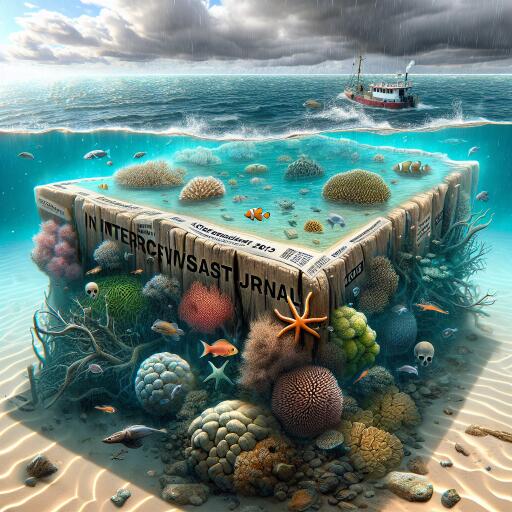
Great Barrier Reef Confronts ‘Catastrophic’ Threats – Here’s Why Hope Remains – Internewscast Journal
The world’s largest coral ecosystem is sending an unmistakable warning: the Great Barrier Reef is under severe and escalating stress. Repeated marine heatwaves and intensifying climate shocks have pushed parts of the reef beyond historic limits. Scientists describe the threat as existential, with the next decade poised to determine whether key habitats endure or unravel. Yet even amid stark risks, new momentum in clean technology and practical conservation offers a credible pathway to protect what remains—and help the reef recover where it still can.
A living wonder at a breaking point
Corals thrive within a narrow band of ocean temperatures. When waters stay unusually warm, corals expel the symbiotic algae that feed them, leading to bleaching. If heat stress persists, many corals die. The Great Barrier Reef has endured multiple mass bleaching events in recent years, driven by record-breaking sea-surface temperatures and the steady backdrop of human-caused warming. Added pressures—ocean acidification, powerful cyclones, sediment runoff from land, and periodic outbreaks of crown-of-thorns starfish—compound the damage, leaving some reefs with less time to recover between shocks.
Crossing “critical thresholds” means bleaching becomes more frequent and severe than the reef’s natural recovery cycles can accommodate. Without rapid cuts to global heat-trapping emissions, projections indicate a growing share of coral communities could face chronic heat stress within the coming decade, tipping the system toward long-term decline.
What “catastrophic” could look like
Coral reefs support extraordinary biodiversity and sustain food webs from fish to seabirds. They buffer shorelines from storms, underpin tourism economies, and hold deep cultural significance for coastal and Indigenous communities. A rapid loss of coral cover would ripple far beyond the reef itself—reducing fish nursery habitats, weakening natural coastal defenses, and imperiling livelihoods that depend on a healthy, vibrant seascape. The ecological cascade is not hypothetical; it is already visible in degraded sections where repeated bleaching has favored hardier but less complex species, flattening the reef’s architectural richness.
Reasons for cautious optimism
Despite the gravity, the Great Barrier Reef retains a capacity for renewal if thermal stress is curbed. Some reefs show pockets of resilience, including corals adapted to warmer conditions and areas that have bounced back during cooler years. Local stewardship is also making a difference: targeted efforts to reduce land-based pollution, restore wetlands, and control crown-of-thorns starfish outbreaks can improve water quality and give corals a fighting chance. Emerging restoration work—such as selectively breeding heat-tolerant corals and reseeding damaged areas—cannot replace the need to stabilize the climate, but it can help safeguard genetic diversity and accelerate recovery in strategic sites.
The clean-tech surge changing the outlook
The pace of change in the global energy system is accelerating. Solar power, batteries, electric vehicles, and heat pumps are scaling faster and becoming cheaper than many expected just a few years ago. As these technologies proliferate and grids modernize, fossil fuel demand growth is slowing and, in some sectors, reversing. This matters profoundly for coral reefs: every fraction of a degree of avoided warming reduces the frequency and severity of marine heatwaves.
Paired with methane reductions, improved energy efficiency, and the protection and restoration of carbon-rich coastal habitats like mangroves and seagrasses, the clean-tech surge can bend the climate curve. That combination won’t spare the reef from all future bleaching, but it can prevent the worst-case scenarios and keep open a window for recovery.
What must happen now
- Rapidly reduce greenhouse gas emissions this decade, with deep cuts to coal, oil, and gas and swift expansion of renewables and storage.
- Slash methane and other short-lived climate pollutants to curb near-term warming and extreme heat events.
- Protect and restore blue carbon ecosystems—mangroves, seagrasses, and saltmarshes—that store carbon, filter water, and shield coasts.
- Improve water quality by reducing sediment and nutrient runoff through better land management, wetland restoration, and sustainable agriculture.
- Scale up reef stewardship: crown-of-thorns control, targeted restoration, and long-term monitoring with Indigenous knowledge and local communities at the forefront.
- Strengthen climate adaptation for coastal towns and tourism operators, integrating science, traditional custodianship, and citizen science to guide decisions.
Holding on to a narrowing but real chance
It is not too late to change the trajectory. The Great Barrier Reef has survived past upheavals because of its capacity to adapt across space and time. That resilience is being tested as never before—and it depends on choices made now. By accelerating the clean-energy transition, cutting pollution on land and at sea, and investing in smart, science-led restoration, we can preserve the reef’s living mosaic for future generations. The window is narrowing, but hope remains grounded in action, not wishful thinking.



Leave a Reply