

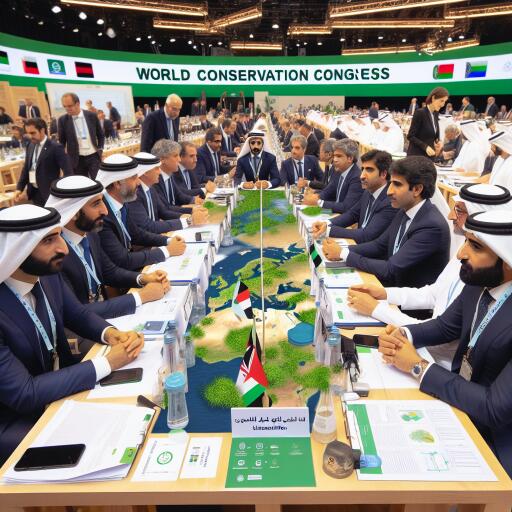
UAE companies drive sustainability at IUCN World Conservation Congress
At the IUCN World Conservation Congress, a cohort of UAE-based innovators spotlighted how technology, creative finance, and education are converging to protect biodiversity and accelerate climate action. From mangrove restoration and marine monitoring to school beekeeping and fungal conservation, these initiatives reflect a growing private-sector role in the country’s ecological transition.
Art, carbon finance, and storytelling unite for conservation
A new creative platform called “Archipel” is using immersive storytelling to channel resources into real-world environmental projects. Conceived by French digital artist Yacin Ait Kaci, the fictional archipelago features imaginative islands inspired by local conservation stories, with their impact amplified through certified carbon credits. The model blends cultural outreach with tangible climate finance and partnerships with NGOs, with expansion planned across the GCC and a strong emphasis on the UAE. In essence, it turns narrative power into a pipeline for funding ecosystem protection and community engagement.
Mangrove tech and marine data: scaling blue carbon solutions
UAE climate-tech venture Nabat showcased a conservation technology suite, including an interactive installation built around live mangroves. The company is advancing large-scale mangrove restoration in the UAE and the wider region, working closely with the Environment Agency – Abu Dhabi in a long-term alliance aimed at rebuilding coastal forests that buffer shorelines, lock away carbon, and shelter marine life. Nabat also announced a collaboration with the Yas SeaWorld Research & Rescue Centre to deploy monitoring for marine life and seagrass habitats, strengthening the data backbone needed for blue carbon management and coastal resilience.
Designing cities where nature can thrive
Terra, the Sustainability Pavilion at Expo City Dubai, presented urban biodiversity strategies tailored for arid environments. The pavilion’s programs illustrate how cityscapes can be reimagined to support pollinators, shade-giving native plants, and ecological corridors. One standout initiative is “Hundred Hives,” a first-of-its-kind school beekeeping program launched in the UAE. By providing equipment, training, and ongoing guidance, the project enables students and teachers to take practical action for pollinators—vital allies for urban gardens, local agriculture, and native flora. Beyond the immediate ecological benefits, the program also cultivates climate literacy and community stewardship.
Fungi in focus: a regional first for species survival
In a significant step for underrepresented species, Terra also highlighted the Middle East’s first Centre for Species Survival dedicated to fungi under the IUCN umbrella. The centre aims to study more than 1,300 threatened fungal species and translate research into solutions with broad benefits—from carbon storage and soil restoration to potential breakthroughs in medicine. Elevating fungi within conservation priorities helps repair entire ecosystems, since healthy fungal networks support plant communities, bolster water retention, and improve soil structure in harsh climates.
Bridging science and policy on climate resilience
Researchers from Sorbonne University Abu Dhabi are convening a panel on sustainability and climate change that underscores the vital connection between evidence and action. The discussion zeroes in on the strategic role of mangrove forests in the UAE’s climate future—both as carbon sinks and coastal shields—and explores how advanced technologies can improve restoration outcomes, monitoring, and policy design.
Alongside the panel, the university is co-hosting a workshop on biodiversity monitoring that brings AI and robotics into the conservation toolkit. The agenda includes sensor networks, autonomous platforms, and machine learning for species identification and habitat assessment, as well as strategies to involve young people in safeguarding the country’s natural heritage. Together, these efforts reflect a shift toward data-rich decision-making and inclusive participation.
A blueprint for regional leadership
Viewed together, the projects showcased at the Congress form a pragmatic blueprint: pair creative engagement with credible carbon finance; blend restoration with real-time monitoring; bring biodiversity into the heart of urban planning; and connect research directly to policy and education. By mobilizing private-sector capabilities and cross-sector partnerships, UAE organizations are positioning the country as a hub for conservation innovation—where ecological health, community involvement, and technological excellence reinforce one another.



Leave a Reply