

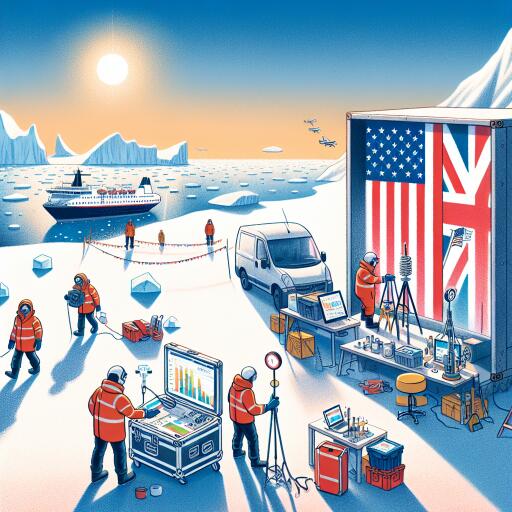
UK spearheads polar climate change research as US draws back
Britain’s flagship polar research vessel is setting course for Antarctica next week, kicking off a packed season of climate investigations just as the United Kingdom and other nations amplify their work in the region and the United States scales back its presence.
The RRS Sir David Attenborough, a 15,000-tonne icebreaker operated by the British Antarctic Survey (BAS), will deliver scientists and gear to projects ranging from tracking powerful internal waves beneath the ocean surface to measuring glacier thinning and surveying whale populations. With a helipad, on-board laboratories, and advanced oceanographic equipment, the vessel is designed to keep research going through the Southern Ocean’s notorious swells and ice-choked waters.
Why Antarctica’s changes reach us all
Antarctica shapes the planet’s climate in profound ways. Its ice sheets hold enough water to raise global sea levels by many meters, and the surrounding Southern Ocean is a major engine of global heat and carbon cycling. Researchers emphasize that disturbances there ripple outward—altering sea levels, weather patterns, and marine food webs far from the pole.
Among the priorities this season is sustained work on the Thwaites Glacier, sometimes dubbed the “Doomsday Glacier” because of its potential to drive significant sea-level rise if destabilized. UK scientists are working alongside colleagues from the Korean Polar Research Institute to keep a close eye on how warm water is interacting with Thwaites’ vulnerable underbelly and how quickly ice is thinning and retreating.
A shifting landscape in polar science
While European and Asian partners have stepped up Antarctic field campaigns, the US is reducing its dedicated research icebreaking capacity. Plans to replace or lease key Antarctic-capable vessels have stalled, even as American attention has tilted toward security and economic interests in the rapidly changing Arctic. The recalibration opens doors for others to expand scientific leadership—but also raises questions about who fills the gap and how research priorities are set.
UK officials say their approach is clear: widen collaboration and accelerate evidence gathering on climate risk. British teams will continue joint expeditions with multiple partners and maintain open data practices to build a global picture of change at the bottom of the world.
From ice to megafauna: science across the spectrum
The Attenborough’s itinerary is anchored by a call at BAS’s main Antarctic hub, Rothera Research Station, on the west side of the Antarctic Peninsula, where a new high-efficiency facility, the Discovery Building, has expanded lab and logistics capacity. Weather permitting, the vessel will then fan out to additional stations and remote field sites to support a wide slate of studies:
- Glaciers and sea-level rise: Autonomous submersibles and ship-based sensors will measure ocean temperature, salinity, and circulation near critical glaciers to refine projections of ice loss and coastal impacts worldwide.
- Internal waves and ocean mixing: Scientists will “hunt” powerful internal waves—sometimes likened to underwater tsunamis—that drive vertical mixing, influencing nutrient pathways, heat distribution, and the behavior of vast water masses encircling Antarctica.
- Past climates from ice cores: By analyzing bubbles and chemicals trapped in ancient ice, some hundreds of thousands of years old, teams will reconstruct temperature, greenhouse gases, and volcanic signals to contextualize today’s rapid changes.
- Marine ecosystems and whales: The Wild Water Whales initiative will use drones, photo-identification, and small biopsy samples to assess the status of blue and humpback whales and the condition of their habitat.
Whale science offers a rare dose of optimism: after being pushed to the brink by industrial hunting in the 20th century, humpback populations in parts of the Southern Ocean have rebounded to an estimated fraction approaching two-thirds of historical levels. Yet the recovery remains fragile. Warming and shifting sea-ice conditions affect krill—the foundational prey for many whales, penguins, and seals—potentially reshaping the entire food web.
A ship built for the job
Designed expressly for polar work, the RRS Sir David Attenborough couples endurance with scientific versatility. A robust hull and propulsion system enable icebreaking, while its motion-damping features and deck layout allow safe operations in rough seas. A 50-tonne crane can deploy heavy oceanographic packages and submersible robots, and standard CTD rosettes will profile conductivity, temperature, and depth to map the structure of the water column.
The vessel’s labs and data systems support rapid sample processing and onboard analysis, critical for time-sensitive measurements in remote conditions. Helicopter flights extend reach across sea ice and rugged coastlines, enabling instrument drop-offs, wildlife surveys, and access to sites unreachable by boat.
Global stakes, urgent timelines
Antarctica’s transformation is not a distant curiosity; it is a near-term driver of coastal risk, weather extremes, and ocean change across the globe. With one major research power stepping back, the UK and a widening circle of partners are moving to ensure year-round observations continue. The work ahead—pinpointing how fast ice will retreat, how currents will shift, and how ecosystems will respond—will shape adaptation plans for cities, fisheries, and infrastructure for decades to come.
As the Attenborough turns south, the message from the science community is plain: the window to capture critical data is open now, and the world cannot afford blind spots at the bottom of the Earth.



Leave a Reply