

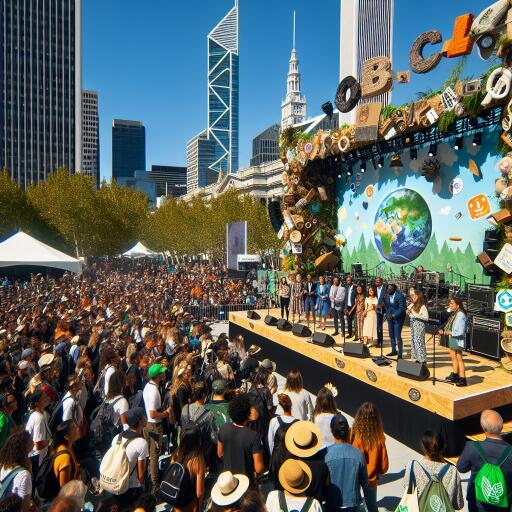
Baku Climate Action Week kicks off
Baku opened its doors today to a new edition of Climate Action Week, launching five days of policy forums, community initiatives, and technical workshops that place implementation at the center of the climate conversation. Running from September 29 to October 3, 2025, the gathering builds on last year’s momentum and aims to turn pledges into practical steps across sectors and scales.
Following the inaugural Baku Climate Action Week held ahead of Azerbaijan’s hosting of COP29, this second gathering returns with a broadened agenda and a sharper focus on delivery. Organizers and participants are expected to translate lessons learned into real-world projects—from retrofitting buildings and upgrading grids to nature-based solutions that protect people and ecosystems.
Climate action weeks hosted around the world have emerged as dynamic platforms that accelerate local and regional efforts while reinforcing international climate diplomacy. They complement the United Nations climate process by aligning cities, regions, and industries with global milestones, helping to raise ambition and speed up progress in the run-up to major conferences.
Key themes shaping the week
- Resilience and adaptation: Practical pathways for managing heat, water stress, and climate-related hazards, with an emphasis on early warning systems and climate-smart infrastructure.
- Energy transition: Scaling renewables, modernizing transmission networks, reducing methane and other non-CO2 emissions, and boosting energy efficiency in buildings and industry.
- Clean transport and urban air quality: Strategies for low-emission mobility, electrification of fleets, and planning compact, accessible cities.
- Finance and markets: Unlocking investment for adaptation and mitigation, de-risking projects, and mobilizing public-private partnerships.
- Nature-based solutions: Restoring degraded landscapes, safeguarding biodiversity, and strengthening coastal and riparian ecosystems linked to the Caspian basin.
- Inclusive participation: Elevating youth leadership, community perspectives, and just transition principles to ensure benefits reach workers and vulnerable groups.
- Measurement and transparency: Improving data, tracking progress, and sharing replicable models that can be adopted across municipalities and regions.
Why Baku—and why now
As a crossroads between the Caspian, the Caucasus, and Central Asia, Baku sits at the confluence of energy systems, trade routes, and diverse ecosystems. The region faces rising temperatures, periodic drought, and coastal vulnerabilities, while also offering vast potential for wind and solar, grid interconnections, and large-scale efficiency gains. The city’s convening power provides a venue to connect local needs with regional opportunities and to build partnerships that outlast the event itself.
What outcomes to look for
While this is not a formal negotiating session, climate action weeks often catalyze specific deliverables that feed into broader processes. Participants may announce updated or sector-specific plans, new coalitions focused on areas like methane reduction or renewable integration, investment roadmaps for resilience, pilot projects in cities and industries, and education programs that build a skilled green workforce. Such commitments can help close the gap between targets and tangible progress.
From talk to transformation
Across the coming days, the emphasis is expected to stay on practical implementation: procurement frameworks that favor low-carbon solutions, standards for resilient construction, nature-positive planning, and community-led initiatives that improve health and livelihoods. Sessions typically bring together government officials, technical experts, businesses, researchers, and civil society to share solutions that are scalable, financeable, and ready to deploy.
As the event unfolds, the central message is clear: accelerating climate action requires connecting global ambition to local delivery. By convening diverse actors and focusing on concrete steps, Baku Climate Action Week aims to turn strategies into outcomes that can be measured in cleaner air, safer neighborhoods, safeguarded ecosystems, and resilient economies.
The program runs through October 3, with a full slate of discussions and demonstrations designed to convert momentum into measurable results across the region and beyond.



Leave a Reply