

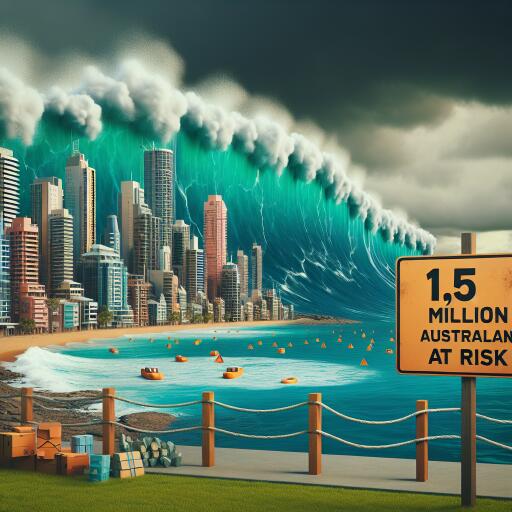
Rising seas are already putting 1.5 million Australians at risk – TyN Magazine
Australia’s first nationwide climate risk stocktake delivers a stark warning: by mid-century, sea-level rise could place 1.5 million coastal residents in harm’s way. It’s part of a broader pattern the assessment outlines—intensifying heatwaves, worsening floods, and more frequent bushfires—threatening lives, livelihoods, ecosystems and the services that underpin daily life.
The report examines pressure points across society, from healthcare and housing to transport, energy, and the natural environment. It concludes that climate impacts are not evenly shared. Those already facing disadvantage—low-income households, regional communities, older people, and those with limited access to services—bear the greatest risks and have the fewest resources to adapt. The call to action is clear: close the “adaptation gap,” design policies that reduce inequality, and rigorously track progress at local and national levels.
Australia’s climate risk snapshot
Sea-level rise is the most visible threat to the nation’s coastal fringe, where infrastructure, tourism and high-value property concentrate. Inundation, erosion and saltwater intrusion will stress housing, roads and water systems, and force tough choices about defenses, redesign and—where necessary—orderly retreat. At the same time, scorching summers and compound drought-fire-flood cycles will strain hospitals and emergency services, disrupt supply chains, and degrade ecosystems already under pressure. The assessment urges early investment in heat-safe housing, resilient infrastructure, better land-use planning, and nature-based buffers such as wetlands and mangroves to blunt storm surges and store carbon.
Global signals: climate, nature and society
- Lives upended by extreme floods in South Asia: Months into the monsoon, more than two million people have been evacuated from Punjab province as rivers overtopped their banks. The disaster is deepening food insecurity and pushing up prices of staples such as rice and sugarcane. Rescue operations remain perilous, and memories are still raw from the catastrophic 2022 floods that killed over 1,700 people and devastated cropland.
- Turning the tide on overfishing: A landmark global agreement to curb harmful fishing subsidies has entered into force, barring government support for illegal, unreported and unregulated fishing and for activities that drive stock depletion. The move aims to protect marine life, safeguard food security and support the long-term viability of coastal economies.
- Sport in a warming world: An assessment of the 2026 men’s football World Cup venues warns that 10 of 16 host locations face very high risk of extreme heat stress, endangering players and fans. Climate exposure is not limited to heat: annual flood-related damages to stadiums are projected to rise from roughly $11 million in 2025 to more than $15.5 million by 2050, underscoring how climate risk is redefining mass events.
- Policy uncertainty in Europe: European Union countries have delayed a decision on adopting a 2040 climate target, including a proposed pathway for a 90% cut in net greenhouse gas emissions from 1990 levels. Ministers will continue discussions, with final decisions expected to be elevated to heads of government.
- Koala conservation breakthrough: After years of development, a vaccine to tackle the chlamydia epidemic in Australian koalas has been approved for rollout. With infection rates reported as high as 70% in some colonies, the intervention could be pivotal for a species already strained by habitat loss and heat stress.
- Teaching resilience from the ground up: Spain will introduce compulsory lessons on floods, wildfires, earthquakes and other hazards for more than 8 million students across 25,000 schools. Younger pupils will receive a minimum of two hours of instruction, while older students will receive at least four—an early investment in preparedness as extremes intensify.
SDGs at a crossroads
With just a few years left until 2030, the world is falling short on its promise to deliver the Sustainable Development Goals. Only about 18% of targets are on track; nearly half are moving too slowly, and close to a fifth are slipping backwards. Major gains in health, education, clean energy and digital access show what’s possible—but the overall pace is insufficient. Global meetings in New York this week (22–26 September) aim to accelerate progress with fresh finance, policy alignment and locally grounded action.
Deep-sea mining debate intensifies
Demand for critical minerals—cobalt, nickel, lithium and others—continues to grow with the clean energy transition. One option, mining the deep seabed, remains highly contentious. The International Seabed Authority is tasked with governing resources in areas beyond national jurisdiction, yet scientists and governments are urging caution. Nearly 1,000 marine experts from more than 70 countries have called for a moratorium, and 38 countries now support some form of pause or ban. The core concern: mining could damage fragile deep-ocean ecosystems before their biodiversity and climate roles are fully understood.
What it means
Australia’s coastal warning is a microcosm of a global story: climate impacts are arriving faster than protections, and the costs of delay are mounting. Three priorities emerge:
- Protect people now: Scale heat action plans, early warning systems, climate-smart housing and nature-based defenses. Embed equity so support reaches those most at risk.
- Invest for resilience: Upgrade infrastructure to withstand water, heat and fire; reform land-use planning; and mainstream climate risk disclosure to steer capital toward safer, greener assets.
- Safeguard nature while decarbonizing: Phase out subsidies that harm ecosystems, strengthen ocean governance, and ensure mineral supply chains for clean energy do not sacrifice biodiversity—including in the deep sea.
The science is unambiguous, and the solutions are well understood. What matters next is delivery at scale: policies that endure, finance that flows to where it’s needed, and communities empowered to adapt. Rising seas along Australia’s shores are a warning line we can still heed—if we choose to act with the urgency the moment demands.



Leave a Reply