

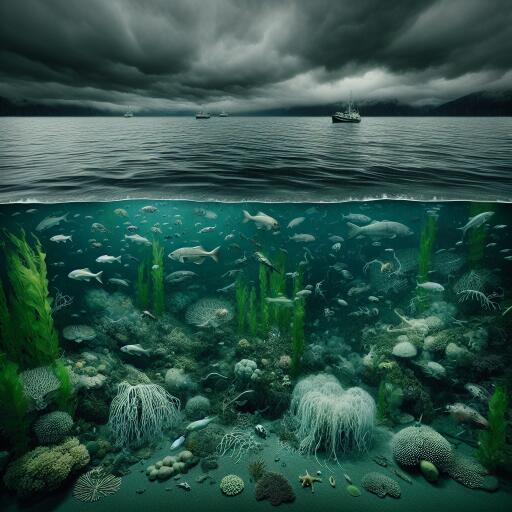
Alarm over oxygen-poor ‘dead zones’ on BC coast
Oxygen-starved “dead zones” are emerging in the deep waters off British Columbia’s Central Coast, raising urgent concerns for one of Canada’s most productive marine regions. New observations point to widespread hypoxia—oxygen levels too low to support many forms of marine life—now taking hold in Queen Charlotte Sound.
What hypoxia means for the ocean
When dissolved oxygen drops below about two milligrams per litre, many crabs, fish, sea stars, anemones and other seafloor organisms begin to struggle or die. Such conditions are appearing more frequently and over larger areas as climate change warms the ocean and reduces the amount of oxygen it can hold. The Central Coast is now showing signs of this global shift, with deep layers of water slipping under the threshold necessary to sustain normal marine communities.
What the data are showing
Extensive measurements in 2022 and 2023 revealed large swaths of low-oxygen water in Queen Charlotte Sound. Preliminary results from 2024 and early 2025 indicate the trend has not relented. Projections suggest that by mid-century, roughly half of the seafloor in the sound could be hypoxic during summer, along with about 40 percent of the water deeper than 100 metres.
Those figures imply a major restructuring of ecosystems. The sound supports ancient glass sponge reefs and significant commercial fisheries for groundfish such as halibut, rockfish and hake. It also sits within the Great Bear Sea (BC Northern Shelf bioregion), where new marine conservation areas are being designed. Persistent low oxygen would reverberate across these habitats and management efforts.
Ripple effects for fisheries and wildlife
Bottom-dwelling animals are particularly vulnerable because they cannot easily flee hypoxic water. Fish often can move, and may abandon areas as oxygen declines, redistributing populations and potentially complicating stock assessments. Large-scale die-offs—like those that have periodically struck Dungeness crab populations just to the south off Washington and Oregon—are a growing risk if conditions deteriorate further.
Keeping a close eye on oxygen levels could help managers anticipate trouble spots, identify refuges where species might persist, and adapt harvest plans for the species most sensitive to low-oxygen stress.
Why it’s happening here
The low-oxygen water bathing the BC shelf doesn’t form locally; it arrives from far offshore, shaped by the vast North Pacific circulation. Deep ocean layers that eventually return to the coast are influenced by conditions in the subarctic Pacific, thousands of kilometres away. Warmer winters and altered storm patterns reduce mixing of atmospheric oxygen into the ocean. On top of that, meltwater and increased rainfall can create fresher surface layers that act like a lid, further limiting oxygen transfer to deeper waters.
These waters take eight to ten years to complete their circuit and make their way back to North America. By the time they rise onto the continental shelf, they already carry less oxygen than in decades past. Once near the coast, natural upwelling brings these deep, nutrient-rich waters toward the surface, fueling intense plankton blooms. As the blooms die and sink as “marine snow,” bacteria consume oxygen while decomposing the organic matter, pushing the deeper layers even closer to hypoxic conditions. The result is a one-two punch: offshore waters arrive with a deficit, and coastal productivity further depletes what’s left.
How scientists are tracking the decline
The latest picture of oxygen change blends nearly two decades of historical records from ships with dense, year-round measurements collected by autonomous ocean gliders. These torpedo-shaped robots repeatedly dive from the surface to the seafloor, capturing high-resolution profiles of oxygen, temperature and salinity across seasons and storms that would otherwise keep researchers at dock. The continuous coverage reveals not just snapshots but the evolving anatomy of low-oxygen layers—how deep they lie, how thick they grow and when they intrude onto the shelf.
From open ocean to inlets
The Central Coast’s fjords—such as Knight, Bute and Rivers inlets—depend on exchanges with the sound to replenish oxygen at depth. If the broader region trends toward hypoxia, those inlets could receive increasingly depleted waters, imperiling the ecosystems and fisheries they support. Symptoms may include stressed or disappearing seafloor communities, altered food webs and greater sensitivity to heatwaves or harmful algal blooms.
What comes next
Recent events appear unprecedented in the available record for this region, and the trajectory points toward worsening conditions in coming decades without swift climate action. While local management cannot fix the offshore drivers, it can buy time by reducing additional pressures—setting conservative catch limits where species are most vulnerable, protecting likely refuges, and curbing pollution and habitat damage that compound low-oxygen stress.
The emerging dead zones off BC are not just an abstract climate signal. They are a direct, measurable disruption to the life support system of the coast—one that is now arriving on the seafloor, in the nets of fishers and, if unchecked, into the sheltered inlets that define the region’s identity.



Leave a Reply