

Sustainable trade in wildlife products – SANBI
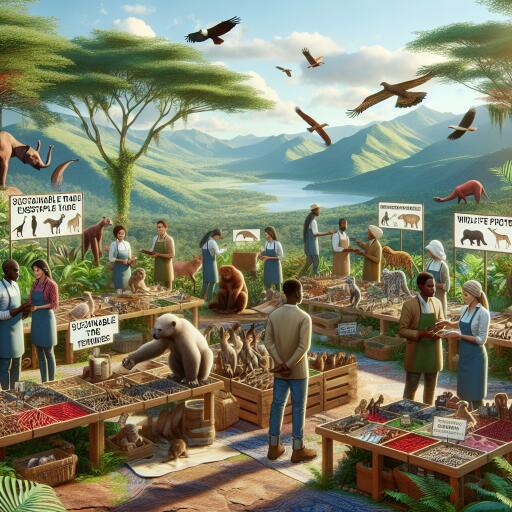
South Africa’s biodiversity economy is booming, but so is the need for rigor. A national programme led by the South African National Biodiversity Institute (SANBI) works across all nine provinces to ensure that wildlife products in commerce—from medicinal plants to reptiles and cycads—are used responsibly. By blending field ecology, forensic science, and digital tools, the initiative turns complex trade dynamics into practical guidance for regulators, researchers and communities.
Why sustainable trade matters
Many native species still enter markets directly from the wild. Demand comes from traditional and general medicinal use (for example, appetite suppressants and herbal remedies), specialist collections of succulents, cycads and reptiles, and from hunting and fishing. Without data on how species respond to harvesting and how trade networks function, exploitation can outpace recovery.
SANBI’s mandate includes generating and sharing knowledge to keep use within ecological limits. That means understanding population dynamics, mapping pressure points along supply chains, and translating evidence into management actions that communities and regulators can implement.
Science and policy under one roof
South Africa’s wildlife trade is governed by national Threatened or Protected Species (TOPS) Regulations and international commitments under the Convention on International Trade in Endangered Species of Wild Fauna and Flora (CITES). As part of the Scientific Authority, SANBI supplies the evidence base that informs non-detriment findings, quotas and permit decisions. The programme curates species information, evaluates risks, and flags emerging issues so that policy keeps pace with market realities.
Tools for the frontline
Identification is often the first and most critical step in enforcement. The SANBI IDentifyIt-Species app and a dedicated Cycad app equip customs officials, environmental inspectors, border police and other authorities with rapid, in-hand identification support for TOPS- and CITES-listed South African species. Faster, more accurate IDs reduce errors at checkpoints and help prevent illegal consignments from slipping through.
Cutting-edge forensics complements these tools. In 2014, research demonstrated that stable isotope and radiocarbon signatures can trace whether cycads originated from the wild, providing a scientific check on declarations for ex situ plants. Genetics adds another layer of assurance: molecular markers developed for Cape parrots (Poicephalus robustus) help regulate legal trade, while markers for wildebeest distinguish between black/blue hybrids and pure lineages—critical for conservation and compliance.
For highly threatened cycads, a Biodiversity Management Plan sets out clear measures for safeguarding Critically Endangered and Endangered species, aligning ex situ propagation, legal trade monitoring, and habitat protection.
Field intelligence: from aloes to euphorbias
Ecology drives the rulebook. Field studies have deepened understanding of traded succulents and aloes, including Aloe plicatilis, Aloe peglerae, Euphorbia colliculina, Euphorbia globosa, Euphorbia schoenlandii and Euphorbia susannae. Researchers track growth rates, recruitment, and harvest impacts to define sustainable offtake and guide site-level management.
Beyond horticulture and collecting, the team examines high-demand medicinal plants listed under TOPS and CITES, with in-depth work in Limpopo on how these species are harvested and managed. In KwaZulu-Natal, studies on illegal hunting of serval and oribi illuminate the drivers of off-take and practical interventions to curb it. Market surveys map the prevalence of protected species in traditional medicine trade, while documentation of the sungazer lizard’s traditional uses informs targeted protection strategies.
Following the trade—offline and online
To see the big picture, the programme analyses official CITES trade data for southern Africa, assembling a decade-long view of exports and imports from 2005 to 2014. The goal: identify species under pressure, trade routes of concern, and mismatches between permits and biological reality. Recognizing that commerce increasingly moves to digital storefronts, the team also examines online marketplaces for reptiles and succulents to understand trends, traceability gaps and potential enforcement responses.
These insights feed into regional Red List assessments of mammals that are used or traded, ensuring that conservation status reflects current exploitation patterns and not just habitat loss.
Collaboration at scale
No single institution can police or understand wildlife trade alone. The programme works with universities across South Africa and abroad, conservation NGOs, research institutes and multilateral monitoring centres. This network shares data, co-develops methods and aligns priorities so that evidence gathered in the field translates into policy decisions at ports, in markets and across landscapes.
From evidence to action
What sets this work apart is the bridge between ecology and enforcement. Species surveys inform identification apps. Forensic signatures validate permit claims. Genetic markers safeguard lineages. Trade analyses recalibrate quotas and guide inspections. And all of it is grounded in on-the-ground studies from Cape succulents to KwaZulu-Natal grasslands.
As demand for wildlife products evolves, so must the safeguards. By pairing technology with field science—and working shoulder-to-shoulder with regulators and communities—SANBI’s programme is showing how sustainable use can be more than an aspiration: it can be measured, managed and enforced.



Leave a Reply