

Promise and peril drive the fascination with rain in the parched deserts of the United Arab Emirates – The Morning Sun
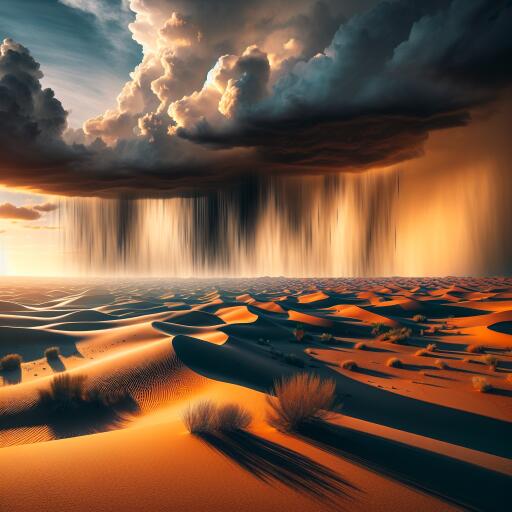
On the edge of a mountain village in the northern United Arab Emirates, a midday sky once blinding and still darkened without warning. Planters toppled in sudden gusts, a refuse bin skittered down the street, and then the rarity that resets this desert nation arrived: rain.
In the Emirates, rain is both spectacle and sustenance. Long-time residents rush into the open to greet it; many migrants from South Asia feel a tug of memory for monsoon seasons back home. Yet the rainfall that thrills also unsettles, exposing the limits of a fast-growing, water-hungry nation under a changing climate.
A thirst shaped by geography and growth
Straddling the Persian Gulf to the north and west and the Gulf of Oman to the east, the UAE is split by the stone ramparts of the Hajar Mountains and bordered southward by the vast Empty Quarter. Monsoon systems brush Oman and Yemen’s coasts, but much of the Emirates sits beneath skies that refuse to give. In some locales, years can pass with barely a drop.
To close the gap, the country relies on roughly 70 desalination plants for drinking water and widely uses drip irrigation supported by recycled wastewater. Dams trap precious runoff in wadis when it appears. Even so, groundwater reserves have been under pressure for years, and the country has experimented with cloud seeding to coax more moisture from passing systems.
Urban growth amplifies the challenge. Dubai alone now hosts an estimated 4 million residents, up from about 255,000 in 1980. The city’s utility reports producing 683.7 billion liters of water last year, largely from desalination, while per-person consumption hovers around 550 liters a day—among the highest rates globally. In a warming world, that thirst coincides with new extremes.
When the sky opens
April 2024 delivered a wake-up call. In a single day, Dubai recorded more rain than at any time since systematic measurements began in 1949: 142 millimeters in 24 hours. By comparison, the city’s airport averages roughly 95 millimeters in an entire year. Sand and hardscape soaked and pooled; the built-up core had few pathways for the surge to escape.
Subsequent assessments by climate researchers concluded that the emirate’s exposure is broad: a large majority of people and infrastructure sit in zones vulnerable to sea-level rise and extreme weather. The question, as one amateur forecaster in Dubai put it, is less whether rain is increasing and more where stormwater can go in a city expanding deeper into the desert.
The impacts were visible on roadways lined with submerged vehicles. Public fleets and residents alike have since adopted snorkels to keep engines clear of floodwaters. Insurance losses are estimated in the billions of dollars.
Designing for deluge in a dry land
Officials have responded with a massive stormwater plan. A new tunnel-based drainage system, budgeted at about $8 billion, aims to boost Dubai’s capacity to move and store rainwater by roughly 700 percent. Authorities describe it as the largest integrated rain capture project of its kind in the region—an attempt to prepare a desert metropolis for the kind of downpours that climate models suggest may become more frequent and intense.
The effort complements existing investments: desalination and wastewater reuse to secure supply, dams to hold flash-flood runoff, and ongoing urban planning that seeks to keep critical infrastructure out of harm’s way. Yet the arithmetic of risk is changing. Sea levels are creeping upward, heat is intensifying, and sudden cloudbursts carry greater punch over landscapes engineered for dryness.
The human pulse of a passing storm
If these storms bring anxiety to authorities, they also bring joy to many residents. On a recent Saturday, storm-watchers traced a towering cumulonimbus drifting over the eastern desert toward the Hajar foothills. Near Masafi, a convoy eased onto a roadside below a new mountain cut. First came the scent—ozone and dust—and then the scattered, heavy taps on metal and glass before the sky surrendered to a steady fall.
Among them were workers from Kerala, India—people who know rain as a season, a rhythm, a comfort. One of them, Muhammed Sajjad Kalliyadan Poil, stepped into the shower, head tilted back, grinning. He said moments like this fold time, transporting him to childhood afternoons when storms were as common as the palm trees outside his home.
Precious water, dual message
For decades, the Emirates has treated water as a strategic asset as essential as any fuel. That ethos is visible in the country’s infrastructure and in the insistence that conservation be part of daily life. But the climate’s new volatility adds urgency: hardening cities for cloudbursts, safeguarding coasts, and using every liter as efficiently as possible.
Rain in the UAE is still a marvel—people race toward it, linger beneath it, celebrate it. Yet each downpour now carries two messages. One is the timeless promise of life in a dry land. The other is a clear warning from a warming atmosphere: prepare for more water, all at once, in places built to expect almost none.



Leave a Reply