

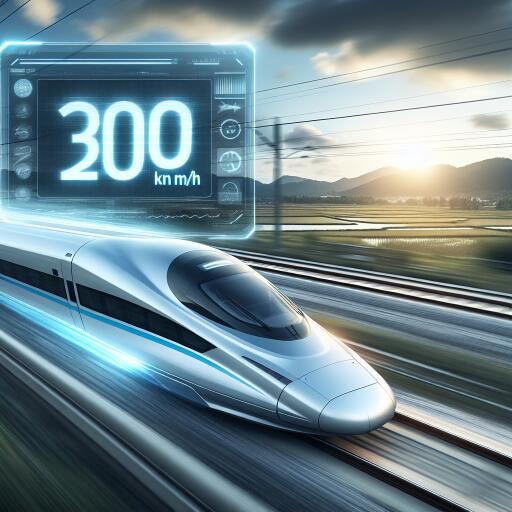
Understanding the Speed of High-Speed Trains
High-speed trains, often known as fast trains, are engineered to travel at speeds exceeding 200 kilometers per hour (124 mph). In some cases, these remarkable vehicles achieve operational velocities ranging between 300-350 km/h (186-217 mph), and during experimental phases, speeds can escalate even higher. Such agility substantially reduces intercity travel times, presenting an enticing alternative to air travel and conventional rail services.
The Science Behind High-Speed Train Velocity
Reaching such high speeds is not merely attributable to a robust engine. It’s the outcome of comprehensive and sophisticated engineering applied to every facet of the train and its support infrastructure. Numerous elements contribute to the remarkable performance of high-speed trains, including specialized tracks, advanced signaling equipment, and precision-engineered rolling stock.
Global Leaders in High-Speed Rail Technology
Countries around the globe have made significant investments in high-speed rail networks, continuously advancing in speed and technological innovation. Nations like France, China, Japan, Italy, and South Korea are at the forefront, committed to ongoing research and development to enhance their high-speed rail systems’ velocity, efficacy, and security.
The Future: Pushing Beyond Conventional Speeds
Though existing high-speed trains are remarkably swift, future advancements may reside in magnetic levitation (Maglev) technology. By utilizing potent magnets, Maglev trains can hover above their tracks, as this technique eliminates friction and allows for impressive speeds.
Moreover, more advanced systems are under scrutiny, like hyperloop initiatives. These futuristic concepts aim to transport passengers in pods through nearly airless tubes, targeting speeds over 1,000 km/h (621 mph).
High-Speed vs. Regular Trains: Key Differences
The principal distinction lies in speed. High-speed trains typically function at velocities exceeding 200 km/h (124 mph) and require dedicated tracks, customized signaling systems, and tailored rolling stock. Conversely, regular trains generally operate at lower speeds and share their tracks with freight services.
Safety and Environmental Impact
High-speed trains epitomize safety, as they integrate cutting-edge safety protocols, including advanced control systems, automated braking, and comprehensive maintenance routines. Statistically, high-speed rail tends to be safer per passenger mile compared to air travel.
Environmentally, high-speed trains offer a sustainable option compared to airplanes, specifically over shorter distances. With considerably lower carbon emissions per passenger mile, their energy efficiency is superior, especially as more countries shift towards renewable energy for their rail networks.
Cost Considerations of High-Speed Train Travel
The ticket pricing for high-speed trains is influenced by several factors such as distance, service class, and booking timing. Generally, tickets can be pricier than standard rail fares but compete well with airfares considering the convenience of city-center locations and reduced check-in times.
Remarkable Train Models and Their Capabilities
The Shanghai Maglev stands as the world’s fastest operational commercial train, reaching 431 km/h (268 mph). In testing, Japan’s L0 Series Maglev attained a ground-breaking speed of 603 km/h (375 mph), although it’s not yet available for public transit.
Benefits and Challenges of High-Speed Rail Travel
Compared to air travel, high-speed trains offer numerous benefits including minimal check-in durations, prime urban locations, and lesser susceptibility to weather disruptions. They tend to be more comfortable, providing ample legroom and the liberty to move during journeys. Environmentally, they are generally superior over comparable routes.
However, establishing such systems involves notable obstacles, including exorbitant construction expenses, extensive land requisition, and environmental impacts linked to new infrastructure development. Complex engineering requirements and advanced signaling systems add to the challenge, amidst the need for public backing and regulatory compliance.
Noise and Technological Features
While high-speed trains do emit noise, the levels are typically lower than those generated by airplanes or highways. Modern designs incorporate noise-reduction features, and sound barriers are often implemented to alleviate the impact on adjacent communities.
These trains feature sophisticated braking mechanisms allowing them to halt smoothly and safely. Systems like regenerative braking convert kinetic energy back into electricity, and traditional friction brakes furnish supplementary stopping power. Automated systems vigilantly monitor train distances to ensure safety.
Service Variability and Curvature Navigation
High-speed trains generally offer varied service classes, from standard to first and business class, each providing distinct comfort levels and amenities. Premium services include broader seats, extended legroom, complimentary meals and beverages, and access to lounge facilities.
The design also encompasses safe and comfortable navigation around curves at high speeds. Tracks are usually banked (superelevated) to counteract centrifugal force, ensuring a smooth ride.
Staying Updated on Routes and Schedules
For information on high-speed rail routes and schedules, the national rail operators’ websites in countries with these networks usually provide comprehensive details. Continuing advancements in high-speed rail underscore a commitment to progressing towards faster, more efficient, and sustainable transportation options, heralding exciting developments for the railway’s future.



Leave a Reply