

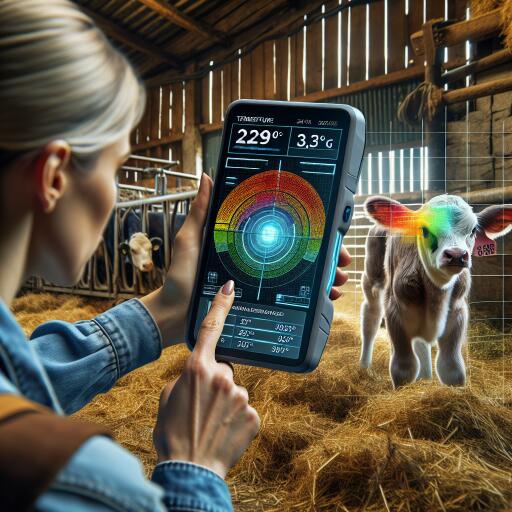
AI Boosts Infrared Scans for Calf Temperature Detection
For years, veterinary practices have relied on rectal measurements for gauging the body temperature of animals, including calves. While effective, this method can cause stress to the animals and fails to provide a continuous reading of temperature fluctuations. Breaking through these limitations, recent technological advancements have led to the adoption of infrared thermography—an innovative, non-invasive approach to measuring body temperatures.
Despite its promise, infrared thermography poses challenges in continuously tracking temperature changes over time and risks variability due to the manual setting of imaging parameters. These challenges underscore the necessity for enhancements in the method, which brings us to a breakthrough driven by artificial intelligence.
A team at Osaka Metropolitan University’s Graduate School of Veterinary Science, under the leadership of Assistant Professor Sueun Kim, embarked on a study to refine the accuracy and consistency of infrared temperature measurements. The researchers used infrared cameras to collect temperature data from 11 calves, simultaneously capturing video footage to analyze temperature changes in specific regions.
The study focused on whether specific areas, such as the eyes and nose, exhibited higher temperature readings and consistent temperature dynamics. Through the innovation of AI-driven segmentation, the team was able to automatically identify these regions of interest (ROI) from the collected video data.
With the application of artificial intelligence, approximately 200 different patterns of temperature change were identified. The analysis revealed notable consistency, particularly with the top 10% and top 30% of values reflecting higher temperatures in the eye and nose regions.
This methodological advancement allows for obtaining regular and reliable patterns of temperature change without the need for direct contact with the animals. The implications of this are significant, enabling detailed statistical analyses that could serve as a vital tool for more accurately evaluating the health and stress levels in animals.
“This research has paved the way for a more consistent and stress-free method of monitoring temperature changes in cattle, offering a tool of higher precision for assessing their health and wellbeing,” noted Dr. Kim in the findings of the study.
This pioneering research promises a future where animal welfare is bolstered through technology, facilitating better-informed decisions in the health management of livestock. With the integration of advanced AI techniques, the field of veterinary science continues to push boundaries, ensuring safer and more effective practices.
The study sheds light on how artificial intelligence and advanced imaging technologies can transform traditional veterinary diagnostics into a seamless, non-intrusive process. By progressing towards real-time, comprehensive monitoring solutions, the standards of animal care are set to elevate, benefiting not only the animals but the farmers and veterinarians dedicated to their care.
As technological advancements continue to merge with veterinary practices, the promise of more humane and effective methods in animal husbandry becomes increasingly attainable. The hope is to extend these benefits beyond cattle to other species, broadening the impact of such innovations across the diverse landscape of animal healthcare.



Leave a Reply