

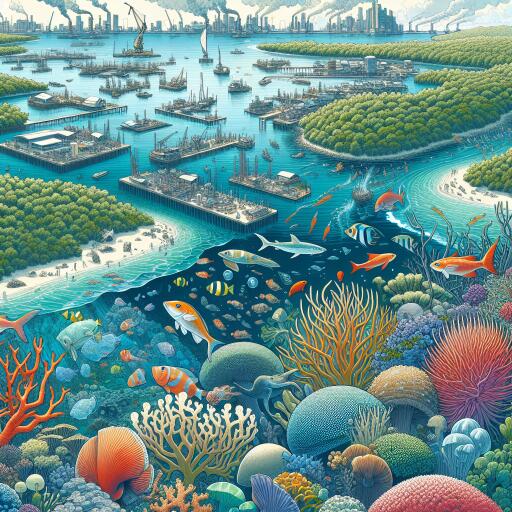
Building a Sustainable Marine Ecosystem for Southeast Asia’s Coastal Economies
Southeast Asia is enriched with vast oceans that bring upon a bounty of marine resources shaping its communities and culinary traditions. The waters are not only a source of sustenance but also economic resilience and cultural heritage, particularly for maritime nations such as Singapore.
Like Singapore, countries across the region are deeply reliant on marine ecosystems. Singapore’s National Biodiversity Strategy and Action Plan, titled “Conserving Our Biodiversity,” serves as a framework guiding efforts to preserve their biodiverse environments. The challenge remains in balancing urban development with conservation in a densely-populated city-state.
In the wider region, concerns over declining marine resources have been echoed due to challenges like climate change, pollution, and ecosystems degradation, which are threatening sectors such as fisheries. A reduction in fish production and ecosystem damages directly translates into economic setbacks.
Regional cooperation and innovative practices are crucial to addressing these pressing concerns. Singapore’s strides in urban aquaculture and applications of innovative technologies can provide insights into scalable, community-integrated practices aimed at developing a resilient blue economy for Southeast Asia.
In Indonesia’s eastern regions, sustainable practices are being explored, particularly in Papua’s coastal villages, to restore environments and boost community livelihoods. Community members engaged in crab farming are observing declines in their harvests due to overfishing, which has affected the natural populations and, consequently, the well-being of local fisher communities.
Among these communities is the Togar Puan fishing group in West Papua’s Patimburak Village. Group members, like Adino, confront challenges such as climate threats to mangrove habitats and sourcing sufficient feed for their crab cultivation efforts.
“We understand the necessity for change to ensure the sustainability of our marine ecosystem. It motivates us to utilize crabs responsibly, maintaining their populations for future use,” shared Adino.
Efforts to revive crab populations saw a collaborative push start in 2020 when a national non-profit partnered with local communities, though initial implementation faced setbacks regarding scale and accessibility. Lessons learned, a renewed effort emerged in 2024 with locally sourced materials for crafting cultivation containers that are customisable to cultivator needs.
Venticia Hukom, a research director, explained, “We’ve adopted a restorative aquaculture approach, ensuring crab populations remain stable. By placing each crab in individual containers, we facilitate monitoring and, importantly, we release egg-bearing female crabs back into the mangroves to sustain the wild stock.”
Additionally, the fishers are educated on monitoring water quality, including ammonia levels, essential for maintaining health in crab populations. This initiative not only seeks to educate about crab survival but also emphasizes the importance of sustainability in aquatic farming practices.
Further, a unique collaboration led to a larger cultivation cage—which mimics natural conditions, blending crab cultivation with mangrove growth, designed to house up to one hundred crabs. This initiative offers dual benefits, promoting both crab and mangrove flourishing.
Adino stressed the significance of appropriate regulations to curb overharvesting, particularly the market demand for female crabs, suggesting their conservation as key in preserving natural stocks. There is a growing recognition of potential in marrying conservation with ecotourism, whereby visitors could learn about the wildlife and cultivation practices, benefiting local economies.
Such collaborative initiatives among fisher groups, research organizations, and governments showcase pathways where resource preservation aligns with economic improvement, enhancing the welfare of coastal communities. By fostering sustainable marine resource management, regions can ensure the longevity of ecologies and enhance the economic conditions for their coastal communities.
The collaborative action research approach, embracing both scientific insights and indigenous knowledge, is pivotal in implementing effective and contextually relevant interventions across Southeast Asia. Emphasizing sustainable practices, regions can rebuild their marine ecosystems ensuring they continue supporting both economies and cultural legacies.



Leave a Reply