

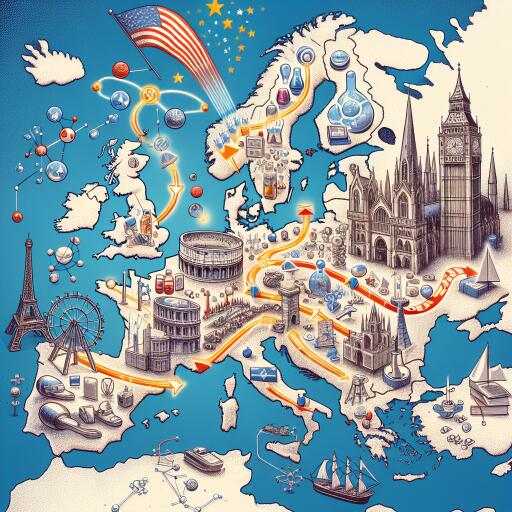
Europe is Breaking its Reliance on American Science
European nations are actively working to diminish their dependence on crucial scientific data traditionally provided for free by the United States. This initiative involves enhancing their own data collection systems to better track climate change and weather anomalies. Over recent interviews, European officials have expressed their concerns over the American government’s reduced focus on scientific research, which has prompted these proactive measures.
Historically, the United States has been a global leader in scientific research, especially in areas concerning climate, weather, and marine data. Recent policy shifts have seen drastic budget cuts to key scientific agencies, which many Europeans view as an unsettling retreat from essential research domains.
European governments have shown increasing unease with these changes, as losing access to American-funded weather and climate data would pose challenges for planning extreme weather responses and infrastructure development. In light of these concerns, more than a dozen European countries have pushed the EU Commission to attract American scientists affected by these budget cuts.
“The current situation is much worse than we could have expected,” expressed Sweden’s State Secretary for Education and Research.
The Danish Meteorological Institute describes the US government data as indispensable, using it to measure crucial environmental parameters like sea ice and sea surface temperatures. The accuracy of such data is vital for issuing extreme weather alerts, climate forecasting, and safeguarding communities, underscoring its role in saving lives.
Officials from several European nations have initiated reviews regarding their reliance on American marine, climate, and weather data. Joint efforts are being organized among countries like Denmark, Finland, Germany, Netherlands, Norway, Spain, and Sweden to secure critical health and climate data.
European Efforts for Independence
As a priority, the European Union is enhancing its access to ocean observation data. Over the next few years, the EU plans to strengthen the European Marine Observation and Data Network, which provides critical information on shipping routes, seabed habitats, marine litter, and other essential datasets. This initiative aims to potentially replace the US-based systems that European industries rely heavily upon.
Concerns have been raised about the potential impact of US funding cuts to research programs that support global ocean observation networks. The Global Ocean Observing System plays a pivotal role in aiding various sectors, from coastal planning to the energy industry. As a result, discussions are underway within the EU to potentially bolster funding for the Argo program, which monitors ocean states and contributes to global climate data.
The Argo program, recognized for its historical contributions to oceanic science, receives significant US funding. However, recent budget proposals from the White House indicate potential reductions in support for this vital initiative.
The steps being taken by Europe represent a notable break from the longstanding American leadership in ocean science. Europe’s move to independently source data and increase its participation in initiatives like Argo highlights the realization of its dependency and the drive to mitigate potential repercussions of that reliance.
Adapting to New Realities
In response, various European governments are focused on reducing this dependency. Nordic nations are collaborating on data storage solutions, and Norway is allocating funding to ensure stable access to US data. Other countries, like Denmark, are taking precautions by downloading historical US climate data for safeguarding purposes. The emphasis is on adapting existing systems to operate independently while maintaining data integrity.
Since the shift in US policies, scientists globally have engaged in proactive data preservation efforts. There’s a collective understanding that without robust support and infrastructure, maintaining the quality of vital datasets is challenging. As nations gather to fill the gaps left by these policy changes, it’s evident that a cooperative global approach is essential.
The discourse surrounding scientific data access illustrates a critical intersection of politics, environment, and global cooperation. By asserting independence in data collection, Europe is setting a precedent for resilience and adaptability in the face of evolving global dynamics.
This development serves as a reminder of the challenges faced in maintaining the currency and availability of scientific data. The journey toward a more self-reliant Europe in scientific endeavors will undoubtedly influence future collaborations and the distribution of scientific resources worldwide.



Leave a Reply