

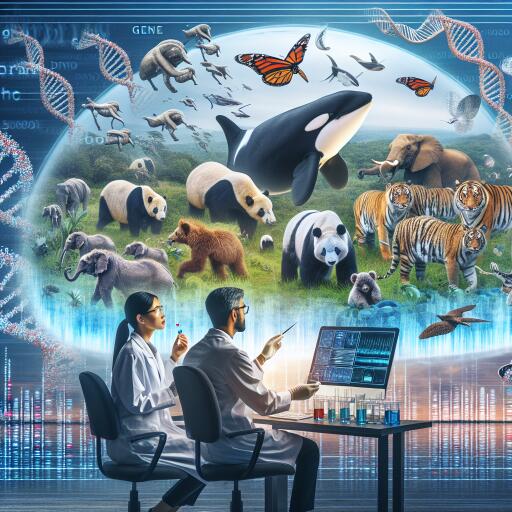
Gene Editing Offers Transformative Solution to Saving Endangered Species: Study
In a world experiencing rapid environmental changes, genomic science might hold the key to conserving endangered species. Recent advancements in gene editing, the kind used primarily in agriculture and potential de-extinction efforts, are now being proposed as groundbreaking tools for enhancing genetic diversity and saving threatened animals.
An international team of scientists, comprising experts in conservation genetics and biotechnology, is spearheading this innovative approach. Their collaborative effort spans multiple institutions globally, focusing on the potential of gene engineering to restore essential genetic variation in species threatened by extinction.
Prof. Cock van Oosterhout from the University of East Anglia emphasizes the urgency of harnessing these technologies. “We are witnessing the fastest environmental change in our planet’s history. Many species lack the genetic variability to adapt and survive. By reintroducing lost DNA variations, possibly even sourcing them from museum specimens, or integrating climate-resilience genes from closely related species, gene engineering becomes a vital tool for conservation,” he remarks.
Traditional conservation strategies, such as captive breeding and safeguarding natural habitats, primarily aim to increase population numbers. However, these efforts often fall short in restoring genetic diversity. Species once at risk still exhibit reduced genetic variation and a prevalence of detrimental mutations, compromising their resilience to future adversities like new diseases or climate shifts—a dilemma termed genomic erosion.
A poignant example is the pink pigeon of Mauritius. Once nearly extinct with numbers dwindling to a mere ten, conservation actions have increased their numbers to over 600. Despite this remarkable recovery, the bird continues to suffer from significant genomic erosion, threatening its long-term survival. Gene editing provides a window of opportunity to restore the genetic diversity needed for its adaptation to forthcoming environmental changes.
This technological promise is already transforming agriculture, with vast areas worldwide producing pest-resistant and drought-tolerant crops. More ambitious projects, such as the revival of extinct species, further underscore its potential. Dr. Beth Shapiro, Chief Science Officer at Colossal Biosciences, notes, “The advances allowing genetic integration of extinct species like mammoths into elephants hold promise for supporting species on the brink today. We must utilize this to mitigate the rising extinction threats affecting thousands of species.”
While gene editing offers promising solutions, it is not without its challenges. Risks including off-target genetic changes and unintended reduction in genetic diversity are significant concerns. Thus, authors urge for carefully structured, small-scale trials and comprehensive monitoring of evolutionary and ecological outcomes, alongside engaging local communities and broader public stakeholders before implementing these strategies on a larger scale.
These genetic interventions should be seen as complementing, not replacing, traditional conservation efforts such as habitat restoration. Associate Professor Hernan Morales of the Globe Institute highlights this complementary nature, asserting, “The assault on biodiversity calls for innovative solutions. Genome editing isn’t a panacea but must be incorporated with established conservation practices to form an integrated approach prioritizing species protection.”
The tale of species preservation is at a pivotal juncture. With unprecedented threats facing biodiversity, the integration of cutting-edge scientific advancements such as gene editing holds the potential to redefine conservation outcomes. As science and technology advance, it is our collective responsibility to balance innovation with caution, ensuring the survival of the planet’s wondrous diversity for future generations.



Leave a Reply