

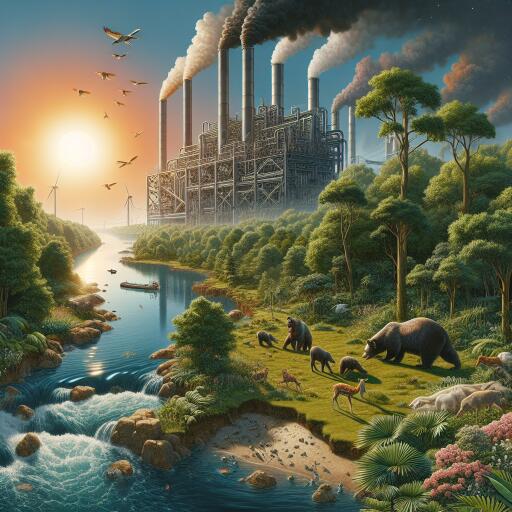
On Climate, Perfect is the Enemy of Good
The concept that ‘perfect is the enemy of good’ has never been more applicable than in the context of climate action. As we approach the annual Earth Overshoot Day, it serves as a stark reminder that our demands on Earth’s resources are unsustainable. This year, Earth Overshoot Day occurs on the 24th of July, marking the earliest date ever recorded and sending an urgent warning signal.
The root of this issue is well-known. Our persistent deforestation outpaces the natural regeneration of forests. Overfishing has led to dwindling fish stocks, and relentless grazing has pushed some lands towards desertification. These activities showcase a broader, systemic issue where ecosystems are driven to exhaustion.
Earth Overshoot Day is an insightful indicator, not without its imperfections. It is calculated based on United Nations datasets detailing national land use and consumption patterns. Oversight is provided by the FoDaFo Science Advisory Committee and the Ecological Footprint Initiative at York University. While not flawless, this calculation provides crucial insights into our environmental impact.
In Argentina, during a climate conference, the founder of the Global Footprint Network emphasized that narratives centered solely on emissions targets and fossil fuel cessation are losing traction, particularly with political and economic leaders. Instead, shifting the narrative to include resource necessity could resonate more effectively. Action at local levels shows some recognition of these resource constraints, which are bound to impact future stability.
The ‘necessity-based narrative’ shifts focus towards resource depletion rather than merely moral obligations. Although not mutually exclusive, this approach highlights the potential scarcity of food and materials. A substantial reduction in carbon emissions could delay Earth Overshoot Day by several months, illustrating the interconnection of climate and resource issues.
There exists a pressing need to move beyond environmental tunnel vision. Many argue that mitigating the impact of climate change shouldn’t be viewed as an insurmountable challenge. However, global conferences often witness nations trying to minimize their commitments while urging others to do more, a strategy that falters in securing a resilient future.
Naysayers of Earth Overshoot Day argue that its methodology lacks precision, leading to disputes about its scientific validity. Nevertheless, it has succeeded in sparking essential conversations about how we are consuming resources beyond their regenerative capacity. It’s an emblematic tool for awareness, communicating the extent of this ecological predicament.
The real challenge lies not only in gathering and presenting data but in utilizing it meaningfully. This is not a new challenge; historical scientific findings on fossil fuel impacts date back to the 1890s. Despite advancements in scientific communication, data often fails to permeate public consciousness due to technical jargon and lack of engaging narratives.
Storytelling remains vital in bridging this chasm. Misinformation persists, with sensationalist conspiracy theories disrupting public understanding of climate science. The truth, backed by scientific evidence, is that climate change exacerbates extreme weather patterns, yet this reality struggles to establish itself amidst louder, unscientific voices.
The legitimacy of Earth Overshoot Day hinges on the reliability of its data. Based on easily accessible UN data, it highlights an “ecological footprint” of 21.7 billion hectares against a planet capable of providing only 12.2 billion hectares. Essentially, humanity’s consumption rate demands 1.8 Earths, a stark reminder of the finite nature of our home.
Earth Overshoot Day distills complex data into an accessible format, fostering awareness. While not without its faults, it provides a foundational baseline from which meaningful dialogues and actions can initiate. Understanding the implications of our current trajectory is the first step towards crafting a sustainable future.



Leave a Reply