

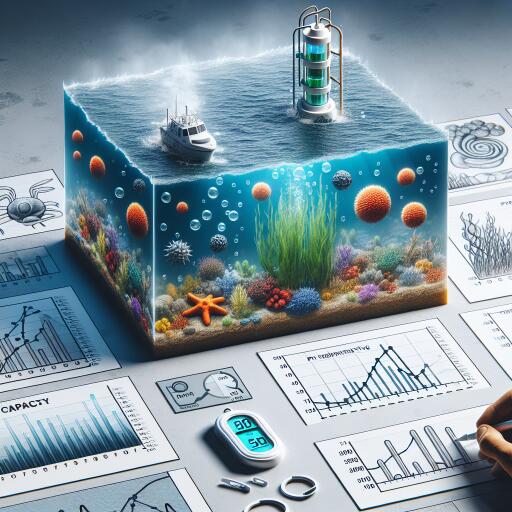
Ocean Acidification Will Be So Bad That We Need A New Indicator For It
Recently, Peter Thomson, the United Nations’ Special Envoy for the Ocean, expressed a sense of urgency at a conference in Nice, France, urging the world to move past debates and take decisive action to address the perils facing our oceans. With this rallying call, global attention is increasingly turning toward crucial ocean-related challenges such as overfishing, deep-sea mining, and pollution. Ocean acidification stands out among these, with its impact intensifying yet underappreciated.
For years, the ability of shellfish to form robust shells has been dwindling, a concern initially seeming localized but now known to have worldwide ramifications.
The Science of Ocean Acidification
Roughly a quarter of the carbon dioxide released into our atmosphere is absorbed by the oceans, resulting in a more acidic environment. This chemical change is equally as disruptive to marine life as substantial temperature shifts. The increasing acidity harms various marine organisms, making adaptation nearly impossible. A stark reminder of this shift is seen when comparing contemporary shellfish to those from the pre-industrial era; today’s variants have shells that are up to 76% thinner, accompanying a 40% rise in ocean acidity. Projections indicate that the acidity could rise by 150% by 2100.
This ominous trend, dubbed the “Evil Twin” of climate change, has already reached critical tipping points, having implications far beyond the inability of shellfish larvae to form shells. The chemical changes hinder the formation of calcium carbonate, a necessity for the structural integrity of shells. This phenomenon has been reported by oyster farmers in the Pacific Northwest since the early 2000s.
Observations of coral, crabs, and krill reveal they also struggle in increasingly acidic waters. Beyond the potential loss of these species as food sources, there’s the broader threat of cascading ecological impacts. Krill’s disappearance affects whales; mollusks’ decline impacts otters; and without coral, the vibrant coral reef ecosystems cannot survive. In essence, ocean acidification imperils marine and terrestrial life alike, as both are inextricably linked.
Tackling Legacy Carbon
In conversations around achieving net-zero emissions, the focus often centers on balancing emissions with the earth’s natural carbon sinks. This means reducing emissions while amplifying carbon absorption, primarily through maintaining forests and transitioning to cleaner energy sources, until current emissions equal the rate of sequestration.
Yet, a critical question persists: What about the carbon that continues to accumulate in the interim?
Since the onset of the Industrial Revolution, carbon emissions have soared. Despite early warnings about anthropogenic global warming, the full consequences have only recently become felt, partly because much of the carbon dioxide finds its way into oceans rather than solely contributing to atmospheric temperature rises.
The oceans, which store an enormous amount of carbon—about 60 times the atmospheric levels pre-Industrial Revolution—could eventually reach saturation. Deep concerns arise at the prospect of reaching a pH level where they can no longer absorb carbon efficiently. Though reaching a critical saturation point is not imminent, this reality prompts scientists to call for new metrics to effectively gauge ocean acidification.
Introducing Gamma Subscript CO2
In efforts to address the burgeoning challenge, researchers published new findings suggesting the adoption of a variable, denoted as gamma (γ), to measure the oceans’ carbon absorption potential. This stems from the escalating quantities of carbon being introduced into both atmosphere and oceans, necessitating new formulas for accurate forecasting. Absent intervention, ocean acidification could lead to a pH as low as 7.8 by 2100, levels not seen since a significant extinction event 14-17 million years ago.
The concept of Direct Ocean Capture (DOC) emerges as a promising countermeasure, parallel in principle to Direct Air Capture (DAC). While DAC technologies filter CO2 from the air, DOC systems target the removal of CO2 from both air and water, addressing ocean acidification through electrolysis and filtration. These plants could operate near desalinization facilities or regions with less alkaline waters for optimal efficiency. The potential for DOC to become cost-effective within a few years is increasingly likely, prompting investment interest for its proven capability and critical necessity. As marine ecosystems teeter on collapse, such strategies offer a beacon of hope for reversing damage.
Proactive measures today could safeguard our oceans and their inhabitants, reaffirming their role as the planet’s lifeline. However, waiting passively leaves the emergency at our doorstep. Therefore, enhancing awareness and investment in solutions like DOC represents a vital step toward mitigating the global crisis of ocean acidification.



Leave a Reply