

“`html
Immersive Experience Highlights Batwa’s Enduring Ecological Legacy
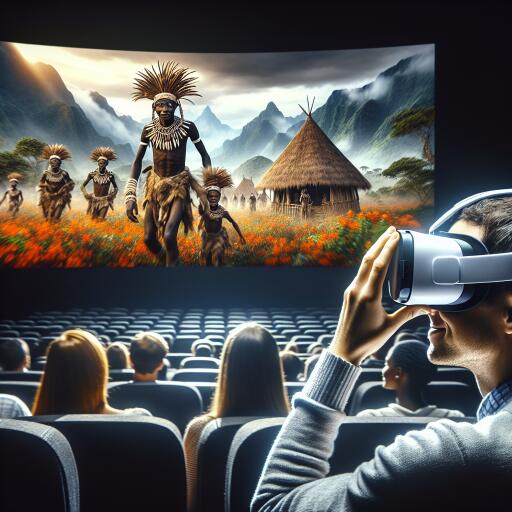
In an innovative leap for Ugandan cinema, the first immersive virtual reality (VR) film about the Batwa community highlights their profound connection to nature and their unique role as conservation pioneers. The film was recently launched, offering viewers a sensory-rich experience that emphasizes the Batwa’s environmental wisdom and the critical threats to their traditional lifestyle.
Keepers of The Forest: The Batwa Legacy, directed by Emmanuel Rukundo and Lorna Okeng Atim, takes audiences on an enchanting journey through history and conservation. This dive into the Batwa people’s ancient relationship with the land highlights their four-decade struggle for recognition after being displaced from their ancestral homes, the Bwindi Impenetrable Forest and Mgahinga National Park.
The film delves into the Batwa’s intertwined existence with their lush surroundings, the majestic mountain gorillas, and their guardianship over one of Earth’s most significant carbon reserves. It shines a light on how their lifestyle, deeply aligned with ecological preservation, offers a blueprint for global climate strategies at a time when indigenous wisdom is sorely needed.
An Intersection of Tradition and Technology
Rukundo and Atim utilize VR’s immersive capabilities to draw viewers into the Batwa’s world. Spanning 15 minutes, this interactive narrative running on Meta Quest headsets combines timeless storytelling with cutting-edge technology. It engages senses through spatial audio, delivering firsthand access to the Batwa’s connection with their environment and their enduring conservation efforts. Supported by local initiatives, the film’s international debut at a prominent festival in Paris marks its global significance.
A Legacy of Sustainable Living
The Batwa’s heritage embodies a seamless coexistence with nature, grounded in spirituality and a deep respect for the land. Their traditions were not codified in books but lived through practices and teachings. They practiced a balance with their environment that modern science is only beginning to appreciate, maintaining an equilibrium that ensured both resource abundance and ecological health. Their sustainable practices were intuitive, allowing them to live symbiotically with the forests that define their culture.
Despite their displacement, the Batwa have retained their cultural identity and ecological wisdom. Although removed from their native forests, they continue to safeguard their traditions through storytelling, community memory, and ceremonial practices. Their continuing bond with their environment is now being shared globally, offering a virtual journey into their forest world through the film.
A Reevaluation of Conservation
This VR journey bridges cultural heritage and modern technology, emphasizing how indigenous knowledge can guide current ecological strategies. As the climate crisis compels rethinking resource management, there is a call to integrate traditional ecological knowledge into contemporary conservation efforts. The Batwa model shifts the focus from isolated conservation areas to interconnected relationships, a concept aligning with ecological sustainability.
The Batwa illustrate conservation as a lived knowledge, an integrated presence with nature rather than isolated scientific metrics. Their methods elucidate a harmonious interaction where every plant and animal is part of a broader life cycle respected and conserved. This worldview transforms how we interpret and implement conservation, stressing the importance of relational balance rather than control.
Guardians of Knowledge
The Batwa encode their ecological knowledge in oral traditions, spiritual rites, and stories, each a piece of a broader ecological philosophy. Their wisdom preserves a lifestyle of balance and respect transcending scientific nomenclature, embodying practices that maintain ecological harmony. Their vernacular understanding champions non-extractive and cooperative conservation approaches, offering fresh paradigms for sustainability.
Through engaging with VR narratives like Keepers of The Forest: The Batwa Legacy, the film invites global audiences to consider the Batwa’s philosophy as a critical resource for developing climate resilience. This immersive film amplifies their story, demonstrating how their cultural roots provide a vital perspective in addressing ecological challenges. It is a compelling reminder that cutting-edge technology can be a powerful ally in preserving and celebrating age-old knowledge, fostering a universal appreciation for cultural legacies in conservation.
“`



Leave a Reply