

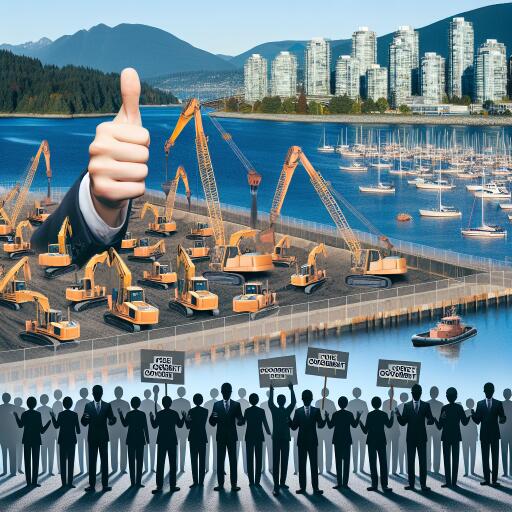
B.C., federal government support dredging Vancouver’s Burrard Inlet, others opposed
The initiative to allow larger tankers to navigate Vancouver’s Burrard Inlet is gaining traction with support from the B.C. and federal government, although it encounters vigorous opposition from local communities and environmental advocates.
According to Energy Minister Adrian Dix, the project is backed by the government as long as it adheres to stringent environmental assessments and First Nations consultations. This policy shift represents a significant deviation from the stance in 2017 when attempts to halt the pipeline’s expansion were fervent.
Facilitating the passage of fully loaded Aframax-class tankers through the Vancouver port would necessitate dredging, which aligns with the government’s vision of optimizing maritime traffic and resource utilization at the port. However, any dredging could potentially disrupt the delicate ecological equilibrium.
Juan José Alava, with the University of B.C.’s Institute for the Oceans and Fisheries, underscores the necessity for detailed evaluation given that such projects can irrevocably alter marine ecosystems. According to Alava, the depth variance in Burrard Inlet, which measures between 21 to 66 meters, makes it susceptible to ecological impacts from dredging activities.
The suspension of sediments increases water turbidity, indirectly affecting the food chain starting at phytoplankton levels and potentially causing an ecological cascade impacting fish and marine mammals. Potential impacts also include disrupting salmon spawning grounds and releasing latent pollutants, showcasing the ecological delicacies at stake.
Further concerns have been raised by Enda Murphy of UBC’s civil engineering department, who highlights uncertainties regarding the project’s scale and its implications for restoring ecosystems along the inlet, particularly for those being rejuvenated by First Nations.
Murphy emphasizes the considerable need for technical assessments alongside deep stakeholder engagement, especially with indigenous communities like the Tsleil-Waututh First Nation, which has historical ties to these lands and waters.
Chief Jen Thomas remarks on the cultural, spiritual, and ecological significance of the inlet and insists on the Tsleil-Waututh’s right to conscientious reviews and implications discussions before any formal proposal advances.
These sentiments echo across environmental groups where Lucero Gonzalez of the Wilderness Committee argues that the initiative is counterproductive to environmental conservation, particularly for endangered species such as the Southern Resident orcas.
While the provincial government maintains that this is a federal endeavor, which it only conditionally supports, the discourse around the project continues amid calls for comprehensive public and environmental evaluations.
Political figures such as the opposition spokesman, Gavin Dew, and interim leader of the B.C. Greens, Jeremy Valeriote, express varied stances. Dew views the dredging as a pragmatic commercial strategy, while Valeriote insists on a need for transparency, comprehensive assessments, and authentic public and indigenous engagements.
The federal government’s next steps will be pivotal as all parties await a detailed review that addresses the multidimensional impacts of such an endeavor, ensuring any development is meticulously weighed against ecological preservation and community interests.



Leave a Reply