

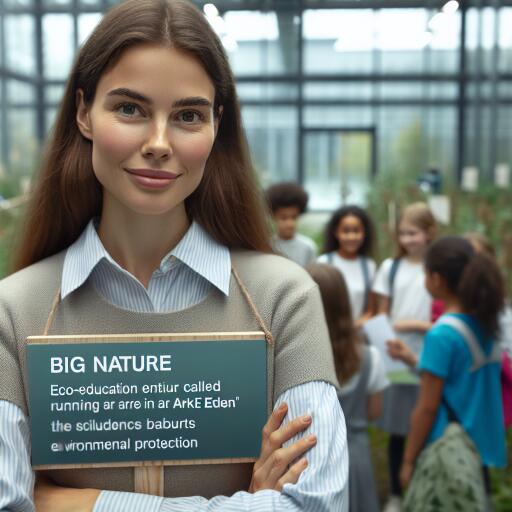
Environmentalist Jenny Quinton on running eco-education centre Ark Eden and protecting Hong Kong’s ‘big nature’
For nearly thirty years, Jenny Quinton, a dedicated environmentalist, has been diligently working on Lantau Island, a place brimming with lush biodiversity, including forests, mountain terrains, and marine life like the unique pink Chinese white dolphins.
Hong Kong’s largest island, Lantau, bursts with vitality, both in flora and fauna. However, plans by the government to develop its coastal regions into “eco-tourism” hotspots bring concern. Jenny Quinton, residing in Mui Wo, a serene area encompassed by nature in the northeast of Lantau, stresses the significance of protecting Hong Kong’s astonishing biodiversity. “Hong Kong’s charm lies in its integration with ‘big nature,'” she expresses, underscoring the urgent need to conserve these valuable endangered environments.
Reflecting on the forest near her home, which once showed signs of poor land management and a disregard for ecological health, Quinton recounts how rampant wildfires during the 1990s, especially during cultural festivals, damaged extensive forest areas. Revitalization took years and required the collective spirit of dedicated locals and volunteers alongside Quinton at Ark Eden, her eco-education centre.
Ark Eden, established in 2006, embodies a vision of permaculture—where human and nature sustain each other in balance. As the institution approaches its 20-year milestone, Quinton acknowledges that there is a continuous need for improving ecological knowledge in the city. “Changing people’s outlook on nature is fundamental,” she asserts.
Originating from Cheshire, England, Quinton’s journey to Hong Kong began with a backpacking trip. Enchanted by Lantau’s natural allure, she decided to settle in Mui Wo. Despite confronting personal tribulations, including becoming a single mother, and facing challenges such as rampant wildfires threatening her home, these events shaped her transformation into a committed environmentalist.
Quinton recognized the absence of environmental awareness in Hong Kong’s education system and initiated Ark Eden to bridge this gap. The centre became a beacon for those seeking a deeper connection to nature, offering a practical, hands-on learning environment outside conventional classrooms. Nestled between a river and a mountain, and close to natural gems such as Silvermine Waterfall and Cave, Ark Eden has evolved to include eco-friendly facilities like a farm, a natural swimming pool, and playgrounds, all constructed by Quinton’s team.
Despite its remote location, Ark Eden has grown in popularity, even more so during the Covid-19 pandemic, as children sought social engagement lost during quarantine. Through summer camps, Ark Eden fosters resilience, life skills, and creativity in children within natural settings. With six full-time staff and numerous part-time instructors, the programmes are well-equipped to support young minds in developing these vital skills.
Recent governmental plans aim to develop an “eco-recreation corridor” along Lantau’s southern coast. While these initiatives might seem promising, Quinton and Ark Eden oppose the development proposals, emphasizing that preserving South Lantau’s natural state offers greater benefits to both humans and wildlife than constructed recreational spaces.
The impact of major infrastructural projects in Lantau’s northern waters has taken a toll on the delicate ecosystem. The number of Chinese white dolphins, for example, has drastically decreased due to these developments, highlighting the serious ecological costs of short-term economic pursuits.
Quinton calls for collaborative efforts with Lantau’s residents, who have long been stewards of the environment. “Consider the voices of those who care for this land,” she urges the government. By aligning with local insights and spurring inclusive projects, the island could thrive without sacrificing its environmental heritage.



Leave a Reply