

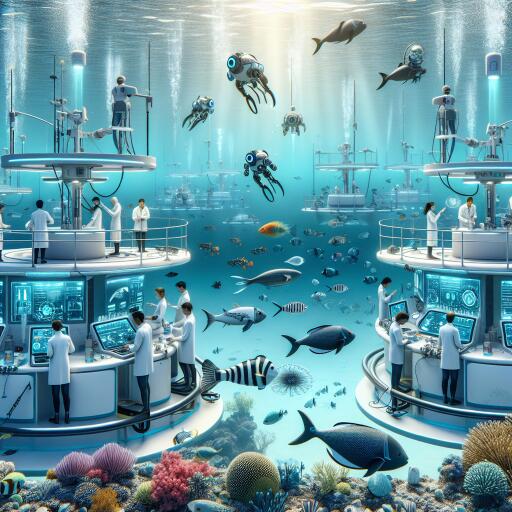
Advancing Ocean Tech for Marine Sustainability: A Dive into Marine Science Innovations
In an era marked by climate change and environmental challenges, our planet’s oceans, covering over 70% of Earth’s surface, are crucial to both the issues we face and the solutions we seek. The interdisciplinary field of sustainability science is essential for comprehending the intricate relationship between human activities and ocean ecosystems. At the forefront of this effort, ocean technology provides pioneering tools to monitor, protect, and rejuvenate the health of our seas.
Ocean technologies such as satellite remote sensing and autonomous underwater vehicles deliver real-time data on sea surface temperatures, chlorophyll levels, and ocean currents. These insights allow scientists to forecast harmful algal blooms, coral bleaching, and ecological shifts, empowering proactive measures to mitigate environmental damage. Innovations in marine monitoring and management exemplify the ocean’s critical role in climate regulation and the promise of technology in fostering smarter, sustainable ocean management.
Harnessing Marine Energy & Protecting Biodiversity
Ocean technology is also revolutionizing marine renewable energy, encompassing offshore wind and tidal power systems. Innovations in floating wind farms and tidal turbines aim to deliver clean energy while minimizing disruptions to marine habitats. Research ensures that renewable energy advancements are harmonious with marine conservation, utilizing tagging systems and open-source software to track marine mammals and assess the effects of new marine infrastructure.
Advanced sonar systems and hydrophone arrays now offer three-dimensional detection of marine mammals around tidal turbines, aiding the development of policies that protect marine biodiversity. Passive Acoustic Monitoring tools, enhanced by AI-powered classifiers, play a crucial role in identifying specific marine species and supporting sustainable fisheries practices. Additionally, non-lethal acoustic deterrents are being designed to reduce bycatch without adversely affecting marine animals.
Innovations in Blue Carbon and Ocean Farming
As global awareness of ocean sustainability intensifies, there is a growing momentum in developing scalable strategies that not only conserve but also regenerate marine health. Looking toward the near future, ecosystems like kelp forests hold the potential to absorb carbon and support diverse biological communities. Regenerative ocean farming is emerging as a natural climate remedy. New modular systems for kelp and mussel cultivation, designed to withstand high-energy offshore conditions, are projected to significantly contribute to carbon sequestration and nutrient cycling.
This innovative approach aims to quantify ecosystem benefits while establishing natural capital metrics. Such initiatives aspire to fortify ecological improvements, open viable avenues in the blue economy, and establish solid markets for future environmental credits.
Conclusion: Steering Towards a Sustainable Oceanic Future
Overall, ocean technology is pushing forward marine sustainability through state-of-the-art energy solutions, monitoring tools, and conservation strategies. By weaving these advancements into the fabric of sustainability science, we are charting a course towards oceans that are more resilient, diverse, and rich with life. Continued advancement, collaboration, and investment will be pivotal in safeguarding our oceans and realizing global environmental and conservation objectives.



Leave a Reply