

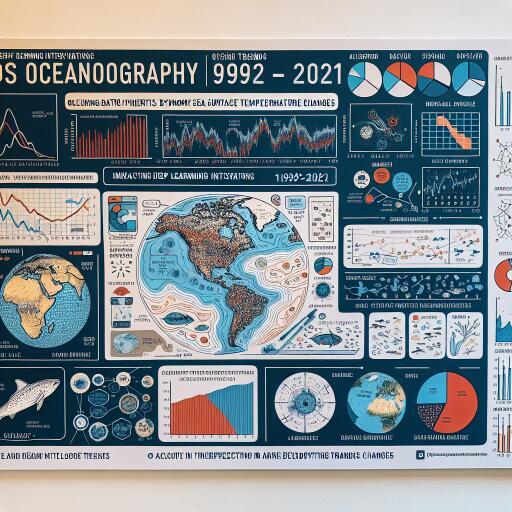
Deep Learning Uncovers Oceanographic Shifts Over 30 Years
Over the past thirty years, the field of oceanography has undergone a remarkable evolution, primarily driven by a surge in global research and the embrace of cutting-edge technologies. A confluence of advanced data gathering, innovative modeling, and international scientific partnerships has fueled this transformation. Despite a multitude of studies, overarching trends within oceanography have remained largely opaque—until the emergence of sophisticated big data techniques, offering a panoramic view of the discipline’s development between 1992 and 2021.
In a groundbreaking study, over 330,000 oceanography-related publications were analyzed using state-of-the-art deep learning methodologies. By employing BERTopic, a refined topic modeling framework harnessing Bidirectional Encoder Representations from Transformers (BERT), researchers pioneered a high-resolution thematic map of oceanographic literature. This method transcends traditional keyword approaches by analyzing the semantic depth of article abstracts, clustering them to uncover latent topics within the field. Spanning 100 key topics, the findings illuminate the dynamic interplay and interdisciplinarity pervasive within modern oceanographic research.
The study reveals that marine and freshwater biology occupy a central position, encompassing research on organisms from phytoplankton to marine megafauna, reflecting a sustained interest in ecosystems and biodiversity. Engineering and water resources stand alongside as crucial sub-domains, emphasizing the role of technical advances in enhancing environmental science. Remote sensing innovations, autonomous buoys, and sophisticated underwater vehicles are among the technical breakthroughs pushing the boundaries of ocean exploration and monitoring.
In terms of geographical analysis, this study unveils the alignment of research priorities with national interests and oceanic regions. China and the United States predominantly investigate the Pacific Ocean, while the United States also leads in Atlantic studies alongside European nations like the UK, France, and Germany. Research in the Arctic is mainly driven by countries with territorial connections, and studies of the Indian Ocean reveal complex ties to monsoon dynamics. These patterns underscore national strategies focused on economically and strategically significant marine zones, fostering global collaborations for scientific advancement.
Deep learning has also revealed the interdisciplinary characteristics of oceanographic research. By computing “topic entropy,” researchers assessed how individual topics span multiple sub-fields. Evapotranspiration, sediment dynamics, and drought have strong cross-domain links, integrating meteorology, geology, and biology. Conversely, topics like spawning and zooplankton are more concentrated, reflecting specialized research areas. Understanding these cross-domain attributes is indispensable for fostering collaborative engagements in the oceanography community.
Temporal analysis highlights a transformative shift in oceanographic focus over the decades. The 1990s were primarily dominated by biological and ecological studies. However, from the early 2000s onward, a marked pivot toward addressing water resources, climate variability, and environmental uncertainties has been observed. Fast emerging topics like flood dynamics, groundwater processes, and plastic pollution emphasize a growing concern with anthropogenic impacts. The increasing application of neural networks illustrates the convergence of oceanography with artificial intelligence, enhancing predictive accuracy and opening new horizons for data-driven insights.
Climate change has become an integral driver, with related oceanographic publications exploding in the past decade. These works primarily interconnect geology, marine biology, meteorology, and water resources. The strong focus on understanding natural processes over technological development highlights an effort to grasp fundamental mechanisms crucial for managing current environmental challenges.
A novel focal point revealed by the research is the concept of “uncertainty.” The rapid growth of uncertainty as a topic reflects the field’s endeavor to grapple with challenges in climate modeling and environmental management. Through leveraging statistical analyses, machine learning, and sensor technologies, scientists seek to address these uncertainties, vital for informing policy and enhancing ecosystem resilience.
Additionally, artificial intelligence’s rising role stands out in oceanographic research. Neural networks and deep learning are proving valuable in predicting phenomena like El Niño and storm trajectories, poised to revolutionize data assimilation and pattern recognition in oceanography. This synergy signifies the future trajectory of the field, where computational power amplifies observational efforts.
Oceanographic collaboration is shifting, with the US sharing its central role with China, highlighting newfound scientific capacities and interconnected global research networks. However, disparities exist, particularly between economically advanced and developing nations, necessitating ongoing investment in global research partnerships to address mutual oceanic challenges.
Despite these advances, the study identifies areas needing attention, such as the underrepresented Southern Ocean—critical for global climate regulation. Addressing such oversight is crucial for advancing comprehensive knowledge of ocean processes worldwide.
This study demonstrates the transformative impact of deep learning-based topic modeling over classical analyses. By utilizing BERT embeddings, BERTopic captures rich semantic relationships beyond conventional methods, offering clarity on latent trends, interdisciplinary connections, and emergent research areas.
As oceanography faces unprecedented environmental challenges, this comprehensive analysis offers essential tools for navigation. It illuminates shifting intellectual contours, guiding research investment and collaborative frameworks crucial for preserving ocean health. The findings reinforce the ocean’s centrality in global systems and the necessity for integrative science supported by computational advances.
In conclusion, this pioneering study provides a detailed portrayal of the evolution in oceanographic research over three decades. It highlights the rise of interdisciplinary methods, the integration with climate science, and the transformative role of AI, serving as a guidepost for future endeavors aimed at sustainable ocean stewardship.



Leave a Reply