

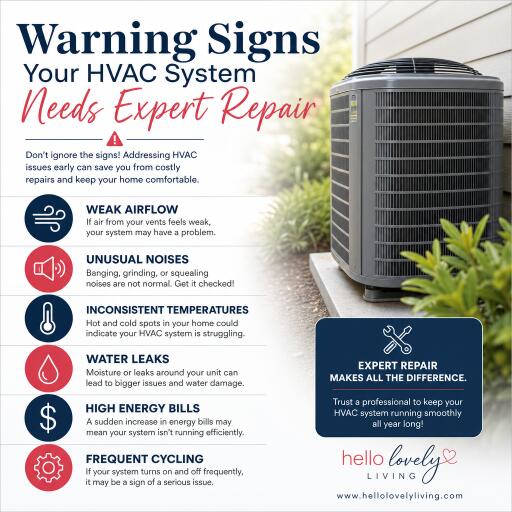
Warning Signs Your HVAC System Needs Expert Repair — Hello Lovely Living
When heating and cooling work in the background, it’s easy to forget the sophisticated machinery balancing your indoor climate. But in an era of record heat waves, polar snaps, and wildfire smoke, small performance hiccups can swell into breakdowns, inflated energy bills, and a bigger household carbon footprint. Recognizing early warning signs is the surest way to protect comfort, wallet, and the planet.
Early whispers: subtle shifts that matter
HVAC systems rarely fail without first leaving clues. If you notice any of the following, your equipment may be working harder than it should:
- Rooms that never quite reach the set temperature or take far longer to get there.
- Short cycling—frequent on/off bursts that strain components and waste energy.
- Uneven temperatures from room to room or persistent drafts.
- Unexplained spikes in your utility bill over a month or two.
- More dust, drier or stickier air than usual, or worsening allergy symptoms.
These shifts often point to airflow restrictions, failing sensors, duct leaks, or refrigerant trouble. Addressing them promptly can extend system life and cut emissions tied to wasted electricity or gas.
Listen closely: sounds that signal trouble
Most homes have a familiar HVAC soundscape: a low startup hum, steady whoosh through vents, an occasional thermostat click. New or louder noises are red flags:
- Rattling or clanking: loose panels, fasteners, or debris in the blower or outdoor fan.
- Squealing: a slipping belt or stressed motor bearings.
- Grinding: metal-on-metal friction—an urgent sign to power down and call a technician.
- Buzzing or clicking: possible electrical issues, failing capacitors, or relay problems.
- Persistent hissing: a refrigerant or duct leak, both of which sap efficiency.
Ignoring these cues can turn a quick tune-up into a costly compressor or blower replacement—and a larger energy footprint while the system struggles.
Smells and air quality: what your nose knows
Odors are often early indicators of hidden issues:
- Musty smells: moisture and microbial growth in coils, drain pans, or ducts.
- Burning or acrid odors: overheated wiring, motors, or dust singeing on electric elements—shut the system off and schedule service.
- Sweet or chemical notes: potential refrigerant leak. Many common refrigerants are potent greenhouse gases; only certified professionals should handle and recover them.
- Exhaust-like odors from fuel-burning equipment: a safety hazard. Ensure carbon monoxide alarms are installed and functioning; if an alarm sounds, get fresh air and seek immediate professional help.
Visual cues: what to look for around the equipment
- Ice on refrigerant lines or the indoor coil: often tied to airflow problems, dirty filters, or low refrigerant charge.
- Water around the air handler or furnace: a clogged condensate drain can lead to leaks and mold.
- Rust, corrosion, or oily residue on lines and fittings: potential leaks or long-term moisture exposure.
- Frequently tripped breakers or lights dimming when the system starts: electrical load or component issues.
- Outdoor unit smothered by leaves, lint, or wildfire ash: blocked airflow forces longer run times—keep at least two feet of clearance and remove debris.
Climate extremes amplify these risks: thick smoke can quickly clog filters, heat waves push systems into short cycling, and coastal air accelerates corrosion. Vigilance during these periods pays off.
Quick homeowner checks (before you call)
- Replace or clean filters every 1–3 months—more often during heavy pollen or smoke events.
- Confirm supply and return vents are open and unblocked by rugs or furniture.
- Verify thermostat settings and schedules; replace batteries if applicable.
- Gently clear debris from the outdoor unit and maintain clearance; if rinsing fins, ensure power is off.
If these steps don’t restore normal performance—or if you notice alarming sounds, odors, icing, or leaks—pause operation and book professional service.
When to call an expert without delay
- New, loud, or persistent noises (grinding, banging, electrical buzzing).
- Short cycling, weak airflow, or failure to reach the set temperature.
- Rapid increases in energy use without a clear cause.
- Hot/cold spots, humidity swings, or worsening indoor air quality.
- Visible icing, water leaks, tripped breakers, corrosion, or oily stains.
- Any suspected refrigerant issue or combustion odor.
A licensed technician can pinpoint root causes, protect high-value components, and ensure any refrigerant is handled responsibly. That keeps your home comfortable, reins in monthly bills, and prevents unnecessary greenhouse gas emissions linked to energy waste and leaks.
Bottom line
Your HVAC system is both comfort infrastructure and climate equipment. Treat small anomalies—sounds, smells, runtimes, and utility spikes—as early alerts. Timely professional care avoids disruptive failures, preserves efficiency through weather extremes, and shrinks your home’s climate footprint—season after season.



Leave a Reply