

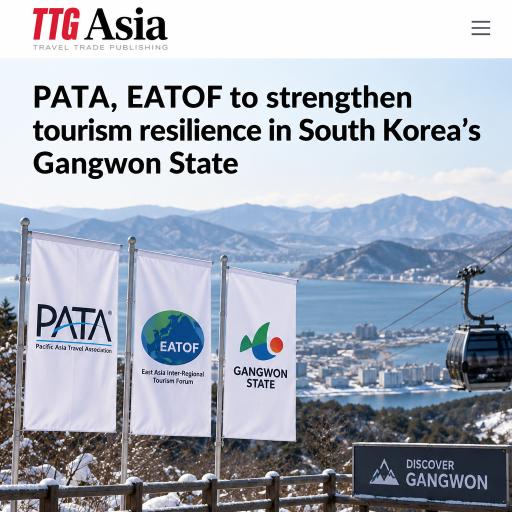
Gangwon strengthens tourism planning for climate and crisis risks
Tourism organisations in South Korea’s Gangwon State are taking steps to improve the region’s ability to withstand climate-related hazards, operational disruptions and sudden changes in visitor numbers.
The Pacific Asia Travel Association (PATA) and the East Asia Inter-Regional Tourism Federation (EATOF) are holding a destination resilience workshop on November 11. Participants include representatives of the Gangwon Tourism Foundation, municipal tourism bodies and local businesses.
Training will cover risk assessment, emergency planning, crisis communication and cooperation between public authorities and tourism operators. The aim is to help stakeholders establish coordinated procedures before an emergency occurs and respond more effectively when disruption is unavoidable.
Gangwon’s tourism economy is closely connected to its natural assets, including national parks, mountain landscapes, coastal destinations and winter sports facilities. That dependence also creates vulnerabilities. Seasonal wildfires can damage ecosystems and force evacuations, while severe winter conditions may interrupt transport and outdoor activities. During popular travel periods, overcrowding can place additional pressure on infrastructure, communities and sensitive environments.
Demand can also fluctuate sharply between seasons, complicating staffing, investment and resource management for local businesses. Building resilience therefore involves more than disaster response: it requires long-term planning that protects residents, visitors and ecosystems while supporting a stable tourism economy.
Following the 2025–2026 Visit Gangwon Year campaign, regional stakeholders are examining how to accommodate tourism growth without compromising safety or environmental sustainability. Measures such as visitor-flow management, clear emergency protocols and stronger communication networks could help reduce pressure during peak periods.
The event is part of PATA’s Tourism Destination Resilience programme, which combines digital learning materials with practical training. The programme is designed to help destinations identify threats, evaluate their readiness and improve collaboration across the tourism sector.
PATA intends to broaden its professional development activities in 2027, with planned emphasis on resilience, sustainable destination management, marketing and artificial intelligence. The organisation views preparedness as a continuous process requiring cooperation and a shared commitment to the long-term welfare of destinations and host communities.
EATOF has similarly highlighted the need for stronger regional partnerships as climate change creates new challenges for tourism. Through joint planning and capacity-building, the two organisations hope to help Gangwon develop a safer, more adaptable and environmentally responsible visitor economy.



Leave a Reply