

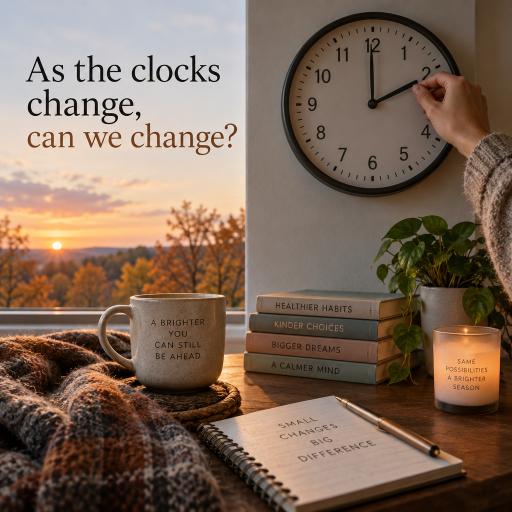
As the clocks change, can we change?
Twice a year, millions of people adjust their clocks and briefly become more aware of time. In autumn, the extra hour is welcomed, even if its arrival often coincides with school holidays, when a longer lie-in may feel less useful. Yet the ritual offers more than a little additional sleep: it marks a turning point in the seasons.
By late October, daylight is already retreating. Mornings feel colder, evenings arrive sooner and familiar conversations return. Are the clocks going forward or back? Is an hour being gained or lost? How can it be dark so early? These questions are repeated every year, but perhaps that repetition is part of their value. They remind us that human lives remain tied to natural cycles, however modern our routines may seem.
Autumn’s fading light can also prompt reflection. Across cultures and faiths, light represents hope, guidance and renewal, while darkness is associated with uncertainty or hardship. A lamp in a window, an illuminated home or the first pale glow of dawn can be reassuring because each signals warmth, safety and a way forward.
That symbolism carries particular weight in an age of ecological disruption. The seasons still turn, but their familiar patterns are becoming less dependable. Warmer autumns, shifting rainfall, earlier springs and more frequent extremes are changing landscapes and wildlife. What once appeared to be a permanent annual rhythm can no longer be taken for granted.
A moment to reset
Changing the clocks is a small collective act. On the same weekend, households across the country alter watches, ovens, heating systems and bedside alarms. It demonstrates that societies can coordinate change when they decide it is necessary. The greater challenge is applying that willingness to the climate and nature crises.
Seasonal habits provide practical opportunities. As temperatures fall, homes can be made more efficient by stopping draughts, using thermostats carefully and reducing unnecessary energy consumption. Walking, cycling or taking public transport for shorter journeys can cut pollution while helping people notice the transformation of local trees, parks and hedgerows. Choosing seasonal food and wasting less of it can also reduce pressure on land and resources.
These actions are not substitutes for ambitious policies or systemic reform. Cleaner energy, warmer homes, reliable public transport and restored ecosystems require sustained investment and political leadership. Individual choices matter most when they help create a wider culture in which environmental responsibility is expected, supported and shared.
Finding light in the darker months
Winter is often portrayed as something to endure until spring returns, but it has its own forms of beauty. Bare branches reveal the architecture of trees. Frost transforms ordinary ground. Migrating birds arrive, and long evenings can create space for rest, conversation and community.
Darkness also makes light more noticeable. That can be literal—a candle, a streetlamp or sunrise after a long night—but it can also describe acts of care. Checking on a neighbour, protecting a local green space, sharing resources or supporting people facing high energy costs can all bring warmth to the season.
When the clocks change, we alter the measurement of an hour rather than the movement of the sun. Still, the ritual invites a useful question: if we can reset our clocks together, what else might we reset? Our relationship with energy, consumption and the natural world is not fixed. Like the seasons, it can change.
The darker months need not represent retreat. They can become a time to conserve resources, strengthen communities and prepare for renewal. Light is most powerful when it is not merely awaited, but created through the choices we make together.



Leave a Reply