

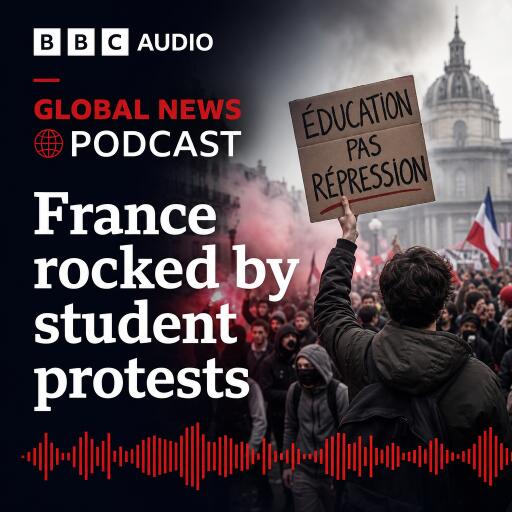
BBC Audio | Global News Podcast | France rocked by student protests
France’s education system is in the spotlight after a wave of student-led unrest over crowded classrooms, staff shortfalls and dilapidated buildings. The protests are reverberating beyond campus gates, touching off debates about public investment, safety and the resilience of school infrastructure at a time of intensifying climate pressures.
France: campuses in turmoil
Across multiple cities, students have torched rubbish containers and set up barricades outside schools and colleges, demanding solutions to what they describe as unsafe, overstretched learning environments. Demonstrators cite packed classes, persistent teacher vacancies and buildings in visible disrepair—from leaky roofs to outdated ventilation—as core grievances.
Authorities report that hundreds of people have been detained since the unrest began, and medical teams have treated dozens of injuries. Several blockaded campuses have experienced fires, prompting evacuations and fresh scrutiny of emergency preparedness on school grounds.
President Emmanuel Macron acknowledged that concerns about funding and study conditions are valid, but he condemned arson and other acts that threaten public safety. The protests have opened a broader conversation about how to modernize education infrastructure—improving indoor air quality, cooling and energy efficiency—so that classrooms can function safely through extreme heat, storms and other climate-related stresses.
United States: legal and justice developments
In Minneapolis, the family of Renee Good, who was shot and killed by an immigration enforcement officer, has filed a lawsuit targeting the former federal administration. The case is likely to test questions of accountability and the boundaries of official immunity in use-of-force incidents.
Separately, in Tennessee, death-row prisoner Christa Pike—who previously survived a failed execution attempt—is reported to be in critical condition in hospital. Her case continues to raise complex ethical and legal debates around capital punishment procedures and the obligation to prevent cruel or unusual treatment.
In New York, state authorities have asked Attorney General Letitia James to examine allegations of a gang rape at Cornell University. The appointment signals heightened scrutiny of the case and could lead to broader recommendations about campus safety, reporting practices and survivor support systems.
Health: a new front against lung cancer
Researchers in the United Kingdom have launched a clinical trial for a vaccine intended to protect against lung cancer. While details remain preliminary, the effort reflects growing momentum behind immunizations designed to prime the immune system against cancers—an approach that could complement tobacco control, early screening and cleaner air initiatives.
If effective, such a vaccine could become a crucial tool alongside policies that reduce exposure to tobacco smoke and air pollution, both major drivers of lung disease. Public health experts note that innovations in prevention and early intervention often deliver the biggest gains, especially when combined with strong environmental protections that curb fine particulate matter and other harmful emissions.
Sport: Ronaldo steps away
In football, Cristiano Ronaldo has stepped away from the Portugal national team. The move marks a turning point for a side long defined by his prolific scoring record and on-field leadership. Attention now shifts to how Portugal will retool its tactics and squad dynamics in upcoming fixtures and tournaments.
Why it matters
From French classrooms to US courtrooms and British laboratories, these stories trace a common thread: institutions under strain and adapting in real time. For schools, the question is how to create healthy, equitable spaces that can withstand the shocks of a warming world. For health systems, the frontier lies in prevention—vaccines and cleaner air policies working in tandem. And for justice and sport alike, accountability and renewal remain perpetual tests.
As the week unfolds, the pressure for durable solutions—adequate education funding, transparent investigations, and science-driven health measures—will only grow. The stakes are not abstract: they are measured in safer learning environments, fairer systems, and lives saved from preventable disease.



Leave a Reply