

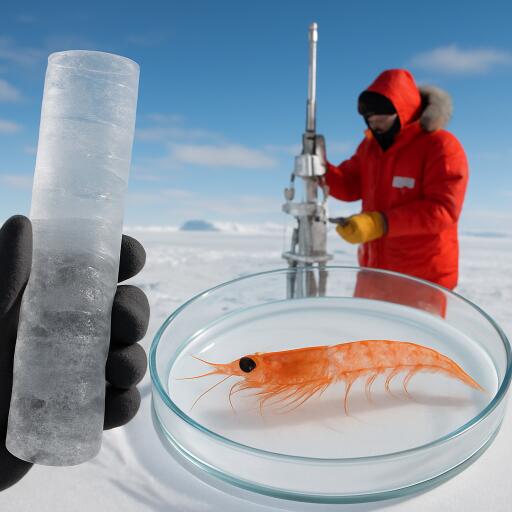
Antarctic Program Highlights Ice Cores, Krill Research
Research vessels are proving to be some of the most valuable tools in Antarctic science, serving as moving laboratories that gather vast streams of data across one of the planet’s most remote and climate-sensitive regions. At a major scientific meeting in Hobart, experts highlighted how decades of ship-based observations in Antarctica and the Southern Ocean are helping reveal long-term environmental change, from warming air and seas to shifts in marine life.
Scientists described how repeated voyages over many years have built an unusually rich record of conditions in southern waters. Measurements collected during expeditions have tracked changes in sea surface temperatures, atmospheric conditions and ocean ecosystems, creating a picture of a region under growing pressure from climate change. The long-term record shows a clear warming trend in the air across both Antarctic and subantarctic zones, while ocean warming has so far been more evident farther north of the Antarctic climate boundary.
That pattern matters because the Southern Ocean often responds more slowly than the atmosphere, meaning some of the full impacts of human-driven warming may still be emerging. Even so, the accumulated observations are already crucial for understanding how Antarctica influences global climate systems.
One of the most important biological monitoring tools discussed at the conference was the Continuous Plankton Recorder, a device towed behind ships that samples tiny marine organisms on a ribbon of silk. This long-running monitoring system has helped scientists detect major ecological shifts in the Southern Ocean. Among the changes identified are a move toward smaller zooplankton, the southward movement of some species and declines in pteropods, small free-swimming molluscs often called sea butterflies.
These changes may seem subtle, but they are significant because plankton and other small drifting organisms form the base of the Antarctic marine food web. Alterations at this level can ripple upward, affecting fish, seabirds, seals and whales. For biodiversity researchers, such signals are early warnings that the Southern Ocean ecosystem is reorganizing in response to warming and changing ocean chemistry.
Advances in vessel technology are also giving scientists a better look at fragile marine life. Older sampling methods often damaged delicate organisms as they were brought aboard in nets. Newer systems, including onboard seawater intake structures designed to keep specimens intact, are allowing researchers to examine vulnerable animals in far better condition. During a recent expedition, this approach enabled scientists to retrieve an intact sea butterfly for laboratory study, offering fresh opportunities to understand species that are sensitive to environmental change.
Modern Antarctic ships do more than support dedicated research cruises. Even while carrying out logistics and resupply work, they continuously collect atmospheric and oceanographic measurements. These observations feed into weather forecasting systems and climate models, improving understanding of both regional and global processes. In a place where fieldwork is costly and conditions can be extreme, every voyage becomes an opportunity to strengthen the scientific record.
Australia’s Antarctic research effort is now preparing for several major campaigns over the next few years, each tied to a broader international push to coordinate observations across the continent and surrounding seas. This synchronized approach is intended to produce a more complete view of Antarctica’s ice, climate, ocean dynamics and ecosystems at a time of accelerating environmental change.
One of the flagship projects is the Million Year Ice Core initiative, an ambitious effort to extract ancient ice from East Antarctica. Ice cores act as natural archives, trapping tiny bubbles of past atmospheres and preserving chemical clues about temperature, greenhouse gases, volcanic eruptions and environmental conditions reaching back hundreds of thousands of years. Pushing the record to one million years could help answer major questions about Earth’s climate history and improve projections of future change.
Field activities linked to this project will continue along an overland traverse from Casey station to the remote drilling site high on the East Antarctic ice sheet. Such work is logistically demanding, but it is considered vital for understanding how Antarctic ice and global climate have interacted over deep time.
Marine ecosystems will also be a strong focus. A planned krill and krill ecosystem campaign in the Mawson region is expected to examine the status of the food web built around Antarctic krill, the shrimp-like crustaceans that underpin much of Southern Ocean biodiversity. Krill are central to the diets of whales, penguins, seals and many fish, making them one of the most ecologically important species in Antarctic waters.
Another expedition will target the marginal ice zone during late winter, when sea ice reaches its maximum extent. Because very few voyages operate in Antarctic waters at that time of year, scientists still know relatively little about conditions during this critical seasonal peak. Studying the ice edge then could improve understanding of sea ice formation, ecosystem productivity and the consequences of changing ice coverage.
Looking further ahead, an East Antarctic ecosystem and ocean campaign is planned to deepen knowledge of biodiversity, climate impacts and marine habitats. The results are expected to support assessments of krill populations and provide scientific evidence relevant to the design of marine protected areas in East Antarctica. For conservation scientists, this kind of interdisciplinary work is essential: protecting biodiversity in the Southern Ocean depends on linking population data, habitat mapping and climate trends into a single management picture.
Together, these projects reflect a shift toward large-scale, long-term observation in Antarctica. Rather than isolated snapshots, researchers are building integrated records that connect ice sheets, atmosphere, ocean circulation and living ecosystems. In a region that helps regulate the Earth’s climate and supports unique biodiversity, that continuity is increasingly important.
The message emerging from the latest Antarctic science discussions is clear: ships remain indispensable to polar research, not only for reaching remote places, but for quietly gathering the measurements that reveal how a rapidly changing Antarctic is reshaping the wider planet.



Leave a Reply