

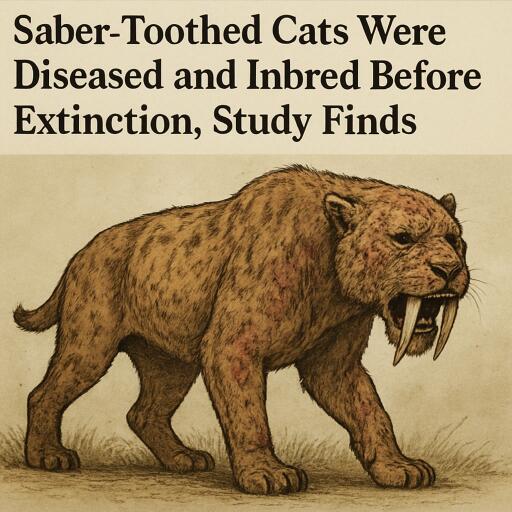
Saber-Toothed Cats Were Diseased and Inbred Before Extinction, Study Finds – Archyde
Fresh research is reshaping the story of saber-toothed cats, suggesting these famous Ice Age predators were already struggling badly before they vanished. Rather than disappearing at the height of their power, animals such as Smilodon appear to have endured widespread injuries, serious dental damage, and shrinking genetic diversity in their final thousands of years.
The emerging picture is of a top predator under mounting pressure from ecological disruption. Fossils indicate that these cats were not only fighting prey, but also the consequences of a changing world that made survival increasingly difficult.
A fossil record marked by pain and stress
Scientists studying saber-toothed cat remains have identified striking levels of physical damage. Many skeletons preserve evidence of healed fractures, worn joints, and other serious trauma. These were animals capable of surviving major injuries, but the frequency of those injuries hints at a species living dangerously close to its limits.
Such damage likely reflects the extreme demands of hunting large Ice Age herbivores. Bringing down massive prey required strength and precision, and any failed attack could leave a predator badly hurt. As ecosystems shifted and prey became less reliable, the risks may have increased, forcing these cats into more desperate and damaging encounters.
Researchers also point to advanced joint degeneration in some specimens, suggesting repeated strain over a lifetime. This sort of wear is consistent with an animal whose hunting style placed enormous stress on its body.
Teeth that reveal a harsher reality
The teeth of saber-toothed cats offer another clue to their decline. Paleontologists have documented extensive tooth breakage and other oral disease in some fossils. For a hypercarnivore dependent on flesh, damaged teeth could be devastating.
Broken carnassials and other dental injuries would have made it harder to slice meat and fully consume carcasses. A predator that could no longer feed efficiently would face declining health, lower energy reserves, and reduced ability to hunt. Poor nutrition could then worsen physical weakness, creating a spiral that made future survival even less likely.
This dental evidence suggests that some saber-toothed cats were not functioning as perfectly adapted killing machines. Instead, at least part of the population may have been coping with chronic injury and physiological stress.
Genetic decline before the end
Fossils are now being paired with genetic techniques that reveal a second, less visible threat: inbreeding. Evidence suggests that saber-toothed cat populations had low genetic variation well before extinction. That matters because strong genetic diversity helps species adapt to disease, environmental upheaval, and changing food supplies.
As habitats fragmented, populations may have become isolated from one another. Smaller groups breeding within a limited pool can accumulate harmful mutations over time, a process that weakens fertility, resilience, and overall fitness. In effect, the species may have been eroding biologically from within even as outside pressures intensified.
This pattern is familiar in modern conservation biology. When animal populations become cut off and decline in number, genetic problems can compound other threats. For saber-toothed cats, that loss of flexibility may have been especially dangerous in a period of rapid climatic and ecological change.
New tools reveal old lives
Modern imaging and chemical analysis are helping researchers read fossil remains with far greater accuracy than before. High-resolution scans can expose internal damage inside bones and teeth, while isotopic studies can provide clues about diet, habitat use, and stress during life.
These methods allow scientists to reconstruct more than anatomy. They can begin to trace life histories, including injury patterns, malnutrition, and the physical burdens individual animals carried. The result is a much more dynamic view of extinction: not a sudden disappearance, but a long deterioration.
Specialists trapped by a changing environment
Saber-toothed cats were highly specialized predators, and that specialization may have become a liability. Their bodies and hunting strategies were adapted for taking down large prey. But during the late Pleistocene, climate instability altered landscapes and disrupted the herbivore communities these cats relied on.
As grasslands shifted and megafauna populations declined or moved, the big cats may have struggled to adjust. A predator built to ambush and overpower large animals would not necessarily be well suited to chasing smaller, quicker prey in altered habitats. In ecological terms, they may have been stranded in a vanishing niche.
That helps explain why extinction was likely the result of several pressures acting together. Injury, tooth damage, food stress, habitat change, and inbreeding did not operate separately. Each one likely amplified the others.
A slower collapse than once imagined
The disappearance of saber-toothed cats now looks less like a single dramatic event and more like a prolonged breakdown. Their fossils preserve signs of species-wide stress accumulating over generations. By the time extinction arrived, these predators may already have been weakened by biological and environmental strain.
This revised understanding also carries a modern warning. Large predators can appear powerful and secure, yet still be vulnerable to fragmented habitats, shrinking populations, and rapid climate shifts. The fate of saber-toothed cats shows how even iconic apex hunters can decline long before the final moment of extinction becomes visible in the record.



Leave a Reply