

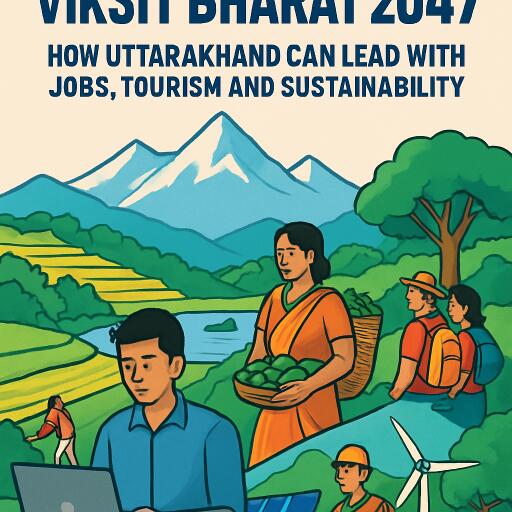
Viksit Bharat 2047: How Uttarakhand Can Lead With Jobs, Tourism and Sustainability
On Independence Day, Uttarakhand’s top administration sketched an ambitious path to 2047: dignified work for mountain youth, women-led entrepreneurship, clean and resilient infrastructure, and a tourism model that protects—rather than pressures—the fragile Himalaya. It’s a blueprint that ties national aspirations with local realities: growth that is not only faster, but fairer and safer.
A Himalayan State at a Turning Point
As Uttarakhand completes a quarter-century, the gains are visible—roads, power, digital services, and expanding education and healthcare. Yet the core challenges remain: outward migration from hill districts, patchy rural services, disaster risk from extreme weather, and the need to conserve springs, forests, and high-altitude ecosystems. The next chapter demands that development happens where people live, not just in urban corridors.
Jobs Where People Live
Creating livelihoods in the mountains is central to halting distress migration. The state can scale:
- Agri-value chains rooted in local biodiversity—millets, high-altitude horticulture, spices, mushrooms, honey, and medicinal plants—backed by cold storage, grading, and fair-market access.
- Crafts and cultural enterprises—handlooms, woodwork, natural dyes—linked to design schools and digital marketplaces.
- Startups in IT and creative industries through hill-based co-working hubs, reliable broadband, and remote-work incentives.
- Green construction skills—stone masonry, bamboo, and timber retrofits—to open steady jobs that also improve climate resilience.
Women at the Center of the Local Economy
Self-help groups already power the rural economy; the next step is scale and value addition. Priority moves include:
- Producer companies led by women for collective procurement, branding, and direct-to-consumer sales.
- Microfinance bundled with training in bookkeeping, e-commerce, and food safety standards.
- Childcare and transport support to unlock fuller participation.
When women’s enterprises formalize and aggregate, incomes stabilize and communities retain youth talent.
Clean Energy, Resilient Infrastructure
Energy-secure villages are the backbone of a climate-ready economy. A balanced mix can reduce both emissions and outages:
- Rooftop solar and community solar gardens for schools, PHCs, and panchayat buildings with battery storage.
- Upgraded micro-hydro in suitable valleys, emphasizing ecological flows and sediment management.
- Solar cold rooms and EV charging at waypoints to support agri-logistics and clean mobility.
- Feeder segregation, smart meters, and time-of-day tariffs to improve grid efficiency.
Resilience demands all-weather roads with slope stabilization, rainwater harvesting at scale, spring rejuvenation, and river-basin planning. Early-warning networks for landslides, flash floods, and glacial lake outbursts—paired with community drills—must become standard.
Tourism That Protects What Tourists Come For
Tourism remains a jobs engine, but only if it respects carrying capacity. A pivot to high-value, low-impact experiences can reduce pressure while increasing incomes:
- Spiritual and wellness retreats that emphasize silence zones, local foods, and traditional therapies.
- Adventure with strict safety codes and habitat safeguards; certified guides and capped visitor numbers on sensitive trails.
- Eco-tourism and homestays across lesser-known circuits, ensuring revenue shares reach host communities.
- Winter and cultural tourism—festivals, folklore, cuisine—spreading demand across seasons.
Core safeguards include waste-free pilgrim routes, EV or shuttle-based last-mile mobility, real-time capacity dashboards, greywater reuse in hotels, and mandatory solid-waste audits. Tourism should fund conservation—through permits that earmark a share for habitat restoration and spring protection.
Digital-First Governance
Public services can move faster and fairer with data-driven decisions. Priorities include one-stop citizen portals, proactive delivery of entitlements, transparent dashboards on jobs and projects, and grievance systems that track resolution quality, not just speed. Responsible use of AI—translated interfaces, document automation, risk mapping—can lighten workloads and improve reach, especially in remote blocks.
Viksit Bharat 2047, Grounded in Uttarakhand
National development will be judged by the most remote hamlet’s wellbeing. That means measuring success not only by highways or megaprojects, but by:
- Dignified local jobs for youth and fair incomes for farmers and forest-dependent communities.
- Universal access to quality education and primary healthcare within reliable travel times.
- Connectivity that serves people—safe roads, digital coverage, and clean public transport.
- Growth that protects watersheds, forests, and biodiversity—our natural insurance policy.
What Success Could Look Like by 2030
- Net addition of hill-district jobs in green sectors: agro-processing, eco-tourism, nature-based solutions, and clean energy services.
- Women’s producer enterprises capturing a larger share of value through branding and direct sales.
- Village institutions co-managing springs and forests with measurable flow recovery and reduced fire risk.
- Tourism governed by carrying-capacity tools, EV shuttles on crowded corridors, and near-zero waste in key destinations.
- Every school and clinic powered by reliable clean energy; disaster early-warning coverage extended to all high-risk valleys.
The Way Forward
The immediate steps are clear: consolidate local supply chains, de-risk mountain infrastructure, codify responsible tourism, and digitize core public services with transparency. With integrity, innovation, and a service-first mindset, Uttarakhand can demonstrate what a climate-smart, inclusive Viksit Bharat looks like on the ground—prosperity that stays in the village, and a Himalaya that stands resilient for generations.



Leave a Reply