

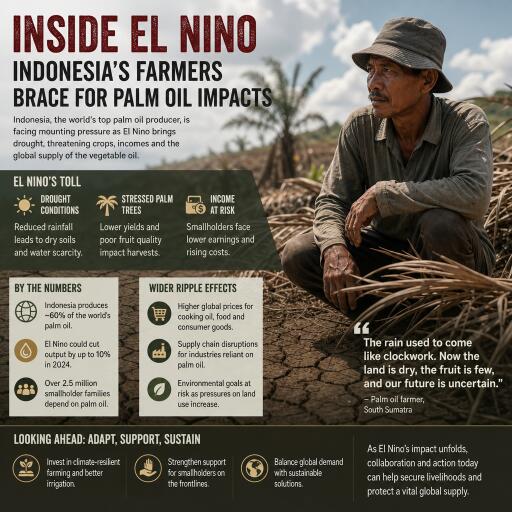
Inside El Nino – Indonesia’s farmers brace for palm oil impacts
On Sumatra’s eastern flank, the province of Riau is bracing for a long, dry season as El Niño intensifies. Forecasts of lower-than-usual rainfall and hotter temperatures through October are sharpening worries among palm oil growers, especially the smallholders who cultivate a vast share of the region’s trees. With water tables dropping and heat stress mounting, they face a fragile few months that could reshape incomes, markets, and landscapes.
Smallholders at the frontline
Riau is Indonesia’s palm oil powerhouse, and smallholder farmers manage roughly 1.7 million hectares across the province. Their orchards supply mills and refineries that feed domestic demand and global trade, yet many operate with thin margins and limited safety nets. When the rains falter, these growers lack the irrigation networks, capital reserves, and fire-prevention resources that larger estates can deploy.
El Niño amplifies those vulnerabilities. In severe dry spells, monthly fresh fruit bunch (FFB) yields can collapse by 50 to 70 percent from typical levels. That decline mirrors the crisis seen during the 2015 El Niño, when fire swept through parched lands, decimating plantations and leaving lasting economic scars. Today, memories of that haze-choked season hover over peatlands that become tinder when groundwater drops.
Costs rise as yields fall
The arithmetic for smallholders is punishing. Reduced fruit loads shrink incomes precisely when expenses spike. Farmers pay more for water access, labor to maintain firebreaks, and the inputs needed to keep trees alive under heat stress. Fertilizer, already a major cost, has climbed, making it harder to maintain soil fertility at a time when nutrition is crucial to tree resilience.
Nationally, Indonesia produced more than 51 million tonnes of palm oil in 2025. This year, output is expected to slip—by as much as two million tonnes—due largely to the climate pattern and steeper fertilizer bills. For households in Riau and beyond, that translates to tighter budgets and tougher choices; for the industry, it threatens a critical pillar of agricultural exports and biodiesel supply.
Peatland fires: a seasonal flashpoint
Much of Riau sits atop peat, ancient carbon-rich soils that store moisture in normal years but burn fiercely when drained and desiccated. Prolonged dry conditions lower the water table, exposing peat to smoldering fires that can spread underground and erupt without warning. Even small blazes can unleash thick smoke, harming health and disrupting daily life across provinces—and sometimes across borders.
Prevention hinges on simple but disciplined steps: keeping peat wet, maintaining canals and water gates, patrolling for hotspots, and avoiding land clearing by fire. Community fire brigades, early-warning systems, and rapid-response teams make a decisive difference, but they require coordination, training, and consistent funding—resources smallholders often struggle to secure alone.
Scrambling to adapt
Farmers are leaning on a patchwork of strategies to ride out the season:
- Mulching with pruned fronds and organic matter to retain soil moisture and cool roots.
- Maintaining groundcover to reduce evaporation and erosion between tree rows.
- Repairing bunds and canal blocks to keep peatlands wetted and stabilize water levels.
- Shifting harvest schedules and thinning fruit loads to reduce stress on trees during heat waves.
- Targeted fertilization and soil amendments to support nutrient uptake under dry conditions.
- Pooling resources for shared pumps, hoses, and firefighting equipment at the village level.
Longer term, growers are exploring drought-tolerant planting material and replanting schedules that stagger age classes across a farm, avoiding sharp production dips in tough years. But replanting demands credit and technical guidance, and many smallholders face hurdles in accessing financing on fair terms.
Market ripples beyond Riau
A tighter Indonesian harvest can send ripples through edible oils markets, affecting prices for consumers and manufacturers far from Sumatra. Domestically, lower output may complicate biodiesel blending plans that rely on a steady flow of feedstock. For traders, the dry-season curve depends on how sharply yields contract—and how quickly rain returns to stabilize bunch formation and oil extraction rates.
The next 90 days matter
El Niño’s imprint is uneven, and not every district will fare the same. Scattered showers can bring temporary relief, yet a short, intense burst of rain rarely rebuilds groundwater on peat. What counts is steady precipitation that recharges aquifers and cools canopies. If the dry spell lingers into the heart of the season, losses will deepen and fire risk will climb.
Conversely, vigilant prevention can blunt the worst outcomes. Keeping canals intact, enforcing no-burn rules, empowering village fire crews, and supporting smallholders with affordable inputs and credit can help safeguard both livelihoods and landscapes. The balance struck in the coming weeks—between heat and moisture, vigilance and fatigue—will determine whether Riau’s farmers endure a tough season or confront a repeat of past disasters.
For now, eyes are on the sky and the canals. As thermometers edge higher and the ground crackles underfoot, Indonesia’s palm heartland is navigating the narrow path between resilience and risk that defines life under El Niño.



Leave a Reply