

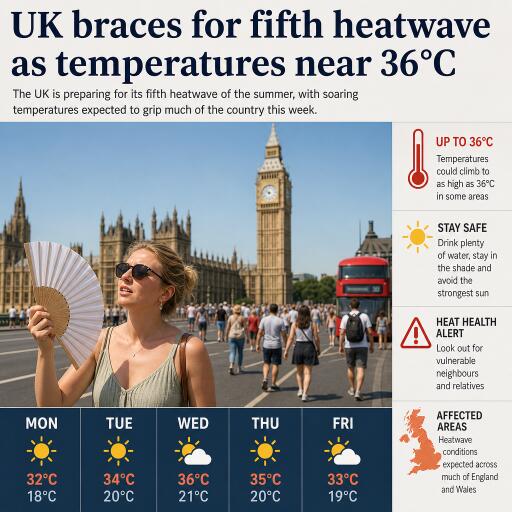
UK braces for fifth heatwave as temperatures near 36°C
Britain is on course for yet another burst of extreme heat, with forecasters warning that parts of eastern and southeastern England could approach 36°C late next week. The renewed surge follows a year already marked by an unprecedented number of very hot days, underscoring the country’s growing exposure to climate-driven extremes.
Records tumble as heat builds again
On Sunday, Frittenden in Kent reached 30.6°C, pushing the national tally of days at or above 30°C this year to 35—surpassing the previous benchmark set in the mid-1990s. After a brief dip to cooler conditions on Monday, temperatures are expected to climb steadily, with East Anglia and the southeast likely to bear the brunt by Thursday.
While heatwaves have long been part of Britain’s weather repertoire, the frequency and duration of these events are increasing. Hot spells are arriving earlier, lasting longer, and stacking up one after another—leaving people, infrastructure, and ecosystems with less time to recover between episodes.
Fields under strain
The intense heat has been compounded by exceptionally dry weather, including the driest July on record for parts of England. Across the countryside, parched soils and stunted crops have narrowed harvest prospects. One Suffolk arable farmer described how the ground “suddenly dried out,” with combines later confirming the worst: cereal yields, including oats and wheat, fell by around a quarter to a third.
For many growers, this drought is only the most recent in a string of disruptive seasons over the past five years. Flooding, unseasonable cold snaps, and heat stress have all taken turns at reshaping the agricultural calendar. As risks mount, farmers are experimenting with strategies to toughen their operations against an increasingly volatile climate.
On some organic holdings, growers are trialling crops traditionally associated with warmer, drier regions—such as fava beans and chickpeas—while refining techniques that help soils retain moisture and sustain biodiversity. Intercropping—sowing two species together to encourage complementary root structures and resource use—is gaining traction as one way to build resilience without leaning heavily on external inputs.
Producers say that policy support will be crucial to accelerate this transition. Grants for soil health, agroforestry, water storage, and local processing, alongside advice services and research investment, could help farms pivot from short-term coping to long-term adaptation.
Food security in a warming world
As temperatures climb and rainfall patterns shift, the UK’s food system faces a twofold test: safeguarding domestic production while navigating more frequent shocks in global supply chains. Specialists argue that relying less on intensive, input-heavy methods and embracing a more circular, diversified model would reduce vulnerability—limiting exposure to volatile costs for fertiliser and feed, and cutting dependence on imports of water-thirsty produce.
That shift is not just about what is grown, but how it moves from field to fork. Storage, processing, transport, and retail all need to be designed for a hotter, less predictable climate. Experts warn that the breadth of the challenge requires stepping up public and private investment in innovation—from drought-resilient varieties and precision irrigation to data-driven crop planning and nature-based solutions that cool landscapes and stabilise soils.
What to expect this week
– Temperatures: After a cooler start to the week, heat is set to intensify mid-to-late week in the east and southeast, with some areas nearing 36°C.
– Nights: Warm nights will make it harder for homes to cool, amplifying health risks for older people, those with chronic conditions, and outdoor workers.
– Environment: Dry vegetation increases the risk of wildfires in grasslands and hedgerows. Rivers and wetlands may face further stress, affecting fish and invertebrates.
– Agriculture: Irrigation demand will spike where available; without it, shallow-rooted crops risk further yield losses. Livestock may require additional shade, ventilation, and water to avoid heat stress.
Staying safe and cooling smarter
Public health officials advise limiting strenuous activity during the hottest hours, staying hydrated, using window shading and ventilation to cool homes, and checking on neighbours who may be vulnerable. For workers exposed to the heat, frequent breaks, adjusted shift times, and heat-aware scheduling can reduce risk.
Urban areas can experience several degrees of additional heat due to the urban heat island effect. Simple measures—street trees, reflective surfaces, and green roofs—help lower temperatures. Longer term, retrofitting buildings for passive cooling and improving access to shaded public spaces will be vital as extreme heat becomes more common.
Why this heatwave matters
Successive hot spells are a hallmark of a warming climate, and the UK is not exempt. The growing tally of 30°C days this year—now higher than any previous record—signals how quickly the baseline is shifting. Each heatwave also carries compounding costs: pressure on health services, reduced productivity, transport disruptions, and added strain on water supplies and biodiversity.
Adapting swiftly—on farms, in cities, and across supply chains—will determine how well the country weathers the next surge. With temperatures again heading toward the mid-30s, the fifth heatwave of the year is both an immediate test and a preview of summers to come.



Leave a Reply