

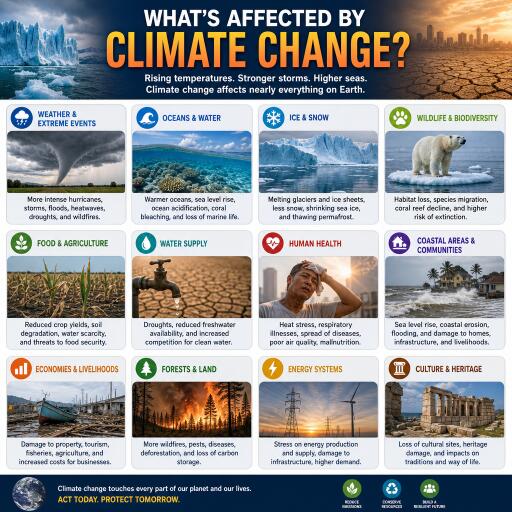
Look What’s Affected By Climate Change, Global Warming
Across Asia and Africa, elephants are being squeezed by a double bind: shrinking habitat and a climate that no longer follows familiar rhythms. These intelligent, social animals have long lived alongside people, but rising temperatures and erratic rainfall are unsettling their movements, straining food and water supplies, and pushing herds toward farms and villages in search of what forests increasingly fail to provide.
When the climate stops keeping time
Elephants rely on predictable seasons. After steady rains, grasses flush with nutrients; streams and wallows refill; shade and forage are plentiful. Climate change is disrupting that pattern in two powerful ways: hotter heatwaves and rainfall that arrives either all at once or not at all. Extended dry spells parch grasslands and dry up waterholes. Sudden cloudbursts can trigger runoff that erodes soils and washes away the tender growth elephants prefer.
Because elephants need vast quantities of fresh, palatable vegetation and many liters of water daily, these swings force difficult choices. When a forest patch no longer supports a herd’s nutritional needs, they move—sometimes earlier than usual, sometimes along unfamiliar routes. Those detours increasingly run along the edges of human settlements.
From forest paths to farm fields
Cultivated landscapes can be irresistible. Crops like bananas, sugarcane, and paddy concentrate calories and water in neat rows, an attractive alternative when wild forage is scarce. As rainfall patterns shift, reports have grown of elephants arriving in agricultural zones weeks or months earlier than in past years, or turning up in places where they were rarely seen before. What begins as a survival strategy can quickly lead to crop damage, property loss, and dangerous encounters—raising the stakes for communities and conservationists alike.
Stress shows up in behavior
Heat and hunger reshape daily routines. Elephants may travel longer distances between shrinking water sources, rest more during the hottest hours, and become more nocturnal to avoid heat stress and human activity. Calves, which are especially vulnerable to dehydration and exhaustion, can suffer on extended marches. Competition intensifies at the few remaining waterholes, increasing the risk of injuries and disease transmission. These stressors, repeated year after year, can influence reproduction and survival, quietly eroding populations even where outright poaching is low.
Climate change compounds old pressures
Habitat loss and fragmentation have long funneled elephants into smaller pockets of forest. Fences, roads, and expanding towns can block traditional corridors that once allowed herds to track seasonal resources. Layer unpredictable weather on top of that, and formerly manageable lean seasons become existential threats. The consequences ripple outward: elephants are major seed dispersers and ecosystem engineers. When their movements are disrupted, so is the regeneration of forests and savannas that store carbon and cradle biodiversity.
What can help now
- Protect and reconnect corridors: Identify and secure climate-resilient migration routes so herds can reach water and forage as conditions shift.
- Safeguard and restore grasslands: Manage fire, invasive species, and grazing pressure to promote high-quality, drought-tolerant forage within protected areas.
- Climate-smart water stewardship: Maintain a mosaic of natural water sources; where appropriate, rehabilitate wetlands and springs and consider temporary, well-sited water provisioning during extreme droughts.
- Forecast-based action: Use seasonal climate outlooks and vegetation monitoring to pre-position conflict-mitigation teams and alert communities ahead of likely elephant movements.
- Coexistence measures: Expand early-warning systems, beehive and chili-based deterrents, and crop choices that are less attractive to elephants near high-risk boundaries.
- Thoughtful land-use planning: Avoid new barriers along known corridors, and design infrastructure with wildlife underpasses or overpasses where feasible.
- Health and stress monitoring: Track body condition, reproduction, and disease to catch climate-related impacts early and adjust management.
A day to commit, not just commemorate
Each year, World Elephant Day highlights the cultural heritage and ecological importance of these animals. But honoring elephants now also means planning for a hotter, less predictable world. Conservation strategies must be dynamic—guided by climate science, grounded in local knowledge, and centered on coexistence. If we keep landscapes permeable, restore resilient habitats, and support communities on the front lines, elephants can continue their ancient journeys and the ecosystems they shape can weather the changes ahead.



Leave a Reply