

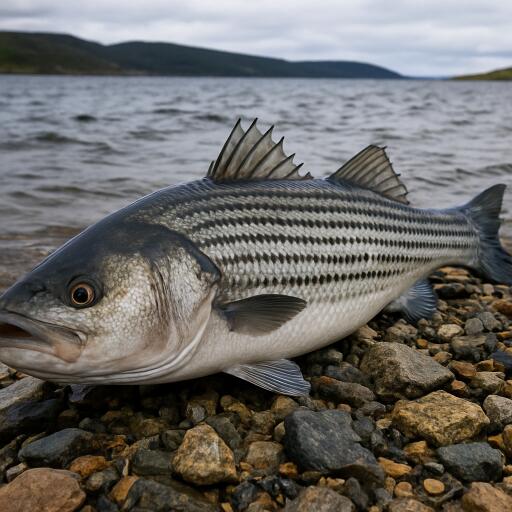
Concerns persist over ‘unexpected’ presence of striped bass off Labrador
The appearance of striped bass along Labrador’s southern coast continues to unsettle residents, anglers and fisheries observers, who worry the powerful predator could disrupt fragile river and coastal ecosystems already under pressure.
Long celebrated elsewhere as a hard-fighting sport fish and a popular meal, striped bass inspire a very different reaction in communities where Atlantic salmon, trout and Arctic char are central to both culture and local waters. In this region, the concern is not about the fish’s appeal, but about what its arrival could mean for species that are already vulnerable.
Reports of striped bass in the Labrador Straits first emerged several years ago, signalling a notable movement north of the fish’s more familiar range. Researchers studying the shift say warming waters and broader ecological change may be helping push the species into new territory, part of a larger pattern affecting marine and freshwater habitats across Atlantic Canada.
That northward expansion has prompted scientific tracking efforts along the NunatuKavut coastline. Using acoustic monitoring, researchers have been trying to determine when striped bass arrive, how long they remain, which habitats they use and whether they may eventually stay year-round. Another major question is how their presence could affect native fish populations and food webs in coastal waters and rivers.
Federal fisheries officials have described the species’ presence off Newfoundland and Labrador as unexpected. While occasional movement into northern waters is now considered possible, scientists still say too little is known to predict whether these visits will increase, become routine or lead to lasting ecological consequences.
That uncertainty is exactly what troubles many people living in the region.
Striped bass are not small visitors. The species can reach impressive sizes, with many fish measuring several feet long and the largest individuals weighing far more than most local river fish. As opportunistic predators, they feed aggressively and can consume a wide variety of smaller fish. In areas farther south, their impact on juvenile salmon has become a major point of debate, especially in waterways where salmon populations are already struggling.
Residents in southern Labrador say the concern is not theoretical. Since the first notable sightings, locals have described repeated episodes in which large numbers of striped bass appeared in bays, near wharves and in estuaries. In some cases, fishers found them crowding into gear set for other species. Others reported seeing them push into brooks and rivers, places that also serve as habitat for trout and salmon.
People who spend time on these waters say the fish can arrive in striking numbers. Accounts from the coast describe schools moving through sheltered areas and feeding heavily. For communities that closely watch the health of local brooks, any new predator entering the system is bound to raise alarms.
Among the biggest fears is the possible effect on Atlantic salmon smolts, the young fish that migrate from rivers to the sea. If striped bass begin consistently feeding in the same migration corridors, even a short seasonal overlap could create added pressure on salmon stocks that are already in decline in many places. Similar worries extend to brook trout and Arctic char, species that are both ecologically important and highly valued by local harvesters and anglers.
Some fishing advocates believe authorities should act before the species becomes firmly established. Proposed responses include broader harvest opportunities for recreational fishers, better tracking of where bass are showing up and more intensive monitoring across eastern Canadian waters. Their argument is simple: if a fast-growing predator is expanding into sensitive habitat, waiting too long could make management far more difficult.
Not everyone sees the fish in purely negative terms. Some anglers point to striped bass as one of the most exciting sport fish in Atlantic Canada, prized for strong runs, aggressive strikes and excellent table quality. For fishers who enjoy variety, the idea of another accessible species has obvious appeal.
Still, even some of those who enjoy catching striped bass elsewhere acknowledge the trade-off. A fish that is thrilling on the line can also be highly effective as a predator. Its ability to reproduce successfully and feed intensively is exactly why its spread into new regions is being watched so closely.
The debate now unfolding off Labrador reflects a broader environmental reality: as oceans warm and species shift, communities are increasingly forced to confront unfamiliar ecological mixes. Fish once considered distant or uncommon can suddenly appear in places where they were never expected, bringing both opportunity and risk.
For Labrador’s coastal communities, the issue is less about novelty than about balance. If striped bass remain occasional visitors, their impact may prove limited. But if their appearances become more frequent, or if they begin using local rivers and shorelines in greater numbers, pressure will grow for stronger monitoring and management.
For now, many of the answers remain out of reach. Scientists are still mapping movements. Officials remain cautious. And along the coast, residents continue to watch the water closely, mindful that the return of this predator could signal a much larger transformation underway in the North Atlantic.



Leave a Reply