

Austin Weather Forecast: Latest Updates & 7-Day Outlook for June 14 – Archyde
Central Texas is bracing for a pronounced early-season heat surge, with forecasters signaling a strong likelihood of hotter-than-average conditions and lean rainfall through July. Climate monitoring from satellite and ground sensors points to a sustained warm pattern developing by mid-June, heightening concerns about expanding drought across the Hill Country and beyond.
Heat Signals Intensify
Meteorologists tracking the region’s atmosphere and soil conditions estimate roughly a seven-in-ten chance that temperatures will exceed seasonal norms as high pressure builds overhead. This early and notable shift from historical patterns is unusual for June and could accelerate drying in rivers, reservoirs, and rangelands.
The warming trend does not just mean uncomfortable afternoons—it suggests longer spells of triple-digit heat, warmer nights that offer little relief, and a slimmer window for rainfall recharge. In this setup, evapotranspiration outpaces any modest showers, compounding stress on vegetation and water supplies.
Tech Economy and Grid Readiness
Large employers in Austin’s tech corridor are moving to conserve water, adjust building operations, and expand flexible work options as the heat wave develops. Their preparations underscore a key resilience gap: while bigger firms can pivot quickly, surveys indicate that a majority of small businesses in Travis County lack formal plans for extreme weather.
Energy analysts warn that prolonged stretches above 105°F could drive a double-digit jump—on the order of 15%—in cooling demand on the Texas grid. That kind of sustained load would test peak-hour capacity, especially if wind output dips or localized outages occur.
Local Measures and Health Alerts
Municipal and state agencies are acting to harden systems ahead of peak summer stress. Austin is investing millions in drought-tolerant landscaping across public spaces to curb irrigation needs, while regional water authorities are upgrading older irrigation infrastructure in neighboring counties to reduce losses and improve efficiency. These upgrades reflect a broader reality: much of the region’s infrastructure was designed for a cooler, wetter baseline.
Public health officials report a clear rise in heat-related emergency visits compared with last spring, prompting renewed safety guidance. Residents are being urged to hydrate regularly, take breaks from outdoor labor, check on vulnerable neighbors, and seek air-conditioned spaces during the afternoon peak. Community facilities are preparing cooling areas as temperatures climb.
Climate Context
The developing pattern aligns with longer-term warming trends observed across the southern United States. International assessments project a steep increase in the frequency of extreme heat days this decade if greenhouse gas emissions remain high. For Central Texas, this translates to hotter highs, hotter nights, and shorter intervals for drought recovery.
Historical markers offer a warning. The 2011 Texas drought inflicted billions of dollars in agricultural losses and reshaped water planning for years. While current outlooks do not predict a repeat of that magnitude, recurring dry spells can have a cumulative impact. Recent federal monitoring shows soil moisture in the region sitting well below average, setting the stage for quicker drought intensification if rain continues to underperform.
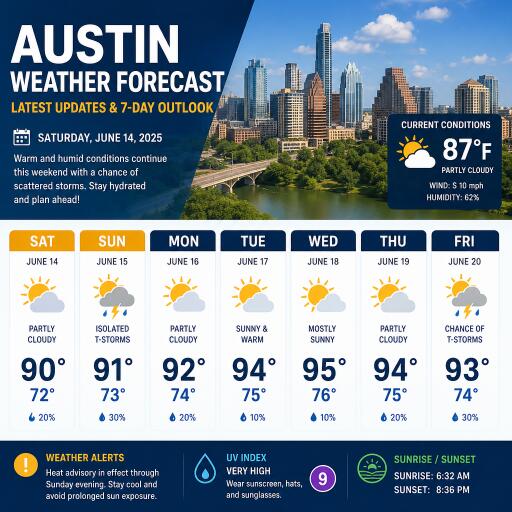
7-Day Outlook for Austin (Friday, June 14 – Thursday, June 20)
- Friday (Jun 14): Hot and dry; modest south breezes. Air quality may trend moderate in the afternoon.
- Saturday: Very warm with abundant sun; isolated clouds, negligible rain chances.
- Sunday: Heat builds further; late-day breeze offers limited relief.
- Monday: Persistently hot; small chance of a stray shower east of I-35, but most stay dry.
- Tuesday: Similar pattern—sun-dominated, low humidity early, oppressive heat by mid-afternoon.
- Wednesday: High pressure holds; continued heat stress, especially for outdoor work.
- Thursday: Little change; slim storm chances at best if a weak disturbance brushes the region.
Expect warm nights with only marginal cooling. Hydration, shade, and frequent breaks remain essential for outdoor activities. Pet care and pavement heat awareness are also critical as surface temperatures soar.
What Residents Can Do Now
- Prioritize cooling: Locate the nearest cooling centers and confirm hours; use fans strategically with air conditioning to reduce energy load.
- Conserve water: Fix leaks, shorten showers, and irrigate pre-dawn; consider drought-tolerant plantings.
- Protect health: Schedule strenuous tasks early morning or evening; wear light clothing and sunscreen; never leave children or pets in vehicles.
- Prepare your home: Service HVAC filters, add weatherstripping to keep cool air inside, and set smart thermostats for peak-load times.
- Community check-ins: Check on older adults, outdoor workers, and unsheltered neighbors; share resources for cooling and hydration.
Guidance for Businesses
- Energy management: Pre-cool facilities before peak hours; stagger shifts to reduce concurrent loads.
- Workforce protection: Provide shaded rest areas, hydration stations, and heat-illness training; adjust schedules to cooler periods.
- Continuity planning: Review backup power options, supply chain contingencies, and remote-work protocols.
- Efficiency upgrades: Invest in high-efficiency cooling, reflective roofing, and water-wise fixtures to lower operating costs and risks.
Bottom Line
Central Texas is entering a sustained hot spell earlier than usual, with limited rain to offset rising demand on water and energy systems. Preparedness—at home, at work, and across public services—will determine how well the region weathers the weeks ahead. Stay alert to heat advisories, conserve where possible, and plan around the hottest hours to reduce risk.



Leave a Reply